Table Of Content
Table Of Content
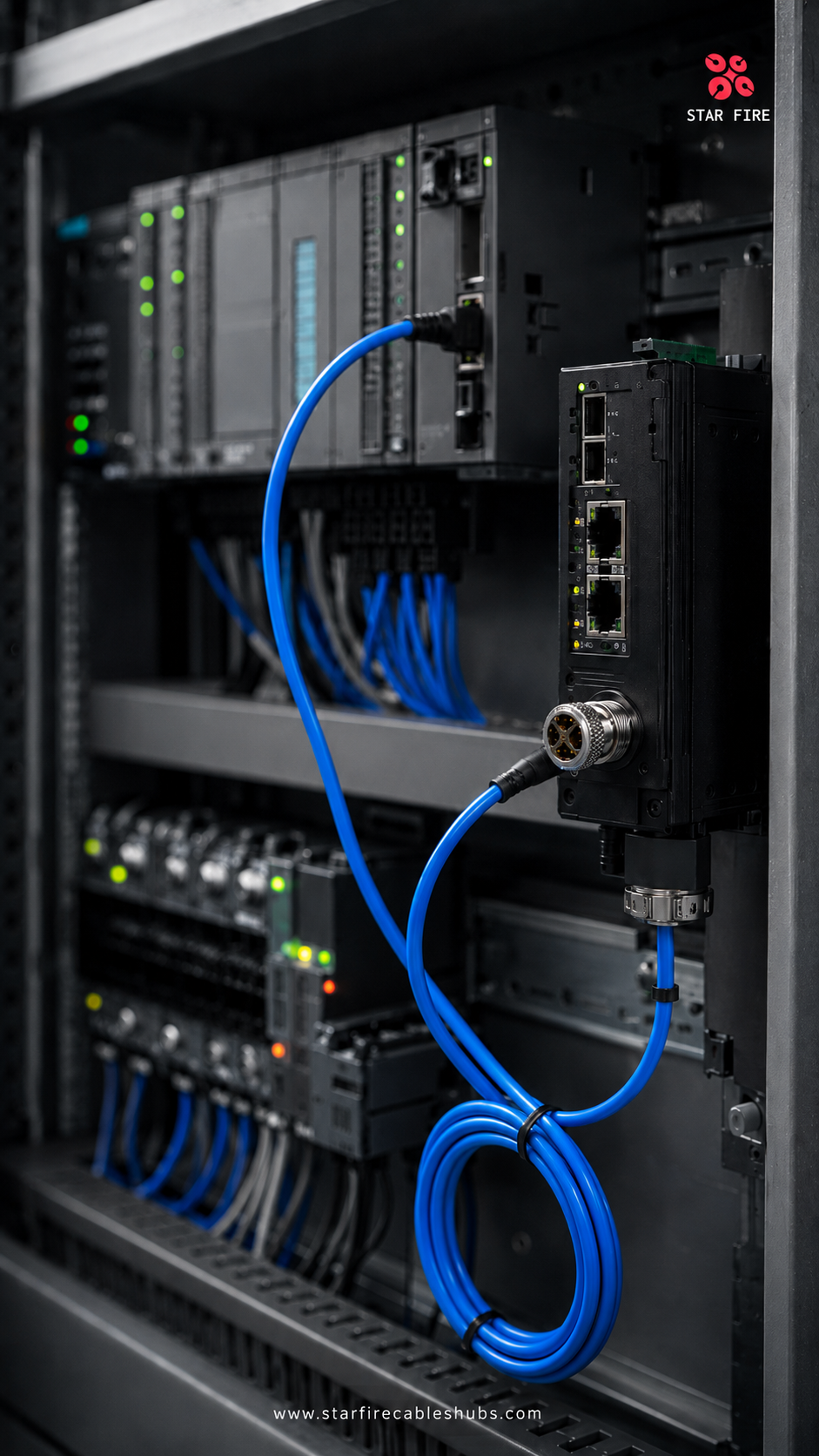
In industrial networking, M12-to-RJ45 cable assemblies are often described as simple adapters.
That description is technically incomplete.
A properly specified M12-to-RJ45 assembly is not merely changing one connector into another. It is creating a controlled transition between two different environments: the rugged machine side and the conventional Ethernet infrastructure side.
That distinction matters in PLC networks, machine vision, robotics, industrial Ethernet switches, control cabinets, transportation systems, smart manufacturing, and increasingly in Pro AV and AV-over-IP applications.
The right question is not:
“Can I convert M12 to RJ45?”
The better question is:
“Where should the rugged industrial network end, and where should standard Ethernet begin?”
Understand the Two Sides of the Connection
M12 connectors are designed for industrial environments where vibration, dust, moisture, oil, mechanical stress, and repeated machine operation are part of daily life.
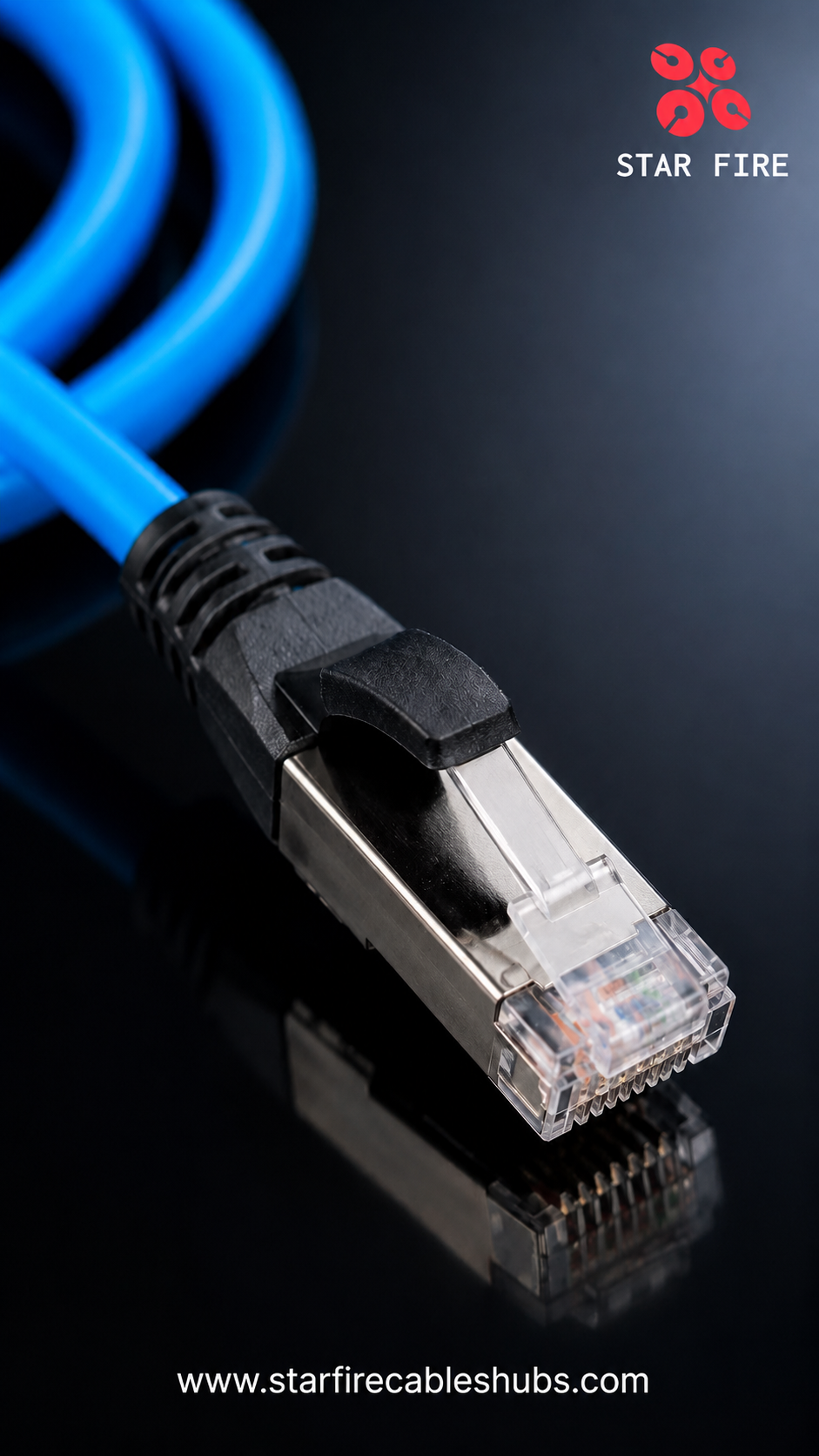
RJ45 is the familiar Ethernet interface used on switches, industrial PCs, servers, laptops, cameras, AV-over-IP devices, patch panels, and control-room infrastructure.
RJ45 is extremely practical. It is compact, widely available, easy to service, and supported by an enormous Ethernet ecosystem.
But a conventional RJ45 connection is generally less mechanically protected than a correctly mated industrial M12 connection.
This is why M12-to-RJ45 assemblies are valuable: they allow engineers to keep rugged connectivity where ruggedness is required, while still connecting to standard Ethernet equipment where RJ45 makes more sense.
The best design is rarely “M12 everywhere” or “RJ45 everywhere.”
It is usually a controlled combination of both.
The Most Common Use Case: Machine to Control Cabinet
One of the strongest applications for M12-to-RJ45 is the transition from the machine field to the protected control cabinet.
Imagine a packaging machine.
Outside the cabinet, a PLC network may connect to remote I/O, servo systems, industrial cameras, sensors, robotic modules, or field switches. These areas can experience vibration, coolant, dust, and frequent maintenance.
M12 is well suited to that environment.
Inside the cabinet, however, the network may connect to:
- An industrial Ethernet switch
- A PLC programming port
- An industrial PC
- An HMI
- A firewall or router
- A standard patch panel
Many of these devices use RJ45.
In that situation, M12-to-RJ45 is not a compromise. It is often the correct architectural choice.
Use the rugged connector at the machine boundary and the standard connector in the protected environment.
Match D-Code or X-Code to the Ethernet Requirement
The most important technical decision is not M12 versus RJ45.
It is the Ethernet performance of the complete channel.
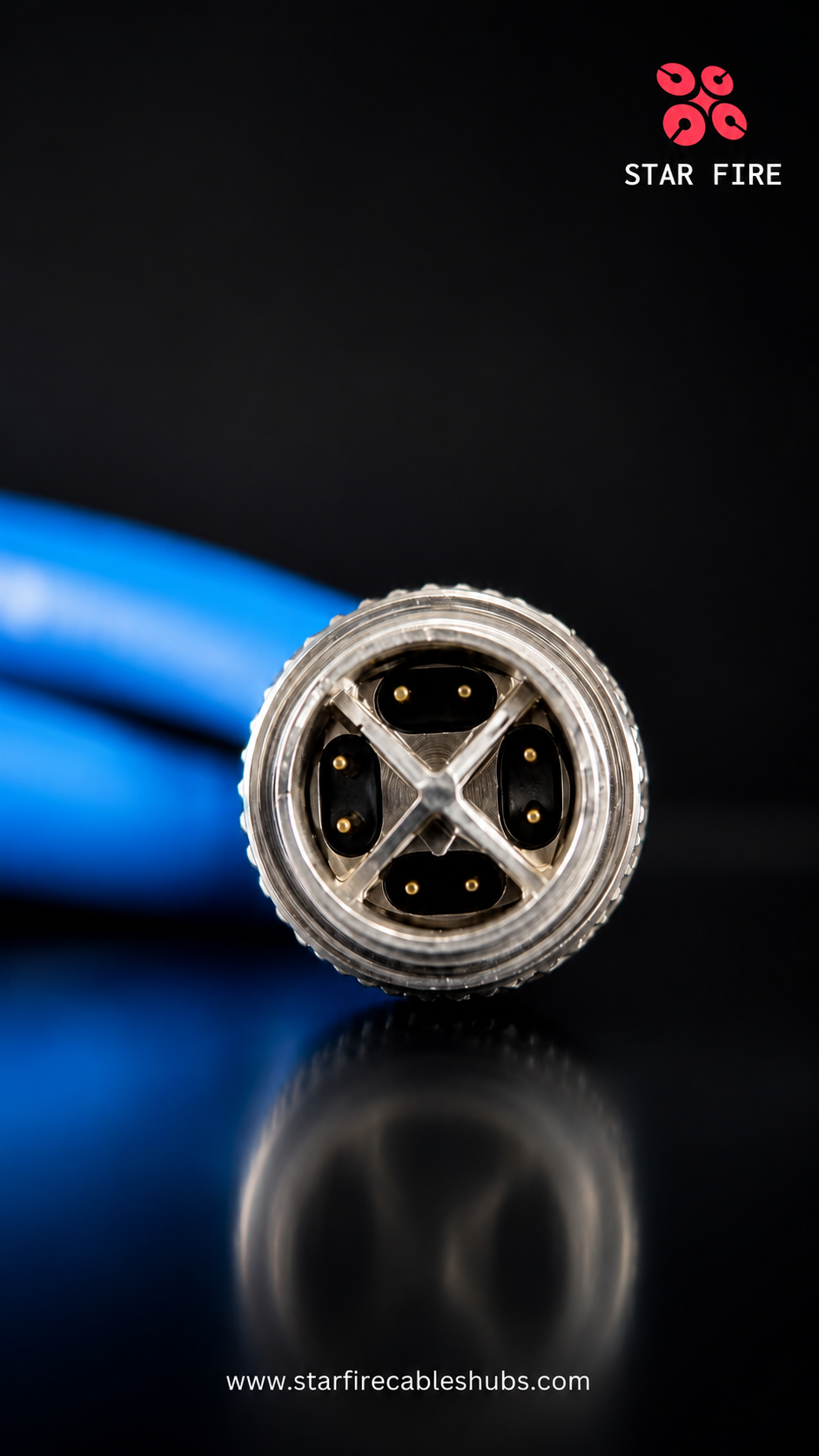
M12 D-Code
D-coded M12 Ethernet uses four contacts and is commonly associated with 100 Mbps Industrial Ethernet applications.
Typical uses include:
- PROFINET device connections
- EtherCAT nodes
- PLC-to-I/O links
- 100BASE-TX machine networks
A D-coded M12-to-RJ45 assembly can therefore be an effective way to connect a 100 Mbps industrial device to an RJ45-equipped switch, PLC, or engineering interface.
M12 X-Code
X-coded M12 uses eight contacts and four twisted pairs. Its internal geometry separates the pairs to control crosstalk and support higher-frequency Ethernet performance.
A correctly designed M12 X-Code-to-RJ45 assembly can support Cat 6A-class channels and data rates up to 10 Gb/s.
This matters for:
- Gigabit industrial Ethernet
- Machine vision
- Industrial cameras
- Edge computers
- High-data industrial switches
- Data acquisition
- High-resolution inspection systems
- AV-over-IP infrastructure
The engineering rule is straightforward:
Do not choose the M12 coding by connector appearance. Choose it by protocol, data rate, channel category, and equipment requirements.
M12-to-RJ45 Is an Environmental Boundary
One of the best ways to understand this cable is to think of it as an environmental transition.
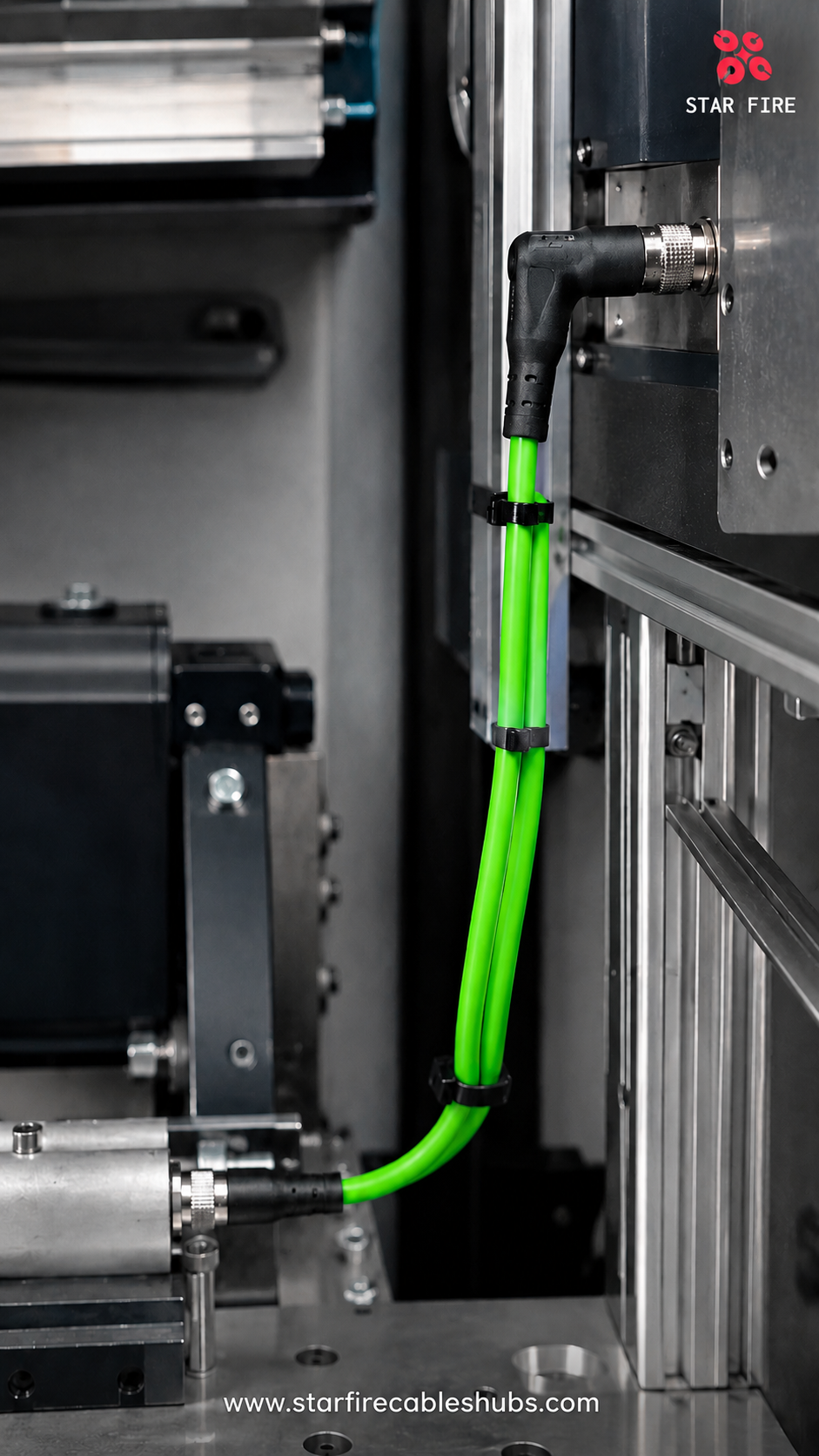
On one end, the M12 connector may sit near a robot, motor, machine frame, camera, conveyor, or outdoor equipment.
On the other end, the RJ45 may terminate inside a cabinet, server enclosure, protected rack, or technical room.
That means the assembly may cross two very different environments.
Engineers should ask:
Where is the connector exposed?
Where is the cable moving?
Where is the strongest EMI?
Which end requires IP protection?
Which end is accessible for maintenance?
Where does the cable enter the cabinet?
An IP67 M12 on one end does not make an exposed standard RJ45 connection IP67.
This sounds obvious, but it is a common design mistake.
The protection level of the system is determined by the weakest exposed interface.
Shielding Matters More Than the Connector Conversion
Industrial Ethernet often runs near VFDs, motors, servo drives, switching power supplies, contactors, and high-current cables.
In these environments, shield continuity can be more important than the physical transition from M12 to RJ45.
For a high-performance shielded assembly, evaluate:
- Twisted-pair geometry
- Foil and braid shield design
- 360-degree shield termination at the M12 shell
- Shield bonding at the RJ45 end
- Grounding strategy
- Pair untwist near termination
- Connector-shell continuity
A cable can pass continuity testing and still perform poorly at high frequencies.
That is why an Ethernet assembly should not be judged only by “pin-to-pin connection.”
Signal integrity is about impedance, return loss, insertion loss, crosstalk, shielding, and termination quality across the entire channel.
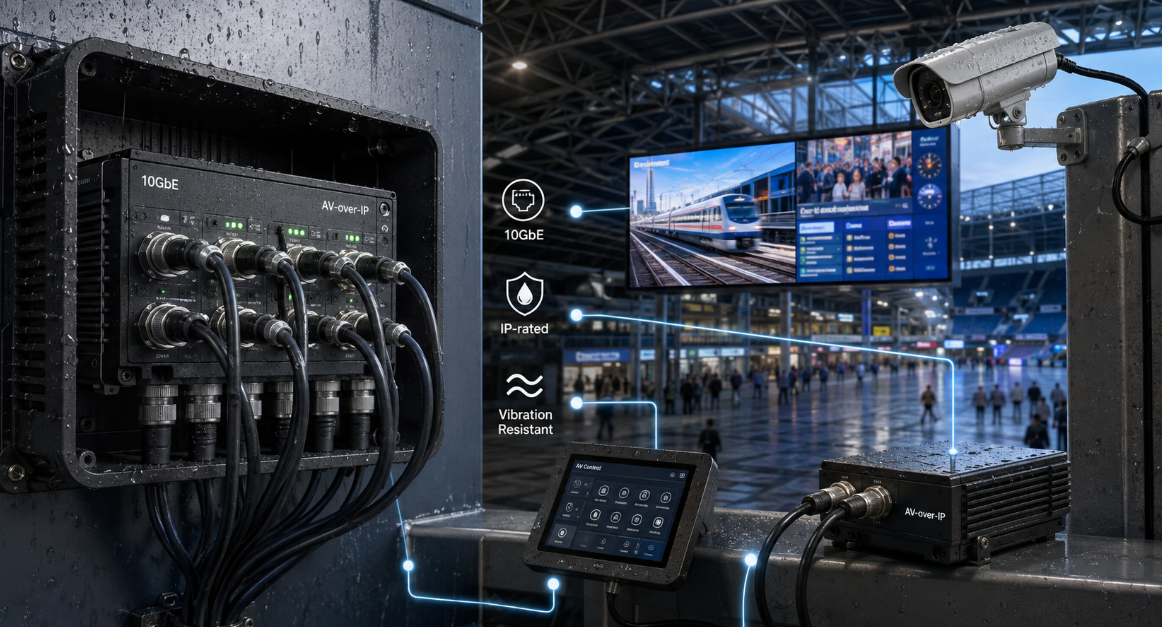
For Pro AV engineers, this becomes increasingly important as control networks and AV-over-IP systems move into factories, transportation hubs, command centers, broadcast facilities, and smart buildings.
When Machine Vision Makes X-Code-to-RJ45 Attractive
Machine vision is one of the clearest examples of where M12 and RJ45 often need to coexist.
A camera mounted on a moving or vibration-prone machine may benefit from rugged M12 Ethernet connectivity.
The industrial PC or network switch processing the image data may use RJ45.
An M12 X-Code-to-RJ45 cable can bridge these two environments while maintaining a four-pair high-speed Ethernet channel.
This is particularly relevant as camera resolution, frame rate, and inspection data increase.
The cable should therefore be selected around the actual imaging system:
- Camera data rate
- GigE or higher Ethernet requirement
- Cable length
- PoE requirement, if applicable
- Continuous-flex requirement
- EMC environment
- Triggering and synchronization sensitivity
A “works with Ethernet” description is not enough for a production vision system.
When You Should Not Use M12-to-RJ45
A transition cable is useful, but it should not be inserted without a reason.
Avoid unnecessary M12-to-RJ45 transitions when both devices already support the same rugged connector and the entire path is exposed to harsh conditions.
For example, an M12-to-M12 connection may be preferable between an industrial camera and an M12 industrial switch mounted directly on the machine.
Every connector transition introduces another:
- Mechanical interface
- Shield termination point
- Potential installation error
- Maintenance point
- Possible performance discontinuity
The goal is not to minimize connectors at all costs.
The goal is to avoid unnecessary interfaces.
Use M12-to-RJ45 where it solves a real boundary problem.
Fixed Cable, Flex Cable, or Drag-Chain Cable?
Connector choice does not determine cable-motion capability.
An M12-to-RJ45 cable used from a fixed panel to a switch may only require a standard industrial Ethernet construction.
The same connector combination mounted on a moving gantry may require a continuous-flex PUR or TPE cable.
For motion applications, verify:
- Dynamic bend radius
- Flex-cycle rating
- Travel distance
- Speed
- Acceleration
- Torsion
- Dynamic temperature range
Do not assume that a molded industrial cable is automatically drag-chain rated.
A flexible cable and a continuous-flex cable are not the same product.
Think About Serviceability
RJ45 has one major engineering advantage: serviceability.
Inside a cabinet, rack, or control room, technicians can quickly connect diagnostic tools, laptops, switches, or replacement equipment using standard Ethernet infrastructure.
This is one reason the M12-to-RJ45 transition can make a system easier to maintain.
It creates a logical boundary:
Machine side: rugged, sealed, vibration-resistant connectivity.
Infrastructure side: standardized, accessible Ethernet connectivity.
This matters not only in automation but also in Pro AV.
Broadcast control rooms, digital signage systems, AV-over-IP networks, transportation displays, command centers, and smart-building platforms increasingly combine commercial Ethernet equipment with industrialized endpoints.
The transition between rugged field hardware and standard IT/AV infrastructure must be engineered intentionally.
A Practical Selection Checklist
Before specifying an M12-to-RJ45 cable, confirm:
Protocol
PROFINET, EtherNet/IP, EtherCAT, standard Ethernet, or another network?
Data rate
100 Mbps, 1 Gb/s, or up to 10 Gb/s?
M12 coding
D-Code or X-Code?
Cable category
Is Cat 5e, Cat 6, or Cat 6A performance required?
Environment
Which end is exposed to dust, water, oil, vibration, or washdown?
Shielding
Is shield continuity maintained through both connector terminations?
Cable motion
Fixed, occasional flex, drag chain, or torsion?
Jacket material
PVC, PUR, TPE, or another compound?
RJ45 location
Is the RJ45 safely inside a cabinet or protected enclosure?
Cable length
Does the complete channel remain within the Ethernet performance requirement?
PoE
Does the application require power over Ethernet, and is the complete assembly designed for the required power level?
Validation
Has the assembly been evaluated for electrical performance, mechanical reliability, and the real installation environment?
The Bigger Idea: Engineer the Boundary
After two decades in connectivity and Pro AV, I believe transition cables are often underestimated.
They sit at the exact point where two design philosophies meet.
M12 represents ruggedized machine connectivity.
RJ45 represents standardized Ethernet accessibility.
Neither is universally better.
The engineering skill lies in knowing where one should end and the other should begin.
At STAR FIRE TECH, our work across M8/M12 industrial cable assemblies, Industrial Ethernet, high-speed copper connectivity, Hybrid AOC, machine vision, and Pro AV gives us a useful view of this convergence.
Factories are becoming more connected.
AV systems are becoming more networked.
Machine vision is becoming more data-intensive.
Control rooms are integrating industrial and IT infrastructure.
In that world, the connection between two systems cannot be treated as an afterthought.
The best M12-to-RJ45 cable is not simply an adapter that fits both ports.
It is a carefully engineered boundary between environments.