Table Of Content
Table Of Content

The hidden cost of HDMI signal loss
In AV projects, HDMI signal loss is more than a technical inconvenience. It can delay installation, increase labor cost, damage customer confidence, and create repeated after-sales support. A black screen in a meeting room, unstable image in a video wall, or random flicker in a classroom display often starts with one question: is the cable good enough for the system?
Common causes of HDMI signal problems
HDMI signal loss can come from several factors. The most common causes include insufficient bandwidth, excessive cable length, poor shielding, weak connector contact, electromagnetic interference, cable attenuation, source and display compatibility issues, and HDMI handshake or EDID communication problems. In real projects, these problems often overlap, which makes troubleshooting difficult.
Why long-distance HDMI is more sensitive
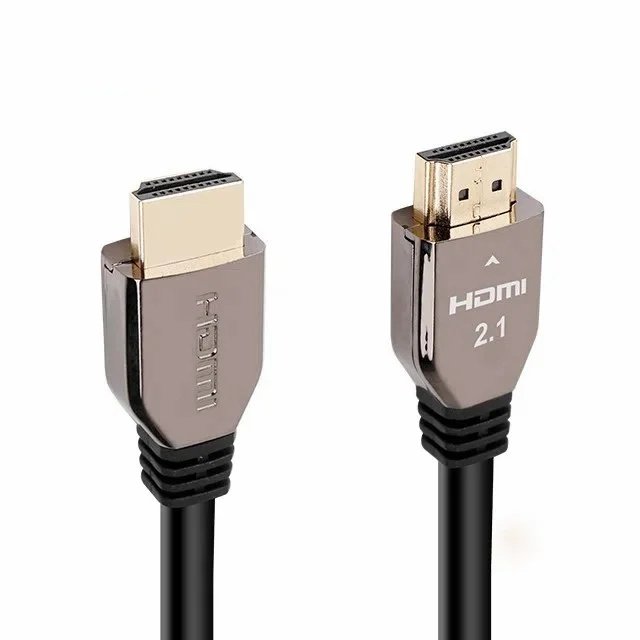
The longer the transmission distance, the harder it becomes to maintain a stable high-speed signal through copper. Long HDMI runs behind walls, inside cabinets, through ceilings, or near power cables are more exposed to attenuation and EMI. This is why a cable that works on a test bench may fail after final installation. Professional project buyers should evaluate not only the product specification, but also the real installation environment.
How to troubleshoot before replacing devices
Before assuming the display, matrix switch, source device, or docking station is defective, check the cable first. Test with a shorter certified cable, confirm the required resolution and refresh rate, inspect connector fit, avoid tight bending, separate HDMI from strong power lines where possible, and confirm EDID and handshake behavior. For long-distance or high-resolution systems, consider HDMI AOC or fiber-based transmission instead of pushing copper beyond its stable range.
How STAR FIRE TECH supports more reliable projects
图3
STAR FIRE TECH focuses on connectivity solutions that help integrators and distributors reduce avoidable AV failures. Our HDMI, HDMI AOC, and hybrid active optical cable solutions are designed for stable transmission in professional environments such as meeting rooms, classrooms, video walls, medical imaging systems, and control rooms. For customers, this means fewer installation surprises, fewer returns, and more confidence when supporting demanding projects.
FAQ for system integrators
Why does HDMI show a black screen? It may be caused by bandwidth mismatch, cable attenuation, EDID or handshake problems, EMI, or an unstable connector.
Can HDMI signal loss happen only sometimes? Yes. Intermittent failure is common when the cable is near its performance limit or exposed to interference.
What is the best solution for long HDMI runs? For many professional installations, HDMI AOC or hybrid AOC is a more stable choice than long passive copper.
#HDMISignalLoss #HDMIBlackScreen #AVTroubleshooting #HDMIAOC #ProAV #AVIntegration #VideoWall #ConferenceRoomAV #CableTesting #SignalIntegrity #STARFIRETECH