Table Of Content
Table Of Content
An HDMI AOC sample works perfectly, but the bulk shipment causes flickering and black screens. Poor quality control can turn a promising product launch into costly customer complaints.
Buyers can verify HDMI AOC cable quality before bulk orders by checking signal performance, environmental reliability, manufacturing quality control, and product documentation. They should test approved samples under real operating conditions, review relevant certifications, and confirm that the manufacturer can maintain consistent quality throughout mass production.
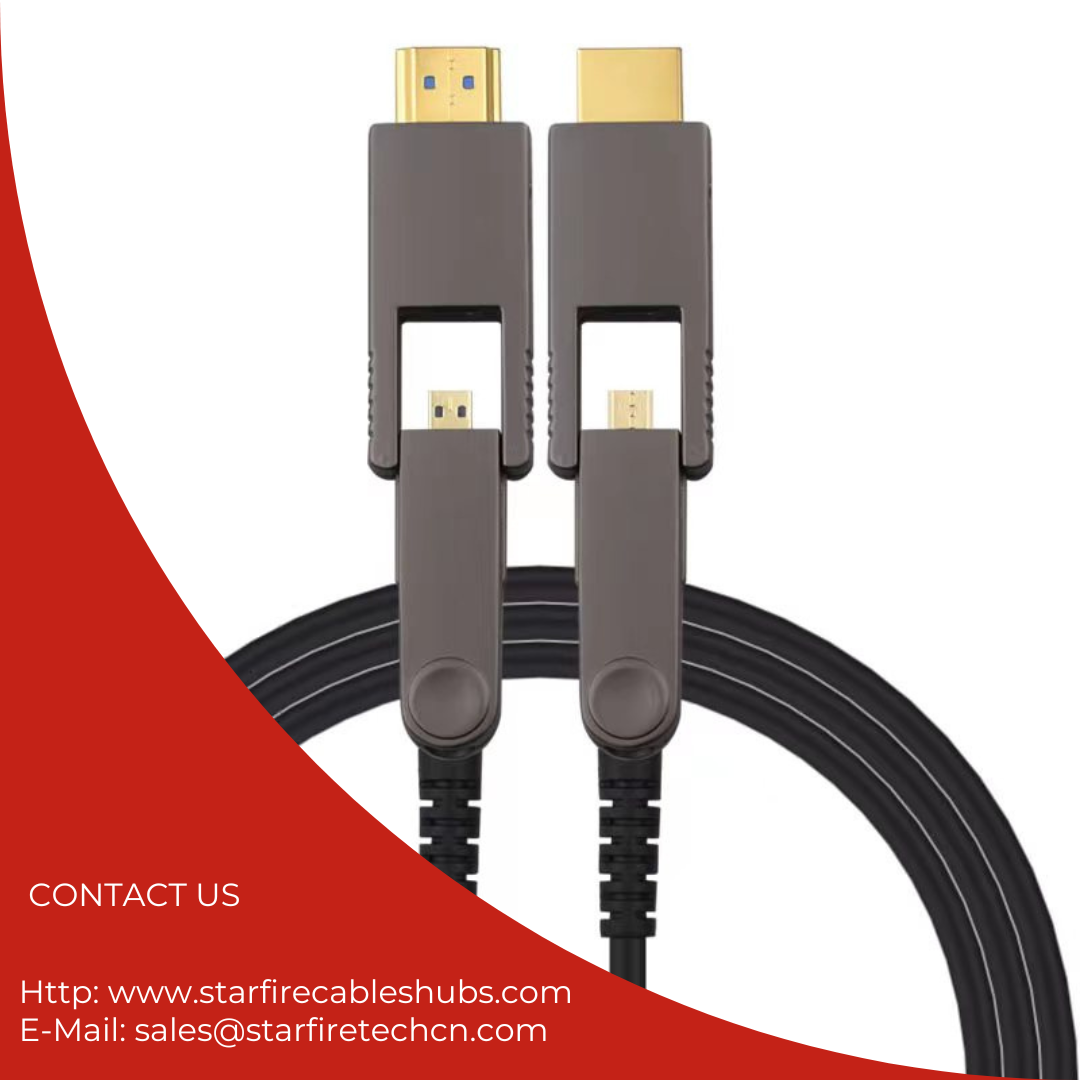
When I evaluate an HDMI Active Optical Cable manufacturer, I look beyond the specifications printed on the packaging.
A cable labeled 4K or 8K may look impressive. However, the label alone does not prove that the product will work reliably in a real installation.
I want to understand how the manufacturer tests its cables, controls materials, and maintains quality across production batches.
These questions matter to cable brands, distributors, and professional AV integrators.
A single defective cable can interrupt an important meeting. A batch of defective cables can create product returns, installation delays, and long-term customer dissatisfaction.
At STAR FIRE TECH, we have worked in connectivity solutions manufacturing since 2006. Our experience includes professional AV cables, optical fiber communication, and industrial connectivity products.
I believe that HDMI AOC cable quality should be evaluated through actual performance and repeatable manufacturing processes.
Buyers need more than a successful sample demonstration. They need evidence that the approved product can be manufactured consistently.
So, which tests and quality control practices should buyers review before committing to a bulk order?
1. What Performance Tests Should HDMI AOC Cables Pass Before Bulk Production?
A cable may display a clear picture during a short test but fail during extended operation. Without proper performance verification, buyers risk receiving cables that cannot meet real project requirements.
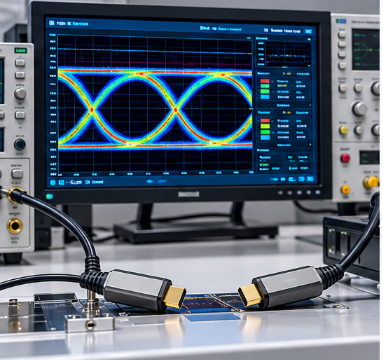
HDMI AOC cables should be tested for supported resolution, refresh rate, bandwidth, signal stability, and device compatibility. Buyers should also verify HDCP, EDID communication, power requirements, and performance at the intended cable length. Test results should match the exact product configuration being ordered.
Why Is Signal Performance Testing Essential?
I consider signal performance the first priority when evaluating HDMI AOC cable quality.
Unlike traditional passive copper HDMI cables, HDMI Active Optical Cables use optical fiber and active electronic components to transmit high-speed HDMI signals.
The source connector converts high-speed electrical signals into optical signals.
The optical signals travel through the cable and are converted back into electrical signals at the display end.
This design helps support longer transmission distances. However, the electronic and optical components must work together correctly.
If the signal conversion process becomes unstable, users may experience:
For professional AV integrators, these failures can lead to additional troubleshooting, installation delays, and maintenance costs.
Which HDMI AOC Performance Tests Matter Most?
Test Item
What I Check
Why It Matters
Resolution Testing
4K@60Hz or supported 8K@60Hz formats
Confirms video format support
Bandwidth Verification
Required HDMI data rate
Checks high-speed transmission capability
Signal Stability
Continuous video transmission
Helps detect intermittent failures
HDCP Testing
Content protection compatibility
Reduces protected-content display problems
EDID Testing
Display information communication
Supports correct video format selection
Device Compatibility
Sources, switchers, and displays
Helps identify equipment compatibility issues
Power Verification
Active cable power requirements
Helps prevent power-related failures
I recommend testing cables at the actual lengths that buyers plan to purchase.
A 10-meter HDMI AOC cable and a 100-meter HDMI AOC cable should not be treated as identical products simply because they support the same advertised resolution.
Each length should be evaluated against its intended performance requirements.
Why Should Buyers Verify More Than the Resolution Label?
I often see buyers focus on whether a cable supports 4K or 8K.
However, resolution alone does not define the full signal requirement.
Refresh rate, color depth, chroma sampling, and compression can all affect bandwidth requirements.
For example, two systems displaying 4K video may require different transmission capabilities.
I recommend asking manufacturers to identify the supported video formats and test conditions.
At STAR FIRE TECH, our HDMI 2.0 Hybrid AOC solutions support 4K@60Hz applications.
Our HDMI 2.1 Hybrid AOC solutions are designed for high-bandwidth applications, including supported 8K@60Hz formats.
I believe that clear technical specifications help buyers avoid misunderstandings before production begins.
2. What Reliability Tests Should Buyers Request for HDMI AOC Cables?
An HDMI AOC cable may pass initial testing but develop problems after installation. Temperature changes, vibration, and mechanical stress can expose weaknesses that basic video testing does not reveal.
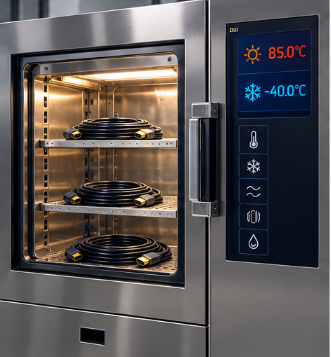
Buyers should review HDMI AOC reliability tests such as high- and low-temperature storage, thermal shock, vibration, mechanical inspection, and relevant corrosion testing. These tests help assess product durability and identify potential weaknesses before bulk production, but they should be evaluated alongside functional performance tests.
How Do Environmental Conditions Affect HDMI AOC Cables?
I believe that cable reliability should always be evaluated according to the final application.
An HDMI AOC cable installed in a conference room may face different conditions from one used in a stadium, industrial facility, or mobile AV system.
For example, a cable installed above a ceiling may experience temperature changes.
A cable used in a mobile presentation system may be repeatedly handled, connected, and transported.
These conditions can affect connector housings, cable jackets, internal components, and mechanical connections.
A cable that passes a short video test may still develop problems after repeated exposure to environmental stress.
This is why I recommend reviewing environmental reliability testing before approving a supplier.
Which Reliability Tests Should Buyers Review?
Reliability Test
Main Purpose
Potential Risk Identified
High-Temperature Storage
Evaluate exposure to elevated temperatures
Material or component degradation
Low-Temperature Storage
Evaluate exposure to low temperatures
Jacket or assembly weaknesses
Thermal Shock
Evaluate rapid temperature changes
Stress on materials and connections
Vibration Testing
Evaluate mechanical vibration resistance
Loose components or connections
Salt Spray Testing
Evaluate corrosion resistance of relevant metal parts
Surface corrosion
Visual Inspection
Examine cable jackets and connectors
Visible assembly defects
I recommend asking the manufacturer for the actual test conditions.
A test name alone does not tell buyers enough.
For example, a high-temperature test report should identify the temperature, exposure duration, acceptance criteria, and test results.
The same principle applies to vibration and thermal shock testing.
How Does Material Selection Affect Cable Reliability?
I believe that reliable HDMI AOC manufacturing begins with suitable materials.
The cable's optical components, electronic components, reinforcement materials, and connector housings all contribute to product performance.
At STAR FIRE TECH, our premium Hybrid AOC solutions use selected materials and components, including:
These material choices support our approach to product development.
However, I do not believe that premium materials alone guarantee a reliable finished cable.
Correct assembly, process control, and product testing are equally important.
I recommend that buyers verify material specifications and applicable compliance documentation rather than relying only on marketing descriptions.
For bulk orders, consistency matters.
A manufacturer should be able to maintain approved materials and production requirements from sample development through final shipment.
3. How Can Buyers Evaluate an HDMI AOC Manufacturer's Quality Control System?
A supplier may deliver excellent samples but struggle to maintain the same quality during mass production. Without effective process control, buyers may face inconsistent performance and unexpected product returns.
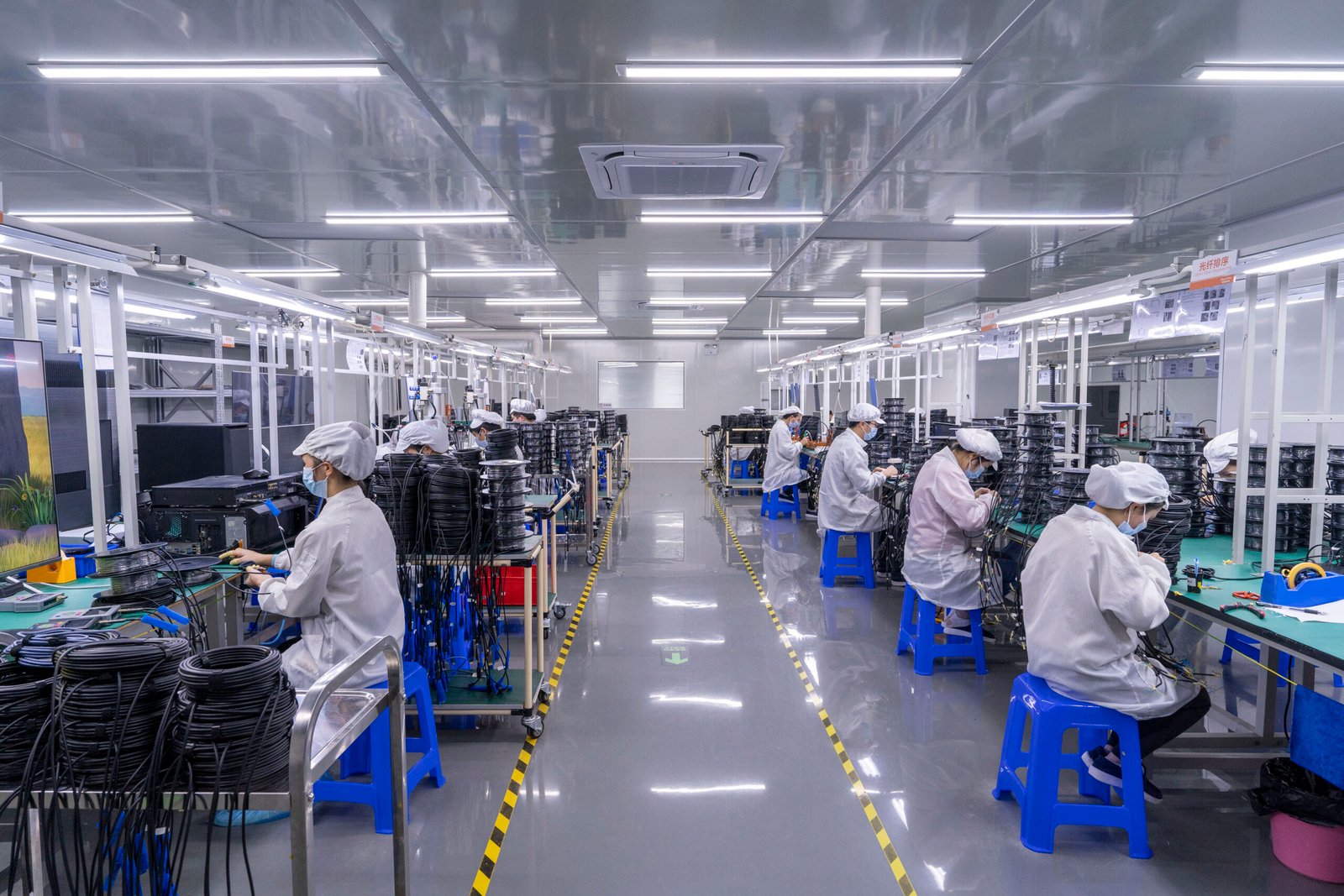
Buyers should evaluate an HDMI AOC manufacturer's incoming material inspection, in-process quality control, outgoing inspection, testing documentation, and production traceability. They should also confirm how approved samples are controlled during mass production and how the factory handles products that fail inspection.
Why Is Manufacturing Consistency Important?
I consider manufacturing consistency one of the most important factors in supplier selection.
A sample may perform well because it receives extra attention during development.
However, the real challenge begins when the manufacturer produces hundreds or thousands of cables.
Small changes in assembly, connector construction, optical components, or cable materials can affect the final product.
For this reason, I recommend evaluating the factory's quality management process before approving bulk production.
At STAR FIRE TECH, we use incoming quality control, in-process quality control, and outgoing quality control as part of our manufacturing management.
Our company maintains ISO and BSCI certifications.
We are also associated with HDMI, VESA/DisplayPort, and USB-IF industry programs.
I believe that quality management systems and industry participation support responsible manufacturing practices.
However, I do not treat these credentials as substitutes for product-specific testing or certification.
What Quality Control Stages Should Buyers Check?
Quality Control Stage
Main Focus
Buyer Benefit
IQC – Incoming Quality Control
Raw materials and components
Helps prevent unsuitable materials from entering production
IPQC – In-Process Quality Control
Assembly and manufacturing processes
Helps detect problems during production
OQC – Outgoing Quality Control
Finished product inspection
Helps reduce defective shipments
Functional Testing
Video transmission and product operation
Confirms required functions
Documentation Control
Specifications, drawings, and inspection records
Supports traceability and consistency
I recommend asking which inspections are performed on every cable and which use sampling methods.
These approaches serve different purposes.
A factory should be able to explain its inspection procedures and acceptance criteria.
What Documents Should Buyers Request Before Bulk Orders?
I recommend requesting the following documents before production approval:
For HDMI certification, I recommend verifying the exact cable model and applicable certification program.
A manufacturer's industry membership does not automatically mean that every product has been certified.
At STAR FIRE TECH, we have HDMI certification documentation for selected HDMI 2.0 copper cable lengths from 0.5m to 7.5m and selected HDMI 2.1 copper cable lengths from 0.5m to 5m.
I distinguish these copper cable certifications from our HDMI AOC product claims.
Buyers should request the relevant documentation for the specific AOC model they intend to purchase.
How Can Sample Evaluation Reduce Purchasing Risks?
I recommend testing samples in the actual application environment before placing a large order.
For example, an AV integrator may need to connect a media player to a commercial display through an HDMI matrix switch.
A cable that works with a direct laptop-to-monitor connection may not perform the same way in a complex AV system.
Testing the complete signal chain can help identify compatibility problems before installation.
At STAR FIRE TECH, we support customized premium HDMI AOC samples, with eligible configurations available from a minimum order quantity of one piece.
Selected AOC products can also be supplied within approximately 3–7 days, depending on specifications, customization, and production availability.
I believe that flexible sample evaluation gives buyers a practical way to compare suppliers and confirm product performance before committing to bulk production.
Conclusion
I believe reliable HDMI AOC sourcing requires verified performance, environmental testing, controlled manufacturing, and approved samples. These steps help buyers reduce quality risks and make more confident purchasing decisions.
Learn more: https://www.starfirecableshubs.com