Table Of Content
Table Of Content
 Reliable Communication for Energy Systems Renewable energy systems depend on reliable communication. Solar farms, wind power sites, energy storage systems, substations, and smart grid infrastructure all require data collection, remote monitoring, control signals, and video surveillance. For customers in the energy sector, network reliability directly affects monitoring accuracy, maintenance response, and operational efficiency.
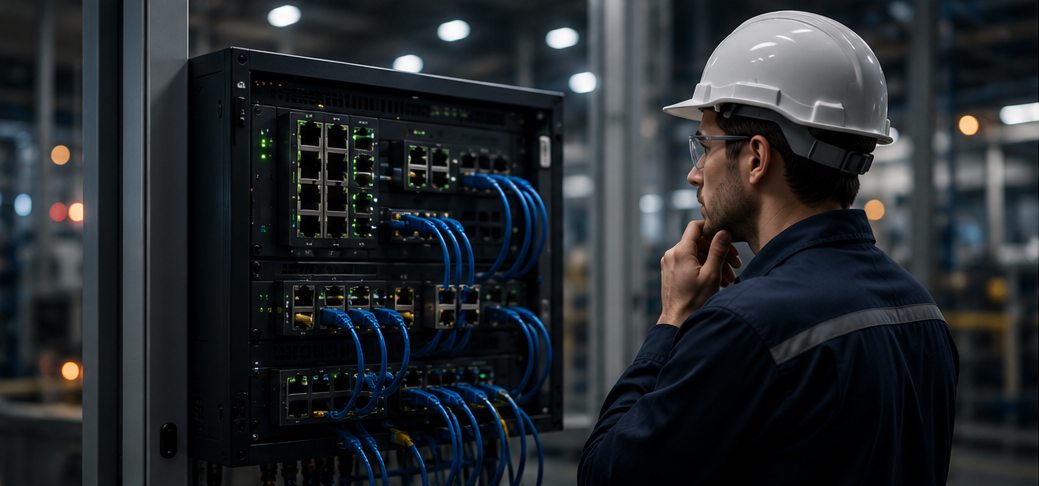
Harsh Conditions in Renewable Energy Sites Renewable energy applications are often installed in demanding environments. Equipment may face high temperature, low temperature, humidity, dust, vibration, lightning risk, and long-distance communication needs. A switch that works only in office conditions may not survive long-term outdoor or cabinet deployment. Rugged industrial switches are designed to support more stable operation in these conditions.
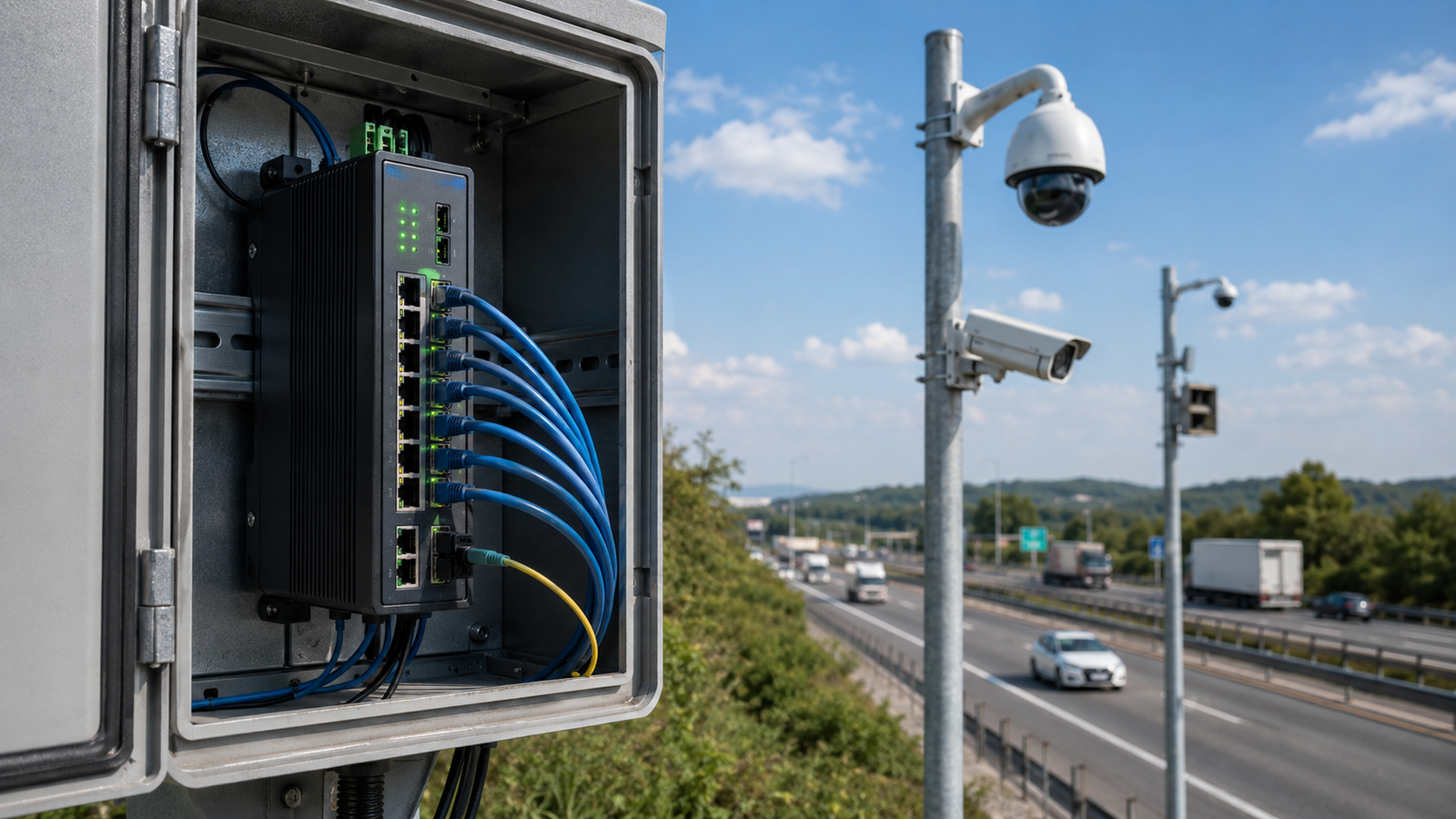
What Industrial Switches Connect in Energy Projects Industrial Ethernet switches may connect solar inverters, monitoring units, weather stations, meters, IP cameras, PLCs, communication gateways, and remote data collection devices. In wind farms, switches may be installed inside turbines or remote cabinets. In solar projects, they may support data aggregation across large outdoor areas. In smart grid applications, they can help support control, monitoring, and network segmentation. Key Requirement: Wide Temperature and Rugged Housing One key requirement is wide temperature operation. Energy sites are often far from controlled indoor environments. High heat, cold weather, and cabinet temperature changes can affect equipment reliability. Industrial switches with wide temperature range, metal housing, and proper installation design can help reduce failure risk and extend service stability.
Fiber Uplinks for Distance and EMI Resistance Solar and wind sites can cover large areas. Fiber uplinks are often used to connect remote cabinets, field stations, and control centers. Fiber also provides EMI resistance, which is valuable near power equipment. For energy customers, fiber uplinks can help support long-distance transmission and more reliable backbone communication.  Managed Features for Smart Energy Networks For smart grid and energy storage applications, managed switches can support VLAN, QoS, monitoring, redundancy, and remote configuration. These features help customers separate traffic, improve visibility, reduce troubleshooting time, and support scalable network architecture. PoE may also be useful for powering IP cameras or wireless devices used in remote monitoring systems.
STAR FIRE TECH Perspective At STAR FIRE TECH, we support industrial switch selection for renewable energy applications by focusing on temperature, fiber distance, redundancy, PoE demand, EMC protection, dual power input, and long-term service stability. For energy customers, the goal is not just device connectivity. The goal is stable data transmission, fewer field failures, lower maintenance cost, and better visibility into system performance.
FAQ Q: Why do renewable energy sites need industrial switches? A: They need rugged communication equipment for monitoring, control, video surveillance, and data collection in harsh environments. Q: Why is fiber useful in solar and wind applications? A: Fiber supports long-distance communication and is resistant to electromagnetic interference. Q: Are managed switches useful for energy projects? A: Yes. They support traffic control, remote management, redundancy, alarms, and better diagnostics. Q: Can PoE switches be used in energy sites? A: Yes. PoE can power IP cameras, wireless access points, and other network devices for remote monitoring. Q: What features matter most for energy applications? A: Wide temperature range, fiber uplinks, redundancy, dual power input, EMC protection, and rugged housing.
#RenewableEnergy #SolarPower #WindFarm #SmartGrid #IndustrialEthernet #EnergyMonitoring #FiberNetwork #IndustrialSwitch #RemoteMonitoring #STARFIRETECH