Table Of Content
Table Of Content
When Long HDMI Runs Start Creating Hidden Project Risks
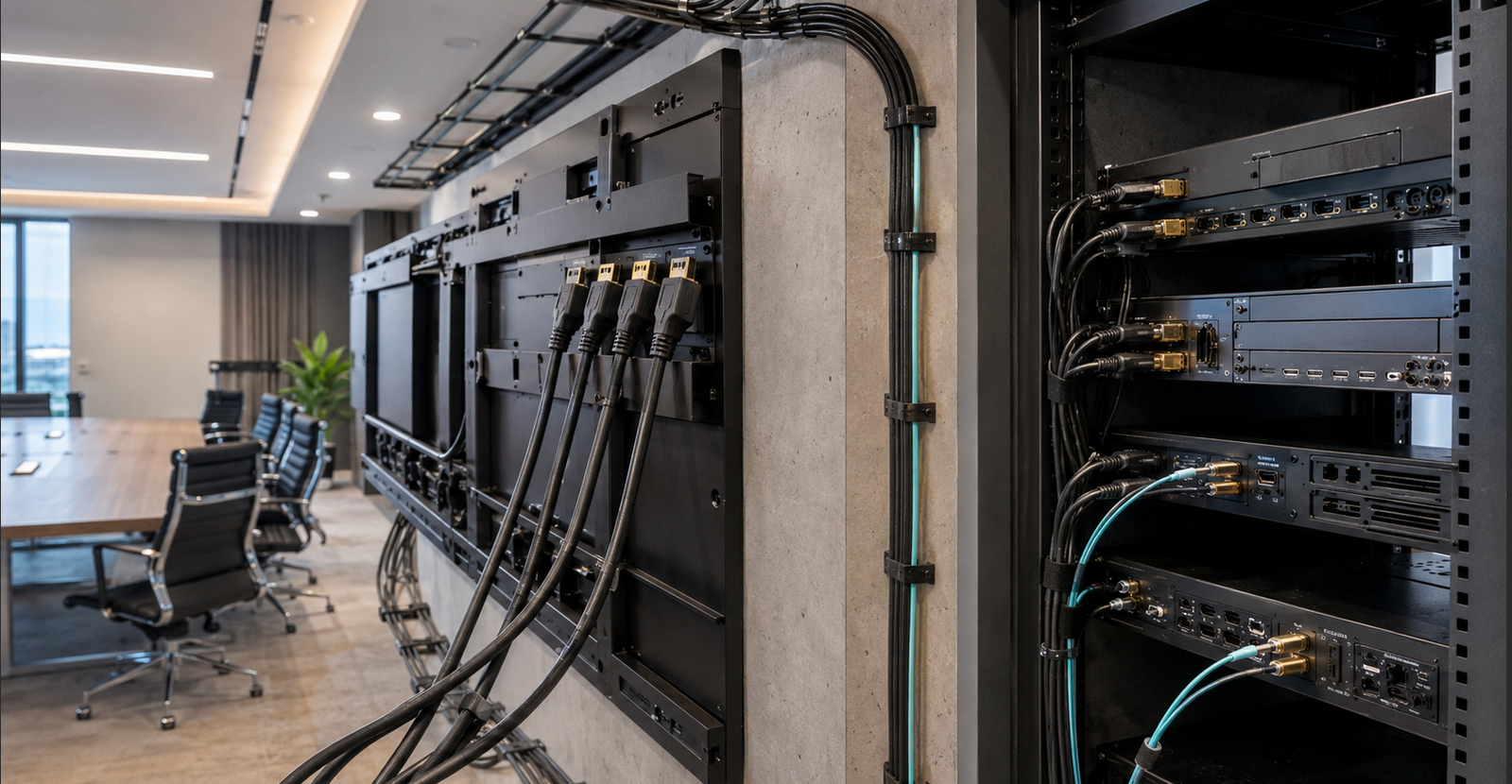
In many AV projects, the cable is often selected after the display, media player, matrix switcher, or control system has already been confirmed. At first, this may seem reasonable. But for long-distance video transmission, the cable can become one of the biggest hidden risks in the entire project.
Customers may not notice the problem during early planning. The issue usually appears during installation or final testing: no signal, screen flickering, unstable image, limited resolution, delayed troubleshooting, or repeated cable replacement.
For system integrators, this is more than a technical problem. It can affect installation time, project handover, customer satisfaction, and total project cost.
Why Long HDMI Copper Runs Become Difficult
Traditional copper HDMI cables can work well in short-distance applications. But as the transmission distance increases, signal attenuation becomes harder to control. High-resolution formats also require higher bandwidth, which makes the system more sensitive to cable quality, shielding, and installation conditions.
In real projects, long HDMI copper cables may create several challenges:
- Signal loss over distance
- Thicker and heavier cable structure
- Difficult cable pulling through conduits
- Higher stress on HDMI connectors
- More risk of damage during installation
- Unstable performance after bending or routing
- Limited flexibility for future layout changes
For customers, the real pain point is uncertainty. The cable may pass one test, but still create problems after the system is installed behind walls, ceilings, displays, or racks.
Why Hybrid AOC Can Reduce These Risks
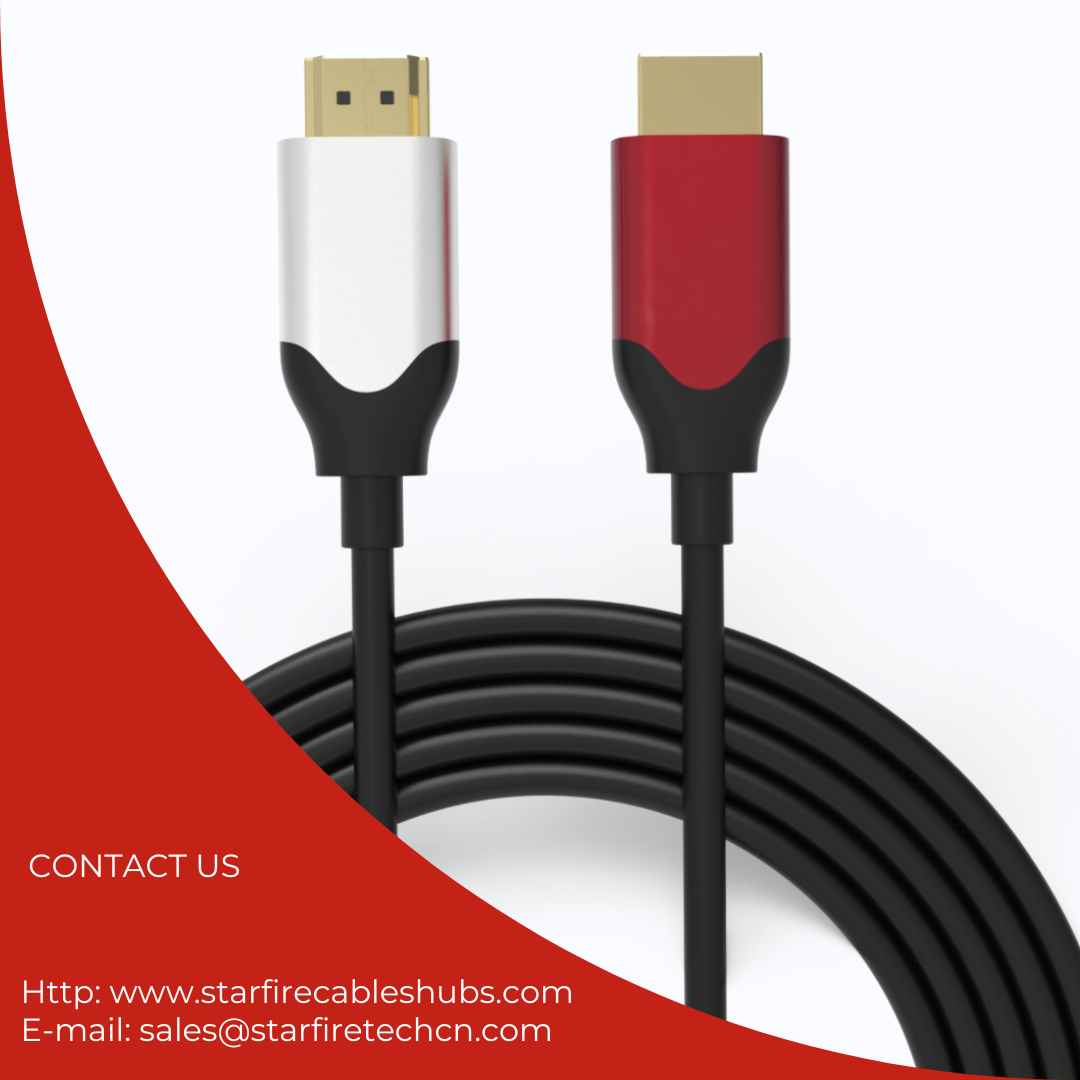
Hybrid AOC cables use optical fiber for high-speed signal transmission and copper conductors for required electrical functions. This structure helps reduce signal attenuation over longer distances while keeping the cable lighter and easier to install than many long copper alternatives.
For AV projects, Hybrid AOC can help customers achieve:
- More stable long-distance video transmission
- Lower risk of signal degradation
- Easier installation in tight spaces
- Less mechanical stress on connectors
- Cleaner routing behind displays and racks
- Better support for high-resolution AV systems
The value is not only picture quality. The bigger value is reducing project risk before it becomes a jobsite problem.
Where Customers Benefit Most
Hybrid AOC is especially useful in applications where long-distance signal reliability and installation efficiency both matter.
Typical applications include:
- Corporate meeting rooms
- Training centers
- Digital signage systems
- Control rooms
- Medical display systems
- Education AV projects
- Broadcast rooms
- Large venue display systems
- Retail display networks
In these environments, customers usually need stable video performance, clean installation, and fewer service calls after deployment.
What Customers Should Check Before Choosing Hybrid AOC
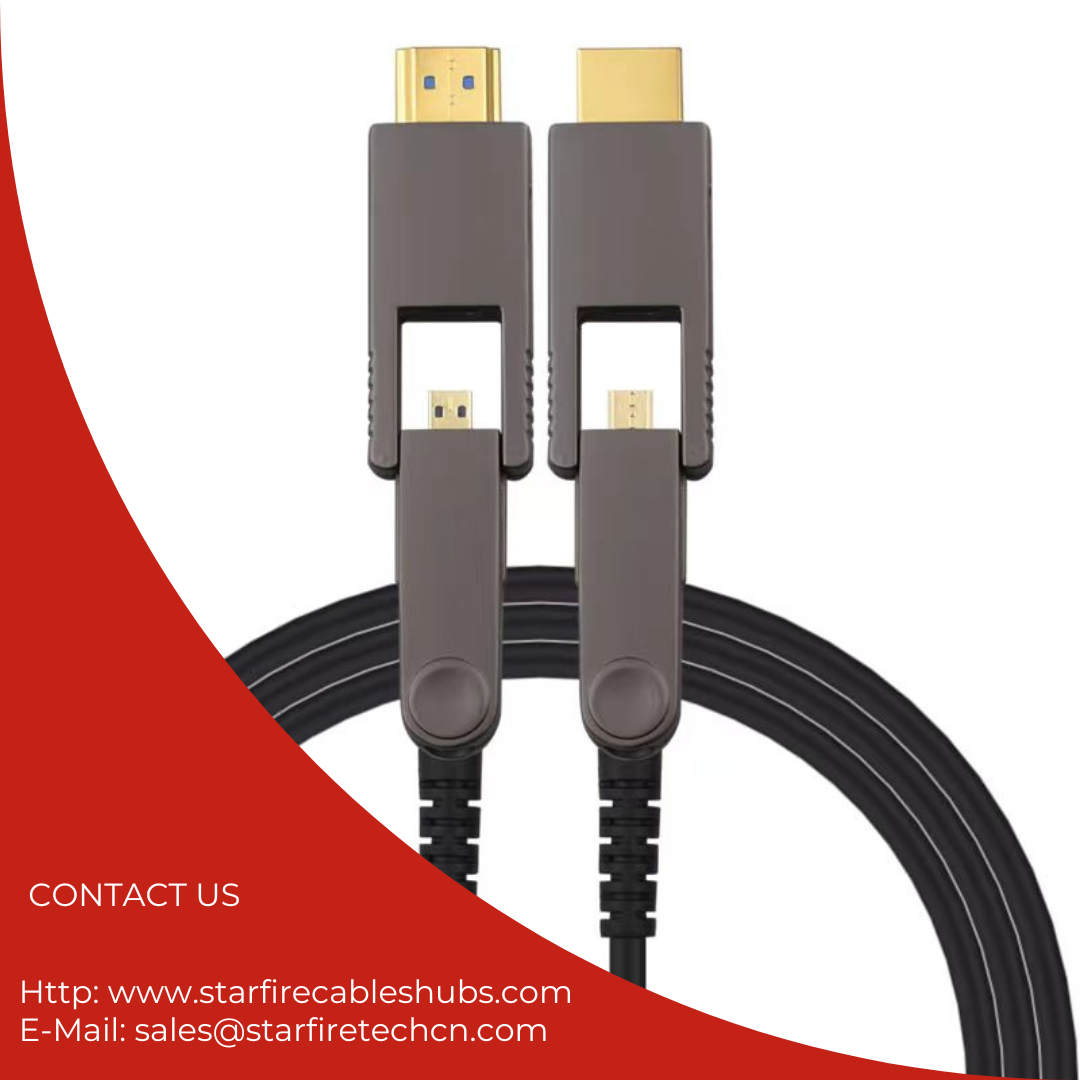
Before selecting a Hybrid AOC cable, customers should confirm the required resolution, refresh rate, bandwidth, transmission distance, connector type, installation path, cable jacket, and bend requirement.
It is also important to consider whether the cable will be pulled through conduit, installed behind a display, routed inside an AV rack, or used in a fixed installation. These details affect the best cable structure and length choice.
For project-based customers, it is better to evaluate the cable at the design stage instead of treating it as a final accessory.
STAR FIRE TECH Perspective
At STAR FIRE TECH, we help customers choose connectivity solutions based on real project conditions, not only product specifications.
Our Hybrid AOC solutions are designed for long-distance, high-resolution AV transmission, with options for HDMI, DisplayPort, and USB-C related applications. We can support OEM and ODM requirements, different lengths, connector structures, jacket materials, and project-based customization.
For customers, the goal is simple: fewer installation surprises, more stable signal performance, and better long-term reliability.
FAQ
Q: Why does long-distance HDMI transmission become unstable?
A: Long copper HDMI runs may experience signal attenuation, connector stress, installation damage, and bandwidth limitations, especially at higher resolutions.
Q: When should customers consider Hybrid AOC?
A: Customers should consider Hybrid AOC when the project requires long-distance transmission, high-resolution video, easier routing, and stable installation performance.
Q: Is Hybrid AOC only useful for very long cables?
A: No. It can also be valuable when cable weight, bend radius, installation space, or connector stress is a concern.
#HybridAOC #HDMIAOC #LongDistanceHDMI #ProAV #AVInstallation #DigitalSignage #ControlRoomAV #MeetingRoomAV #HighResolutionVideo #STARFIRETECH