Table Of Content
Table Of Content
A Professional AV Engineer's Guide to Signal Integrity, HDMI Reliability, and Real-World System Performance
By a Professional AV Connectivity Expert
Walk into almost any AV project today and you'll hear a familiar statement:
"We're using an 8K HDMI cable, so bandwidth shouldn't be the problem."
Yet installers continue encountering intermittent black screens, signal dropouts, flashing displays, HDCP handshake failures, or unstable video after installation.
Why? 
Because "8K" is only a resolution specification—not a guarantee of transmission quality.
After more than two decades working with HDMI connectivity for professional AV applications, I've learned that successful system performance depends far more on engineering than on the resolution printed on a package.
In mission-critical environments—including control rooms, digital signage networks, broadcast studios, healthcare imaging systems, conference rooms, simulation centers, and command-and-control facilities—the difference between a reliable installation and an expensive service call often comes down to signal integrity.
This article explores the real engineering factors behind HDMI reliability and explains why professional AV integrators should evaluate much more than bandwidth specifications.
Understanding the Difference Between Resolution and Transmission Quality
Many buyers assume that an HDMI cable labeled 8K automatically delivers reliable performance.
In reality, HDMI certification only verifies that a product can satisfy defined compliance requirements under specified conditions.
Actual field installations introduce variables that laboratory testing cannot fully reproduce.
Professional AV systems commonly involve: Long cable pathways Equipment from multiple manufacturers Matrix switchers AV over IP systems Extenders Wall plates Patch panels Active repeaters Electromagnetic interference Cable trays shared with power wiring
Every additional connection introduces insertion loss, impedance discontinuities, reflections, and timing uncertainty.
The cable becomes only one component in an entire signal ecosystem.
Why Black Screens Occur Even When Everything Is "8K"
A black screen rarely has a single cause.
Most failures result from multiple small transmission issues accumulating until the receiver can no longer recover the digital signal.
Common symptoms include: Intermittent black screen Random signal loss Sparkles Image flickering HDCP authentication failure Display not detected EDID reading failure No signal after power cycling Long synchronization time
Many installers mistakenly replace displays or source devices before investigating the transmission channel itself.
The Five Engineering Factors That Determine HDMI Reliability
- Signal Integrity
Signal Integrity (SI) is the foundation of high-speed digital communication.
An HDMI 2.1 cable transporting 48Gbps data carries extremely fast transitions where even minor discontinuities become significant.
Poor signal integrity can result from:
Excessive insertion loss Return loss Crosstalk Reflection Jitter Attenuation
When the eye diagram begins to close, the receiver has less timing margin.
Eventually, synchronization fails.
- Controlled Impedance
HDMI differential pairs require tightly controlled impedance.
If impedance fluctuates throughout the cable because of inconsistent manufacturing, reflections occur.
Reflection causes:
Eye closure Increased jitter Reduced timing margin Higher bit error rate
Maintaining impedance consistency requires precise conductor spacing, insulation uniformity, and connector manufacturing tolerances.
- Shielding Performance
Professional AV environments are increasingly noisy.
Nearby equipment may include:
Industrial motors Variable-frequency drives LED controllers UPS systems Network switches Wireless transmitters Power distribution units
Without effective shielding, electromagnetic interference can corrupt high-speed TMDS or FRL signals.
High-quality shielding typically combines multiple protection layers, such as:
Aluminum foil Braided copper shielding Ground continuity Optimized connector grounding
Proper shielding reduces EMI susceptibility while minimizing signal radiation.
- Conductor Quality
Not all copper is created equal.
Conductor characteristics influence:
Resistance Skin effect performance High-frequency attenuation Long-distance transmission stability
Poor conductor consistency increases signal loss and reduces system margin.
Professional-grade cables generally employ higher-purity copper with tighter manufacturing tolerances.
- Connector Manufacturing Precision
Many HDMI failures originate at the connector rather than within the cable itself.
Critical factors include:
Contact resistance Gold plating consistency Mechanical durability Solder quality Strain relief design Ground continuity
A connector may pass initial testing yet degrade after repeated insertion cycles if manufacturing quality is inconsistent.
Why Laboratory Testing Is Not Enough
Many products successfully pass compliance testing yet experience failures in field installations.
Laboratory environments cannot fully reproduce: Continuous daily operation Thermal cycling Mechanical vibration Frequent reconnection Mixed-brand system integration Long-term aging
Professional AV deployments require validation under real operating conditions.
The Importance of TDR Testing
One valuable engineering tool is Time Domain Reflectometry (TDR).
TDR helps engineers identify impedance discontinuities throughout the cable.
Rather than simply determining whether a cable works, TDR reveals: Reflection locations Connector discontinuities Manufacturing inconsistencies Impedance variation Assembly defects
For high-bandwidth HDMI products, TDR analysis provides insight that ordinary continuity testing cannot.
Beyond TDR: Comprehensive Validation for Professional AV
Reliable HDMI performance depends on a broader verification process that may include: Signal integrity analysis Eye diagram evaluation High-frequency insertion-loss characterization Return-loss measurement EMC and EMI evaluation Mechanical durability testing Connector mating cycle verification Environmental reliability testing Functional interoperability across multiple source and display brands
The objective is not merely to pass a laboratory benchmark, but to ensure dependable operation throughout the product's service life.
Choosing HDMI Cables for Professional AV Projects
When evaluating an HDMI cable, consider questions beyond the resolution printed on the packaging:
Has the cable been verified for stable high-bandwidth transmission? Is impedance consistently controlled? Has shielding been engineered for electrically noisy environments? Are connectors manufactured with tight tolerances? Is there documented quality verification beyond basic functionality? Does the supplier understand professional AV integration rather than only consumer electronics?
The answers to these questions often have a greater impact on project success than the advertised bandwidth alone.
Why Reliability Matters
A failed HDMI connection affects far more than image quality.
It can lead to: Extended commissioning time Increased labor costs Emergency service visits Customer dissatisfaction System downtime Delayed project acceptance
For AV integrators, consultants, and system designers, selecting reliable connectivity is ultimately a risk-management decision.
About STAR FIRE TECH
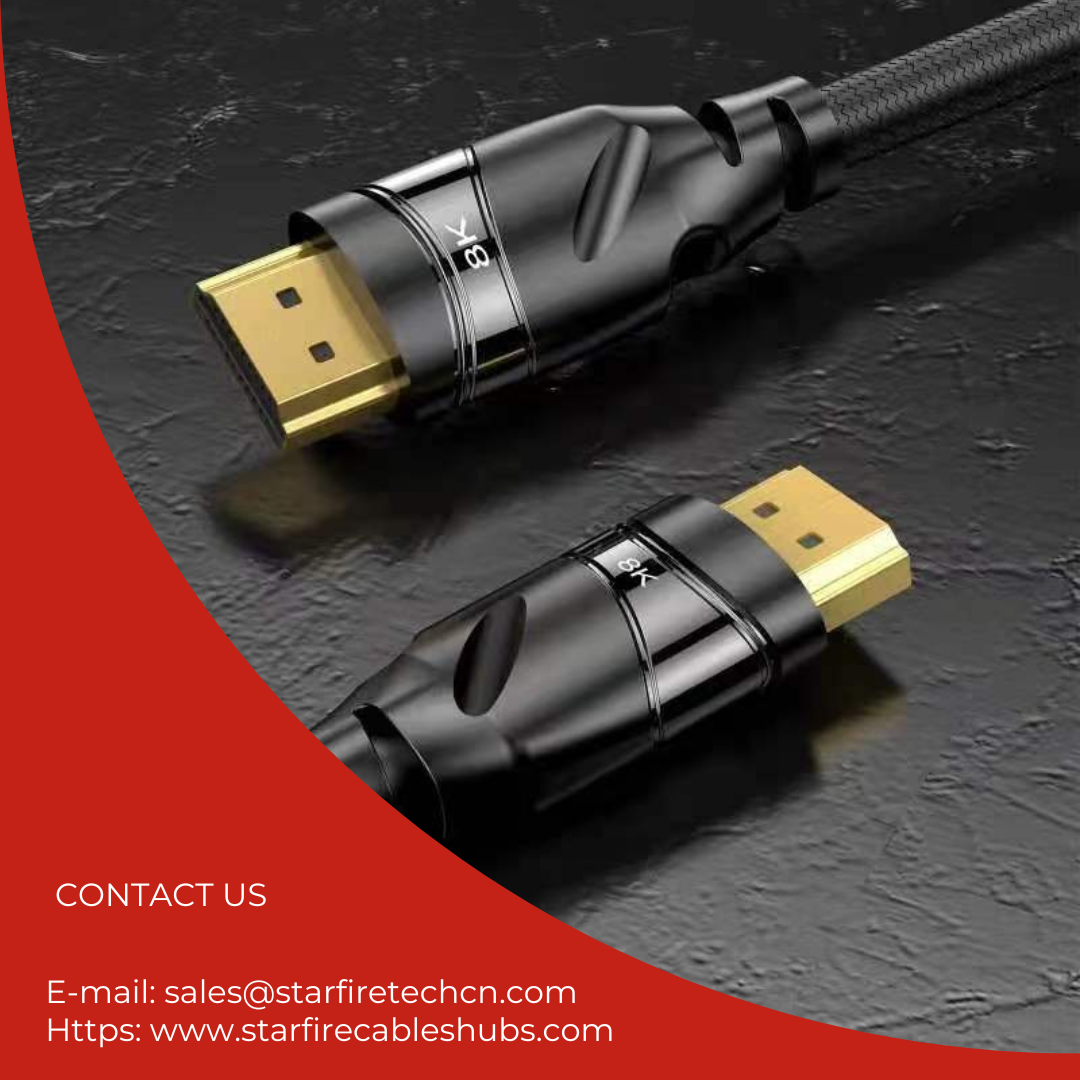
At STAR FIRE TECH, we specialize in high-performance connectivity solutions for Professional AV, including certified HDMI, DisplayPort, USB, USB-C, Hybrid AOC, and custom cable assemblies.
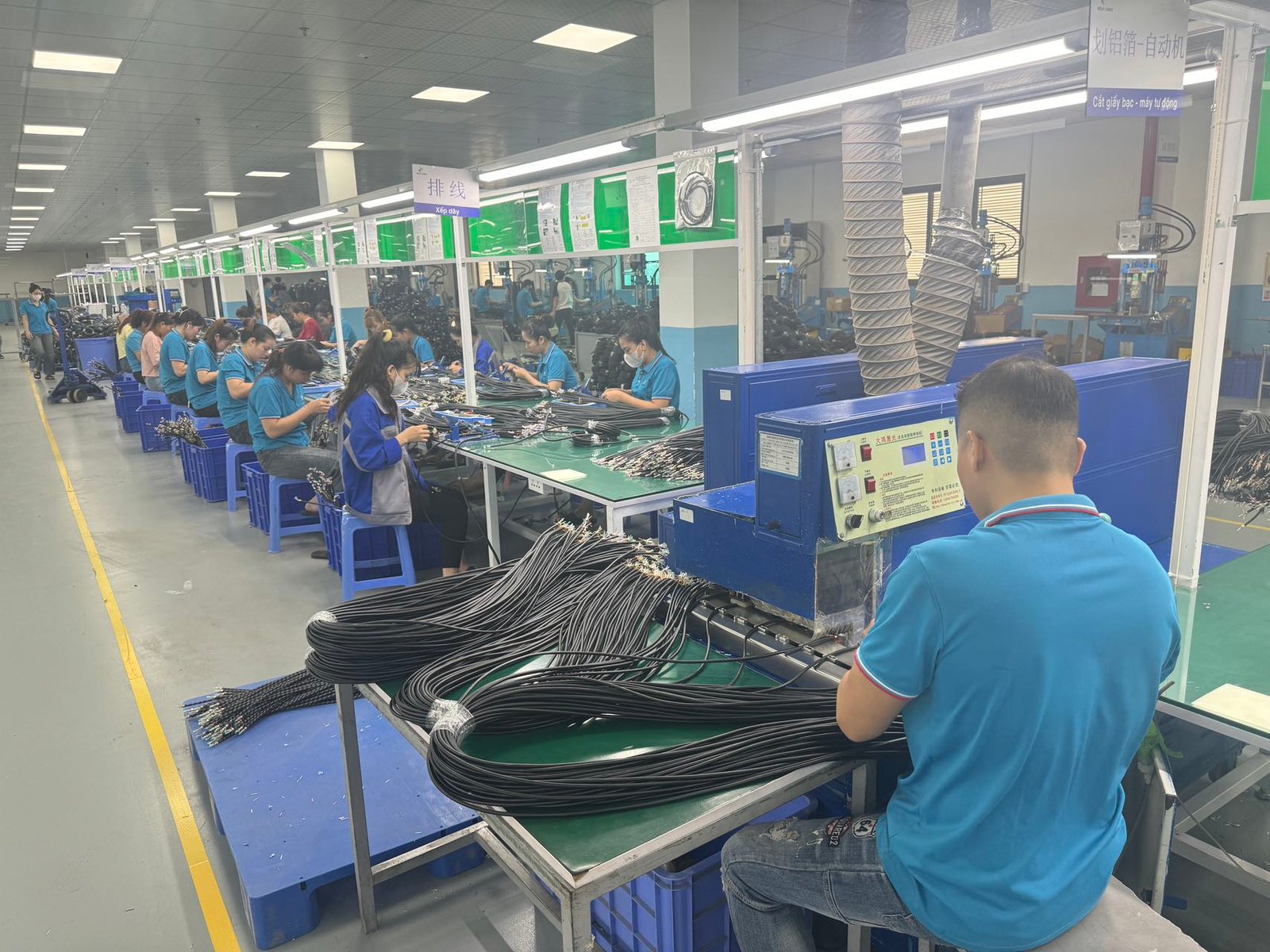
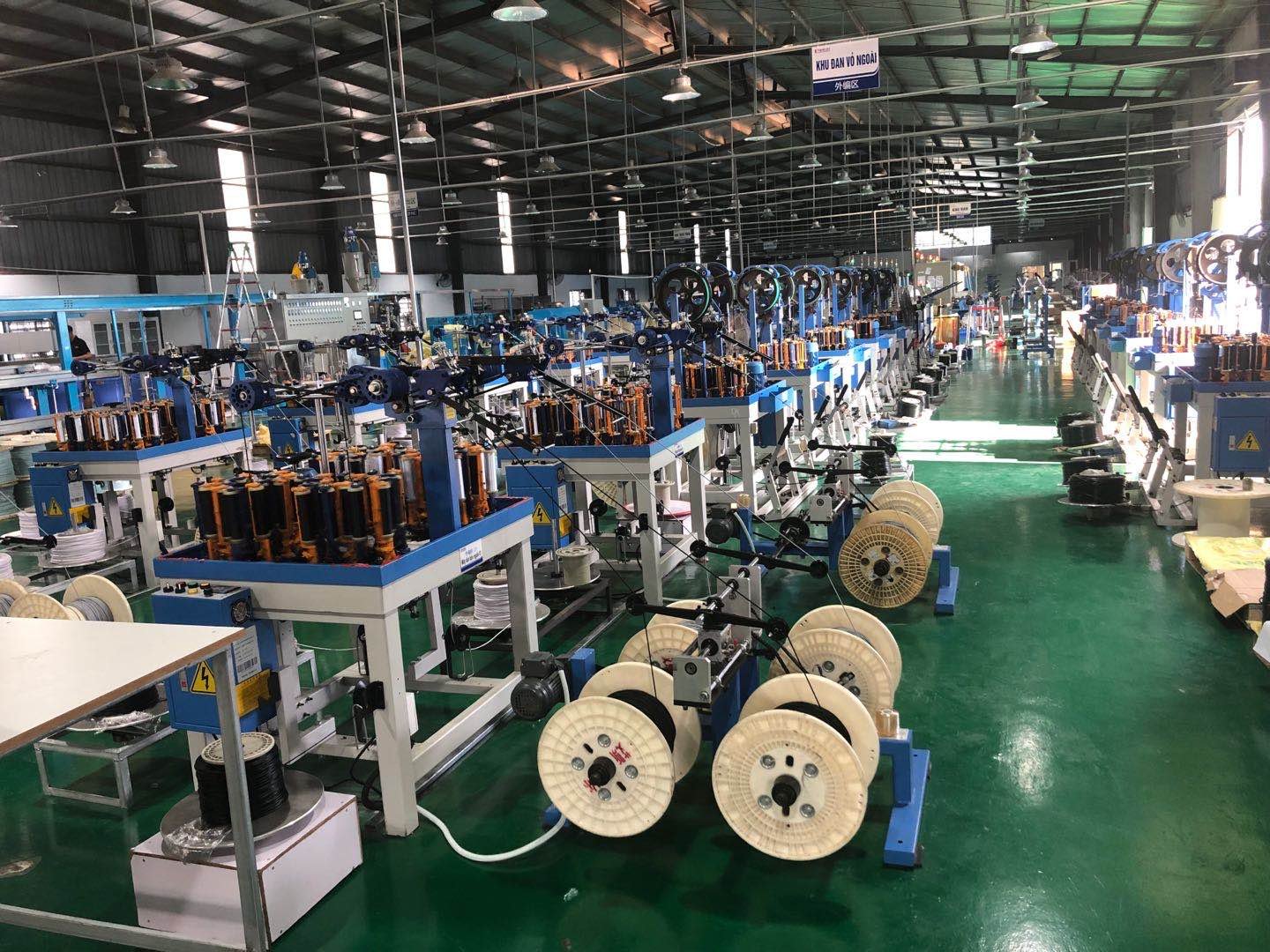
Our engineering and quality processes emphasize signal integrity, controlled impedance, transmission stability, and comprehensive verification—including TDR analysis—to support demanding applications such as conference rooms, control centers, digital signage, healthcare, education, and commercial AV systems.
We believe a professional cable should do more than transmit data.
It should contribute to the long-term reliability of the entire AV system.
Learn more: www.starfirecableshubs.com
#HDMI 2.1 #8K HDMI Cable #HDMI Black Screen #Signal Integrity #Time Domain Reflectometry (TDR) #Controlled Impedance #HDMI Signal Loss #AV Integration #Commercial AV #Digital Signage #Meeting Room Technology #Control Room #Hybrid AOC #HDMI Certification #EMI Shielding #High-Speed Connectivity #DisplayPort #USB-C #Professional Connectivity Solutions