Table Of Content
Table Of Content

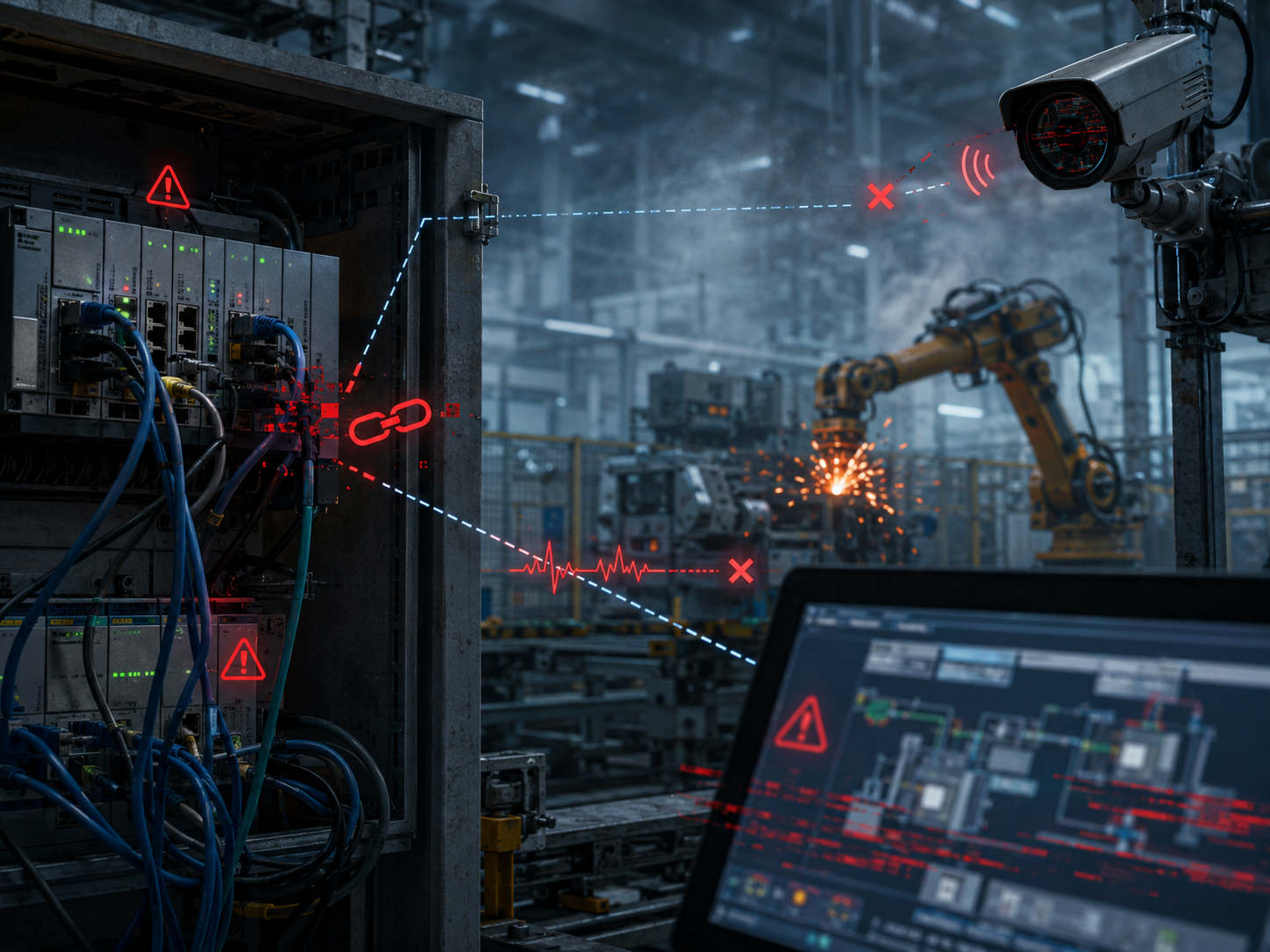
In industrial automation, network failure is not just an IT problem.
It can stop a production line, disconnect a PLC, freeze a machine vision camera, interrupt a SCADA system, or cause an IP surveillance system to lose video at the worst possible time.
Many teams only notice the problem after the system starts showing symptoms:
Packet loss. Network latency. Unstable communication. Random device disconnection. Camera image freezing. PLC communication alarms.
But in most industrial environments, these problems are not caused by one single device. They are usually caused by a combination of network design, environmental interference, cable quality, and switch performance.
EMI interference is one of the most common causes
Factories are full of electromagnetic interference.
Motors, inverters, welding equipment, high-voltage power lines, and heavy machinery can all affect Ethernet communication. If the network cable shielding is weak, or if the switch does not have strong EMC protection, signal stability may be reduced.
This can lead to:
Unstable data transmission Packet loss Communication delay Unexpected device disconnection Video signal interruption in IP camera systems
For industrial automation, EMI resistance is not optional. It is part of network reliability.
2. Office-grade switches are not designed for harsh environments
A commercial Ethernet switch may work well in an office, but industrial environments are different.
Industrial sites often have:
High temperature Low temperature Dust Vibration Voltage fluctuation Electrical noise Limited cabinet space 24/7 operation requirements
If a switch is not designed for these conditions, it may become a weak point in the entire system.
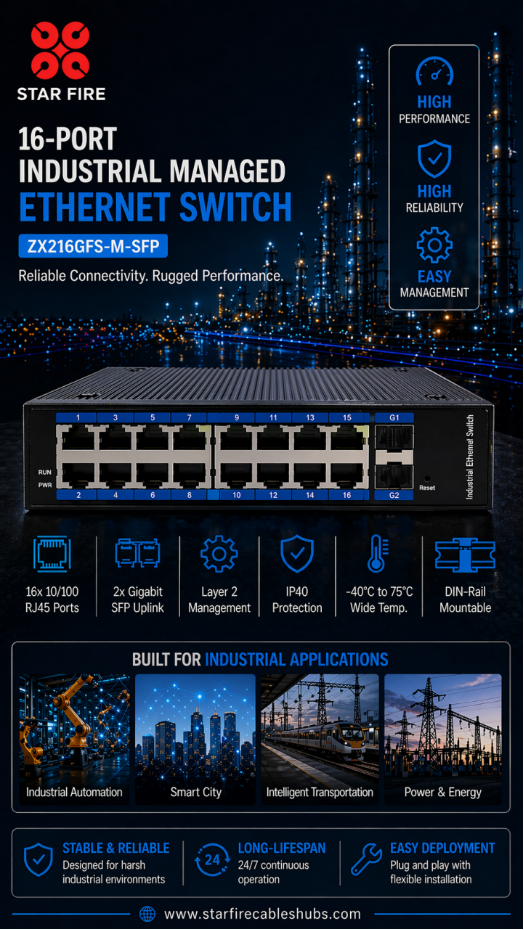
That is why industrial Ethernet switches are usually built with metal housings, fanless heat dissipation, wide temperature support, DIN-rail installation, EMC protection, and redundant power input.
3. Poor network topology can create hidden risks
Some industrial networks are built quickly during project installation. Devices are added one by one, but the network topology is not properly planned.
Common design issues include:
Too many devices connected to one unmanaged switch No VLAN segmentation No redundancy Long copper transmission distance No fiber uplink for long-distance communication No traffic priority for critical control data
In small systems, this may not create obvious problems at first.
But as more cameras, PLCs, HMIs, sensors, and controllers are added, the network becomes more sensitive to congestion and failure.
4. PoE instability can affect IP camera and edge device performance
In surveillance, transportation, smart factories, and outdoor monitoring systems, PoE is widely used because it allows one Ethernet cable to transmit both power and data.
However, unstable PoE power can cause real problems:
IP cameras reboot randomly Video drops or freezes Infrared cameras fail at night Wireless APs disconnect Access control devices become unstable
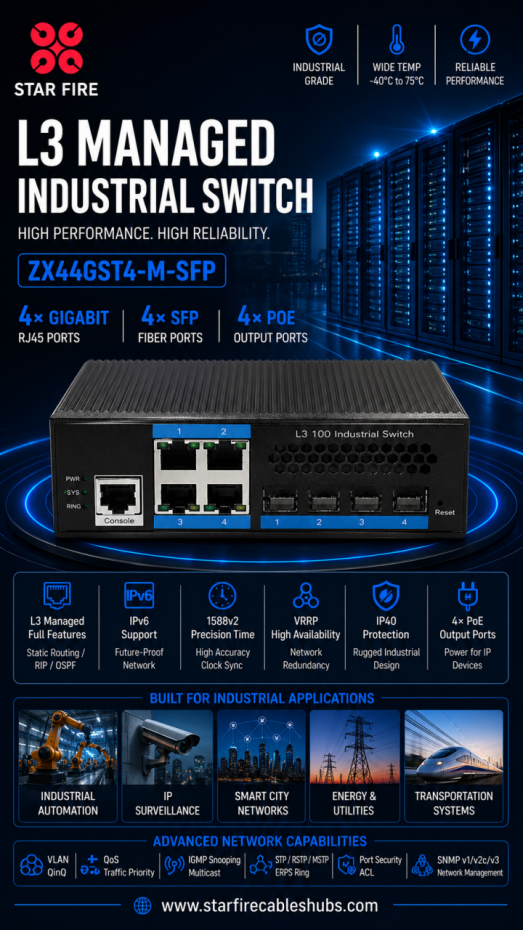
When choosing an industrial PoE switch, engineers should consider not only the number of ports, but also PoE budget, port power output, operating temperature, surge protection, and uplink design.
5. How to improve industrial network reliability

To reduce industrial Ethernet failure, the solution should be systematic.
Start by checking the environment. Is there strong EMI nearby? Is the switch installed inside a hot cabinet? Is vibration a concern?
Then check the network structure. Are there too many devices on one segment? Does the system require VLAN, QoS, or managed switch functions? Is redundancy needed?
Finally, check the hardware. A reliable industrial Ethernet switch should support stable operation under harsh conditions and provide the right port configuration for the application.
For example:
For IP camera networks, use industrial PoE switches with sufficient power budget and fiber uplinks.
For factory automation, use managed industrial switches with VLAN, QoS, redundancy, and remote management.
For long-distance or high-interference environments, consider fiber industrial switches instead of copper-only transmission.
For outdoor cabinets or roadside monitoring systems, choose rugged switches with wide temperature support and strong protection design.
FAQ
What causes packet loss in industrial Ethernet networks? Common causes include EMI interference, poor cable shielding, network congestion, weak switch performance, unstable power supply, and improper topology design.
Why do industrial devices disconnect randomly? Random disconnection may be caused by vibration, unstable connectors, poor power supply, high temperature, EMI, or an office-grade switch being used in an industrial environment.
When should I use a managed industrial switch? Use a managed switch when the system requires VLAN, QoS, redundancy, remote monitoring, traffic control, or better network troubleshooting.
Is fiber better than copper for industrial communication? Fiber is better for long-distance transmission and high-EMI environments. Copper is still suitable for short-distance cabinet or machine-level connections.
Why is PoE stability important for surveillance systems? Unstable PoE can cause IP cameras to reboot, lose video, or disconnect, especially in outdoor, night-vision, or high-power camera applications.
At STAR FIRE TECH, we focus on industrial-grade networking solutions for demanding environments, helping customers build more stable connections for automation, surveillance, transportation, and smart manufacturing systems.
Because in industrial applications, network reliability is not a small detail.
It is the foundation of system stability.
#IndustrialEthernet #IndustrialSwitch #IndustrialNetworking #FactoryAutomation #SmartManufacturing #PacketLoss #NetworkLatency #PoESwitch #IndustrialPoESwitch #SCADA #PLCCommunication #MachineVision #EMIProtection #DINRailSwitch #STARFIRETECH