Table Of Content
Table Of Content
Critical Design Factors in High-Performance Hybrid AOCs: What Buyers Should Evaluate
Active Optical Cables (AOCs), particularly hybrid designs, have become essential components in high-performance connectivity systems. However, not all AOCs deliver the same level of reliability, even when nominal specifications appear identical.
This article outlines the key technical factors that directly impact AOC performance, reliability, and lifecycle stability from a buyer's perspective.
1. Optical Engine Architecture
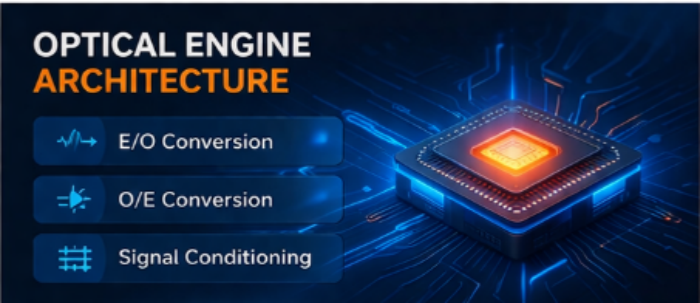
At the core of every AOC is its optical engine, which includes:
Electrical-to-optical (E/O) conversion
Optical-to-electrical (O/E) conversion
Signal conditioning and equalization
The quality of the integrated circuit (IC) determines:
Signal recovery capability
Jitter tolerance
Bit error rate (BER) performance
Lower-grade chipsets may meet initial compliance tests but often exhibit instability under:
Temperature variation
Long-duration operation
High data-rate stress conditions
Conclusion
2. Laser Source and Optical Components
The laser (typically VCSEL or similar) is a critical determinant of optical performance.
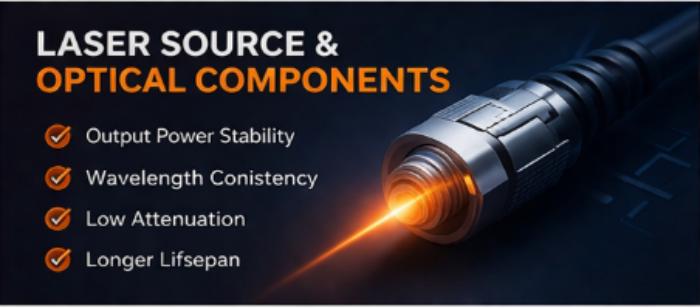
Key parameters include:
Output power stability
Wavelength consistency
Mean Time To Failure (MTTF)
High-quality laser sources provide:
Lower attenuation over distance
Improved signal-to-noise ratio (SNR)
Longer operational lifespan
In mission-critical applications such as medical imaging or machine vision, component quality directly impacts system uptime.
3. Hybrid Power and EMI Design
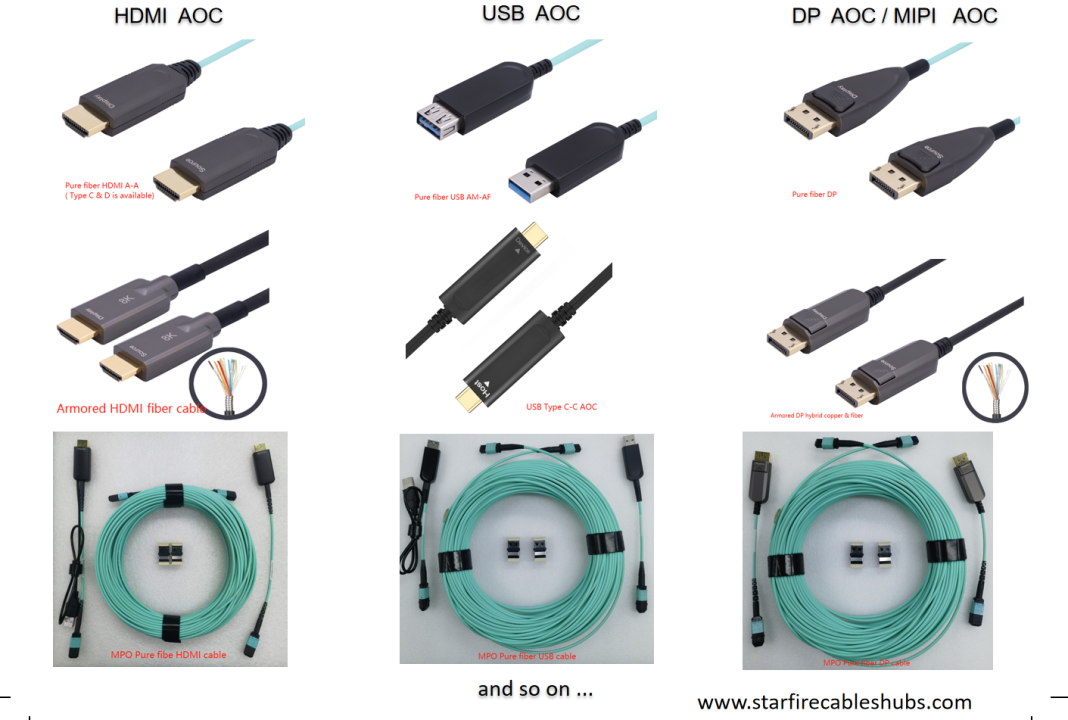
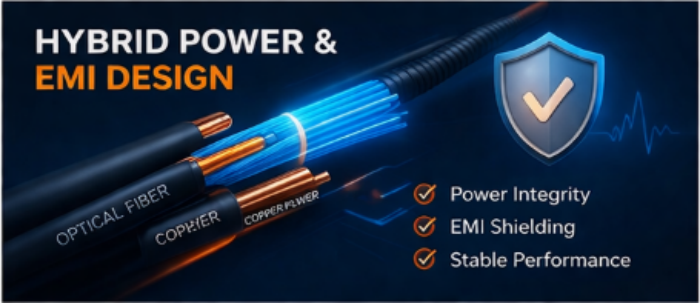
Hybrid AOCs integrate optical fibers with copper conductors for power delivery and control signaling.
This introduces additional design challenges:
Power integrity (voltage stability across length)
Electromagnetic shielding effectiveness
Grounding and isolation strategies
Inadequate design can lead to:
Signal instability
Device compatibility issues
Increased susceptibility to external interference
Effective EMI shielding and robust power architecture are therefore essential.
4. Mechanical Design and Materials Engineering
Mechanical reliability is often underestimated but plays a critical role in real-world deployment.
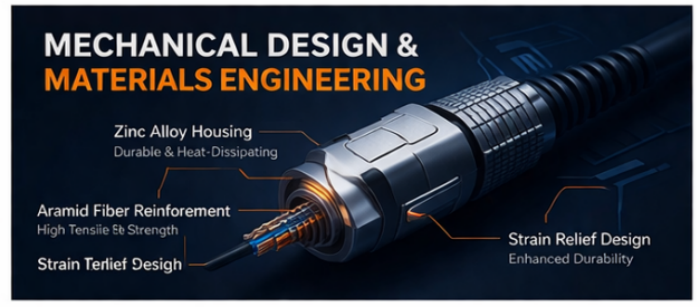
Important design elements include:
Connector housing material (e.g., zinc alloy for heat dissipation and durability)
Internal reinforcement (e.g., aramid fiber/Kevlar for tensile strength)
Strain relief design
These factors influence:
Cable durability under repeated handling
Resistance to bending and pulling forces
Long-term connector integrity
5. Thermal Management
AOCs generate heat due to active components within the connector heads.
Poor thermal design can result in:
Performance degradation
Increased BER
Premature component failure
Effective thermal management strategies include:
High-conductivity housing materials
Optimized internal layout
Low-power chipset selection
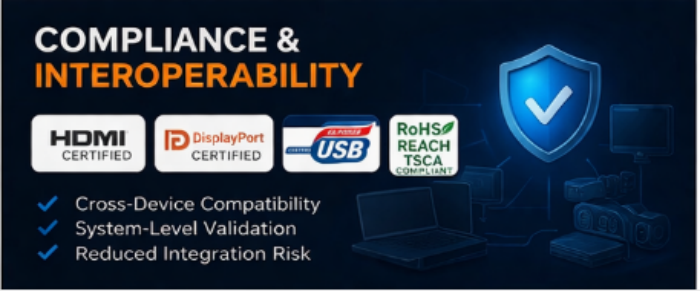
6. Compliance and Interoperability
Compliance with industry standards is not merely a regulatory requirement—it is a proxy for interoperability and reliability.
Relevant standards include:
HDMI, DisplayPort, USB-IF certifications
Environmental compliance (RoHS, REACH, TSCA)
Certified products are more likely to:
Ensure cross-device compatibility
Pass system-level validation
Reduce integration risk
Conclusion
Selecting an AOC based solely on headline specifications (e.g., "48 Gbps" or "10 meters") is insufficient for high-performance applications.
A rigorous evaluation should include:
Optical engine quality
Component sourcing (laser, ICs)
EMI and power design
Mechanical and thermal engineering
Certification and compliance
For system integrators and OEMs, a well-designed AOC is not just a cable—it is an active subsystem that directly affects overall system stability and performance.
Investing in higher-quality AOC solutions can significantly reduce long-term operational risk and maintenance cost.