Table Of Content
Table Of Content
How to Choose an Industrial PoE Switch for IP Camera and Surveillance Projects
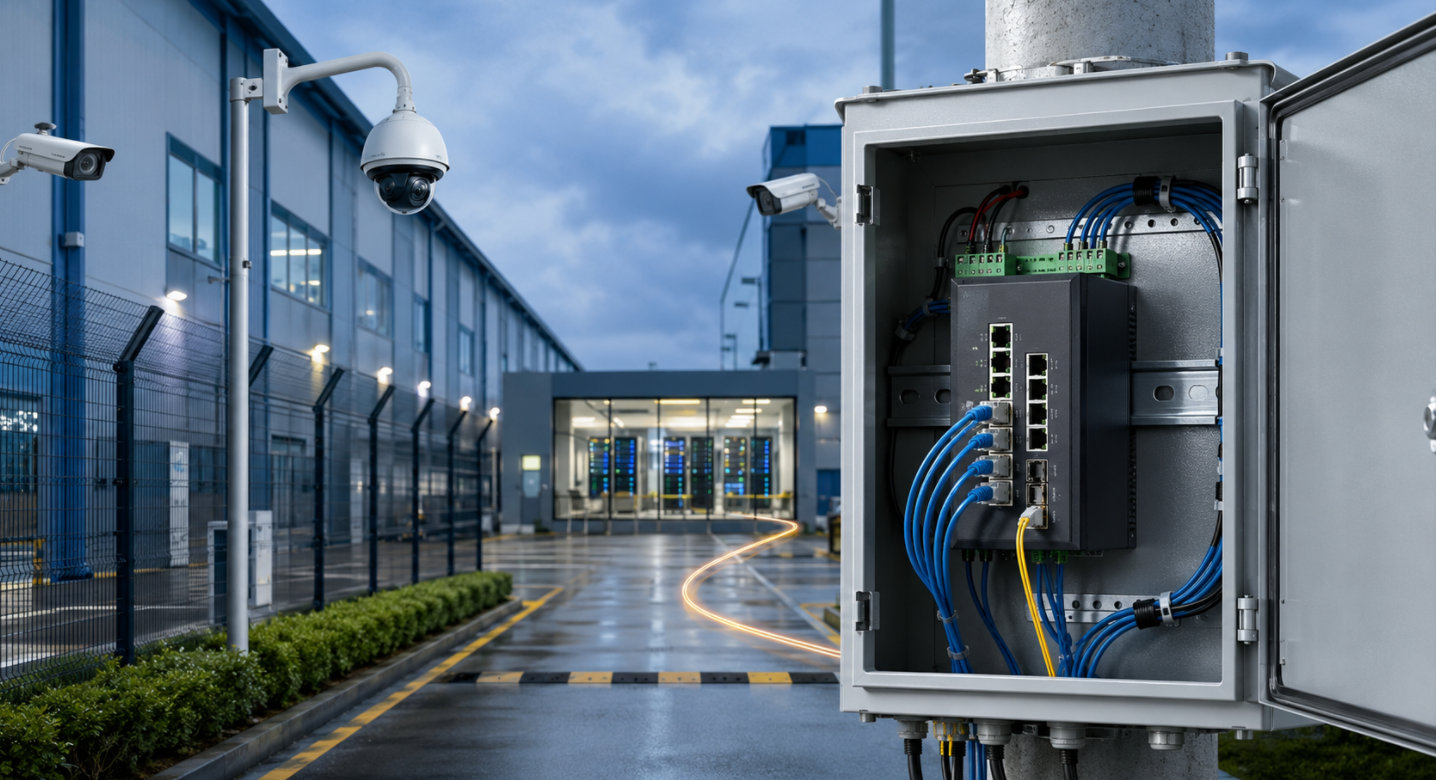
In security and surveillance projects, IP cameras are everywhere.
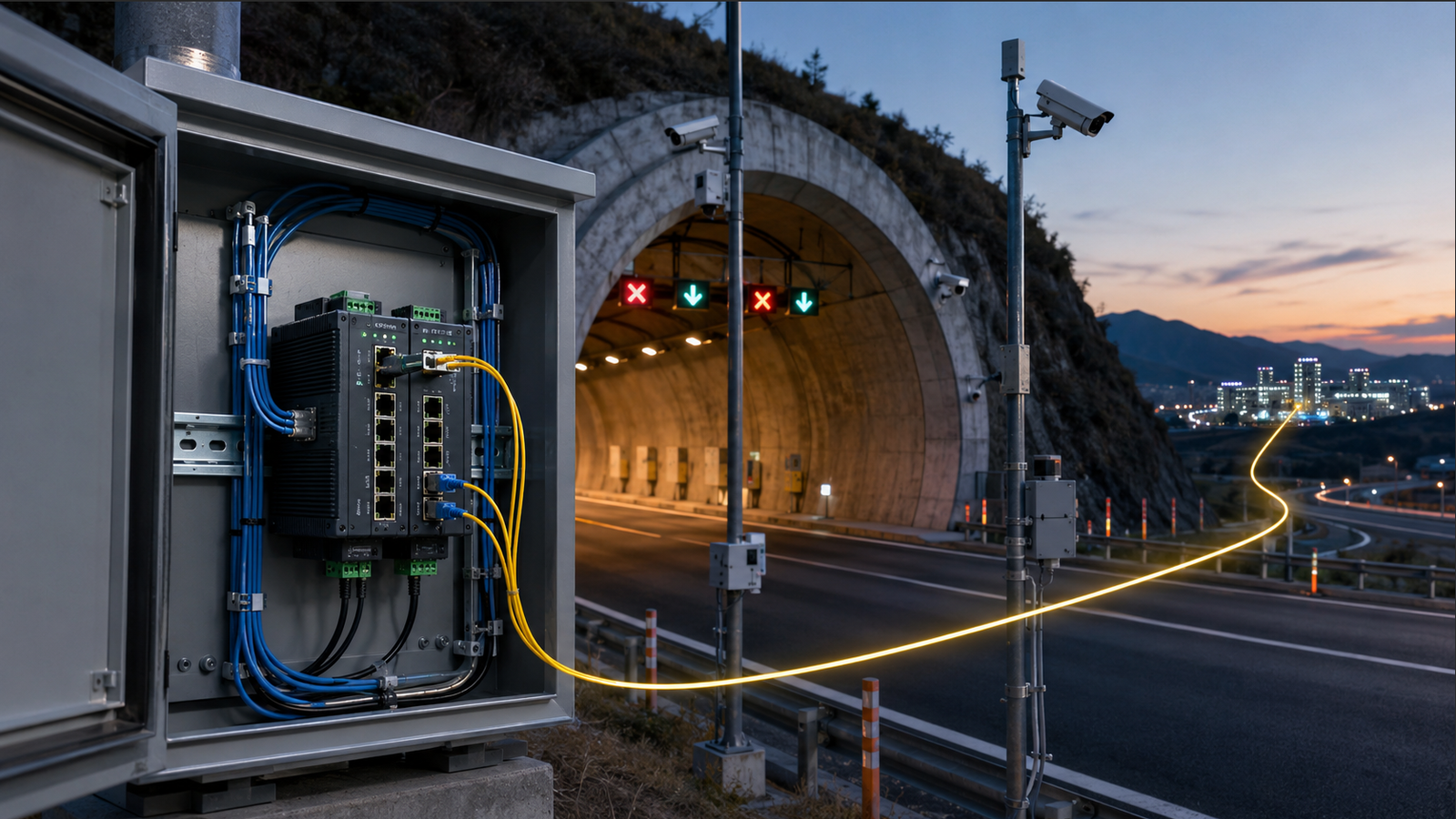
They are used in factories, warehouses, transportation systems, parking lots, smart buildings, tunnels, highways, energy sites, and outdoor monitoring cabinets.
But many camera problems are not caused by the camera itself.
They are caused by unstable power, weak network design, poor uplink capacity, EMI interference, or a switch that is not suitable for the environment.
That is why choosing the right industrial PoE switch is critical.
Why PoE matters in surveillance systems
PoE, or Power over Ethernet, allows one Ethernet cable to transmit both power and data.
For IP camera projects, this makes installation easier because the camera does not need a separate power cable.
But convenience is only one part of the story.
In real surveillance projects, PoE stability directly affects camera performance.
If the PoE switch cannot provide stable power, the camera may:
- Restart randomly
- Lose connection
- Show video delay
- Freeze during live monitoring
- Fail when infrared mode turns on at night
- Become unstable in cold or hot environments
For security applications, this is a serious risk.
A camera that disconnects at the wrong time can create a blind spot.
1. Check the PoE power budget
The first thing to check is the total PoE power budget.
Do not only count the number of PoE ports.
A switch may have 8, 16, or 24 PoE ports, but the total available power may not support all connected devices at full load.
For example, PTZ cameras, infrared cameras, and outdoor cameras may require more power than standard fixed cameras.
Before selecting a switch, calculate:
- Power requirement per camera
- Total number of cameras
- Peak power requirement
- Power needed at night for infrared operation
- Future expansion needs
A reliable industrial PoE switch should provide enough power margin instead of running at the limit all the time.
2. Consider uplink capacity
Many surveillance failures are caused by insufficient uplink bandwidth.
A project may connect many cameras to one switch, but if the uplink is too weak, video data can become congested.
This may cause:
- Video delay
- Frame loss
- Recording problems
- NVR connection issues
- Poor live-view performance
For camera networks, uplink design matters.
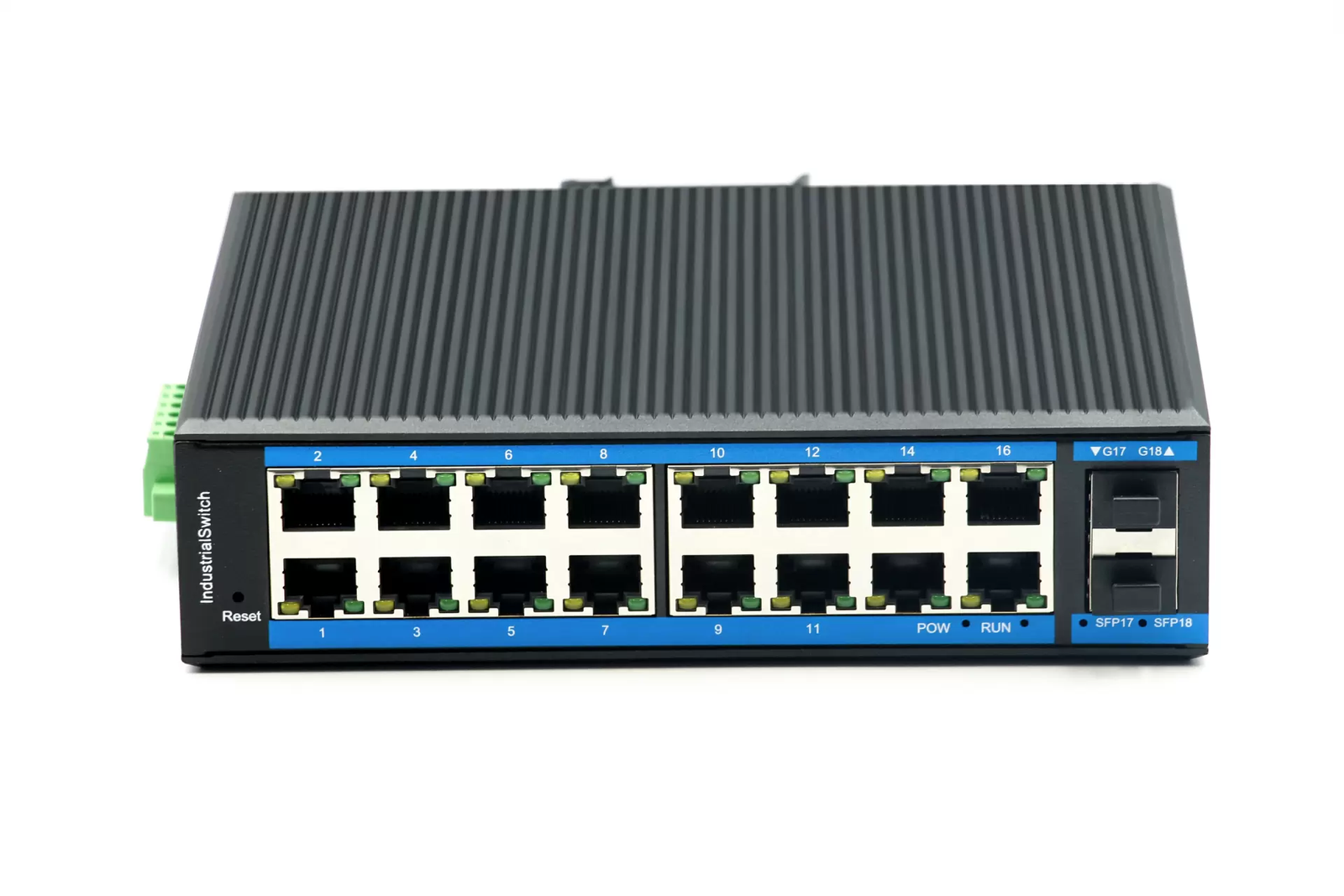
Gigabit uplinks are commonly used for local surveillance systems. Fiber SFP uplinks are often used for long-distance transmission, outdoor cabinets, road monitoring, perimeter security, and large facility networks.
If cameras are high-resolution or if the system has many camera channels, uplink planning becomes even more important.
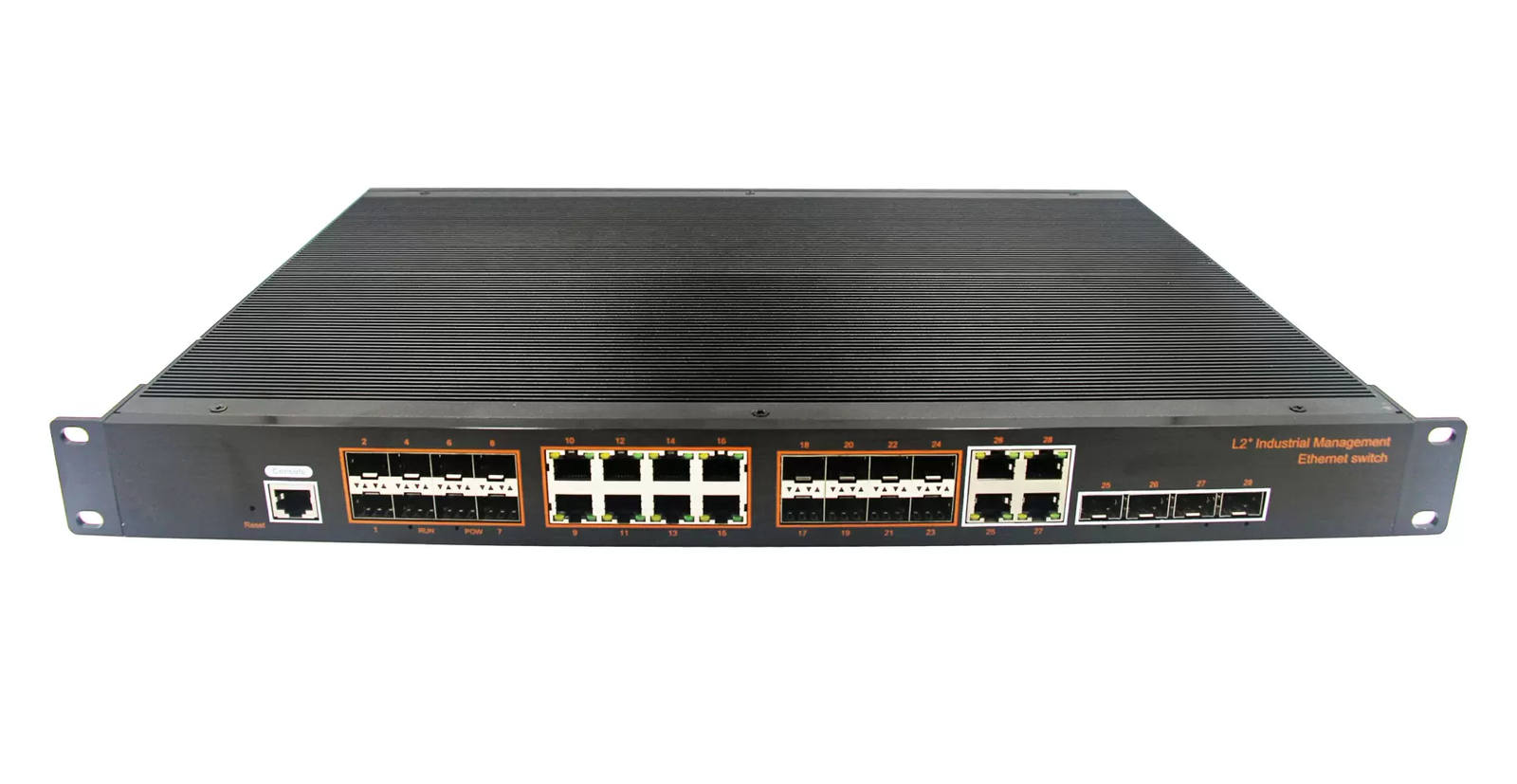
3. Choose industrial-grade hardware for outdoor or harsh environments
Surveillance switches are often installed in difficult environments.
Examples include:
- Roadside cabinets
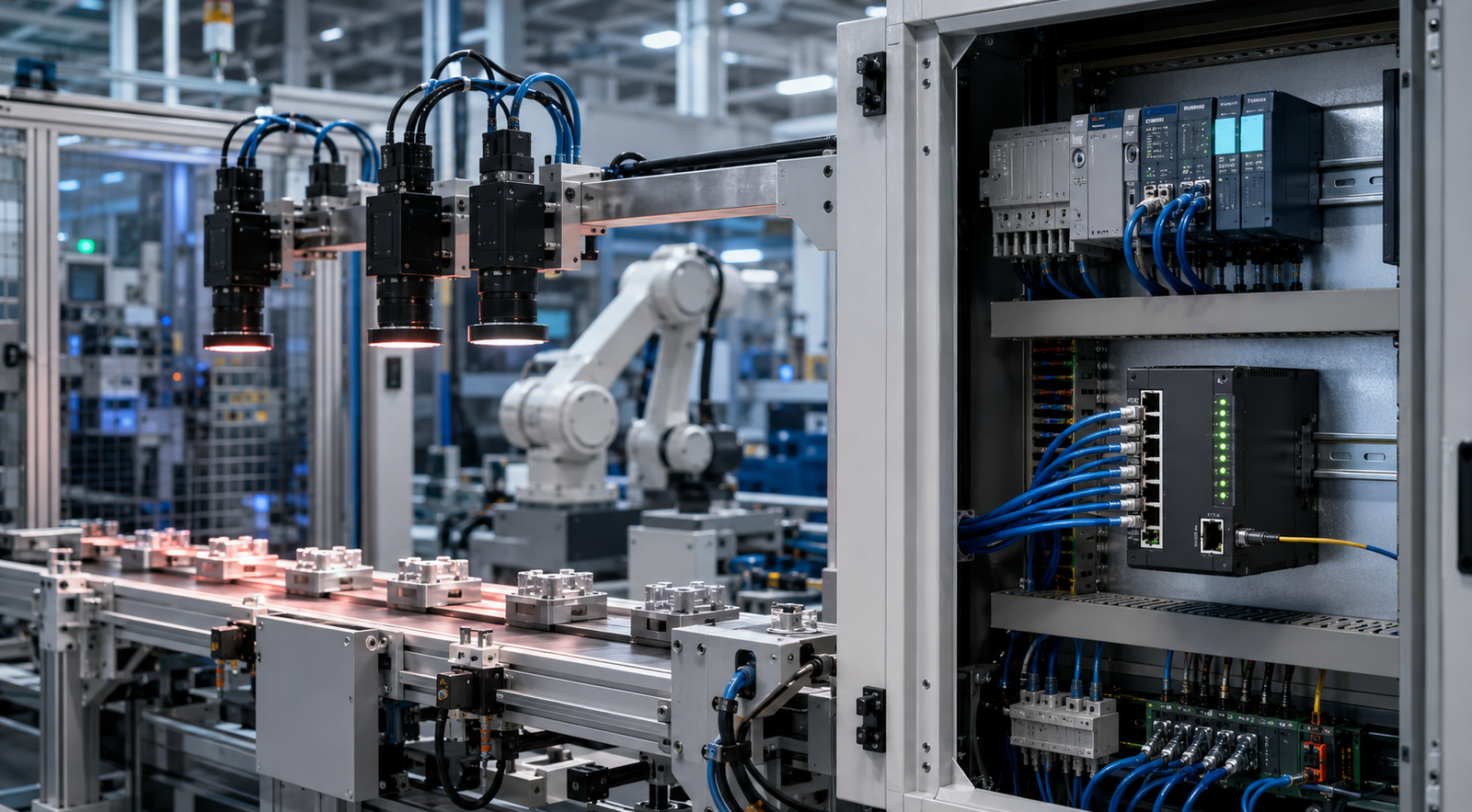
- Factory workshops
- Parking lots
- Outdoor poles
- Tunnel monitoring boxes
- Energy sites
- Warehouse control rooms
- Transportation systems
These locations may have high temperature, low temperature, dust, humidity, vibration, unstable power, and EMI.
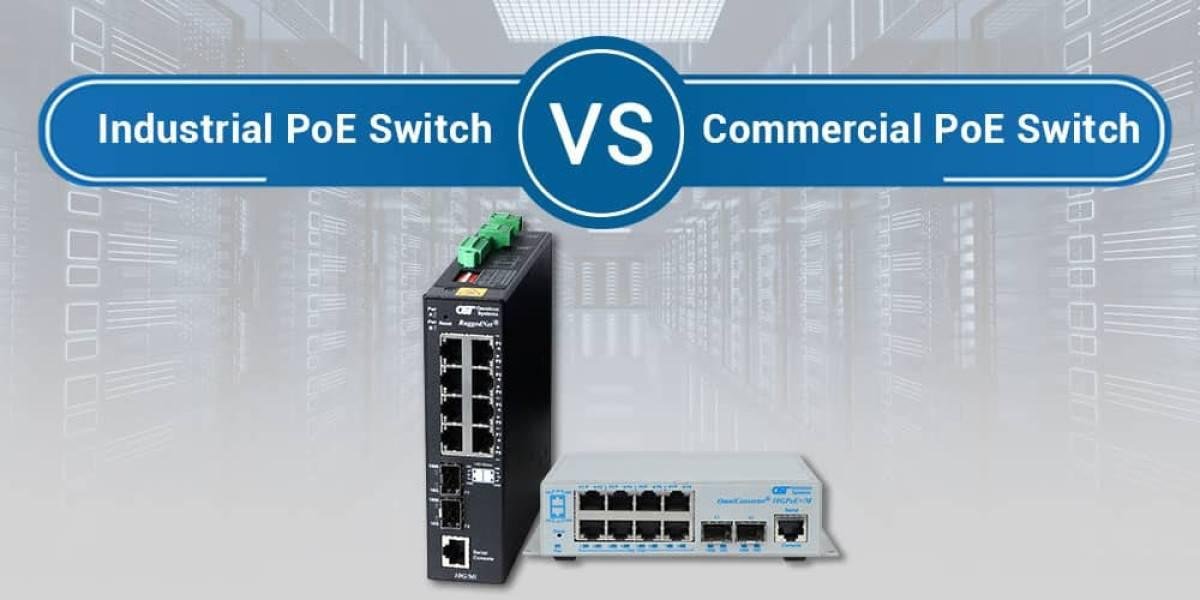
A regular commercial PoE switch may not be designed for these conditions.
For these projects, industrial PoE switches are usually a better choice because they can support rugged installation needs such as DIN-rail mounting, metal housing, wide temperature operation, and stronger protection design.
4. Managed functions help with maintenance
For small camera systems, an unmanaged PoE switch may be enough.
But for medium and large surveillance projects, managed PoE switches provide better long-term value.
Useful managed features include:
- VLAN to separate camera traffic
- QoS to prioritize important data
- Port monitoring for troubleshooting
- IGMP snooping for multicast video traffic
- Redundancy for higher uptime
- Remote management for maintenance
These features help integrators and maintenance teams solve problems faster.
Instead of going to the site every time a camera disconnects, engineers can check switch status remotely and identify possible network issues.
5. When should you use fiber uplink?
Fiber uplink is recommended when:
- Transmission distance is long
- The environment has strong EMI
- The system connects multiple outdoor cabinets
- The camera network needs stable backbone communication
- Copper cable distance is not enough
- The project needs better electrical isolation
For highway monitoring, tunnel surveillance, large factories, and perimeter security, fiber uplink can improve transmission stability and help reduce interference-related issues.
FAQ
What is the best switch for IP camera systems?
For small indoor systems, a standard PoE switch may be enough. For industrial, outdoor, or large surveillance systems, an industrial PoE switch with sufficient power budget, fiber uplink, and management functions is usually a better choice.
Why do IP cameras disconnect randomly?
Common causes include unstable PoE power, insufficient uplink bandwidth, EMI interference, poor cable quality, overheating, or weak switch performance.
Do I need a managed PoE switch for surveillance?
For small systems, not always. For larger camera networks, managed PoE switches help with VLAN, QoS, monitoring, troubleshooting, and redundancy.
When should I use fiber uplink for surveillance?
Use fiber uplink for long-distance transmission, outdoor cabinets, high-EMI environments, highway monitoring, tunnel systems, and large facility networks.
How much PoE budget do I need?
Calculate the power requirement of each camera, add the total load, consider infrared/night mode power consumption, and leave enough margin for stable operation and future expansion.
For surveillance projects, a PoE switch is not just a power device.
It is part of the security system’s reliability.
At STAR FIRE TECH, we provide industrial PoE switches and industrial Ethernet solutions for CCTV, smart buildings, transportation, factory surveillance, and harsh-environment monitoring applications.
Stable power. Stable data. Reliable surveillance.
#IndustrialPoESwitch #PoESwitch #IPCamera #CCTV #VideoSurveillance #SecuritySystem #SurveillanceNetwork #IndustrialEthernet #FiberUplink #SmartBuilding #TransportationSecurity #PerimeterSecurity #DINRailSwitch #NetworkReliability #STARFIRETECH