Table Of Content
Table Of Content
Choosing the wrong HDMI 2.2 cable manufacturer can lead to certification issues, unstable performance, delayed shipments, and costly product returns. How can brands avoid these risks?
To choose reliable HDMI 2.2 cable manufacturers, I recommend evaluating official Ultra96 HDMI Cable certification, 96Gbps signal integrity, manufacturing experience, quality control, OEM/ODM capabilities, and supply reliability. A qualified manufacturer should provide verifiable certification details, consistent production quality, competitive pricing, and technical support for your product launch.
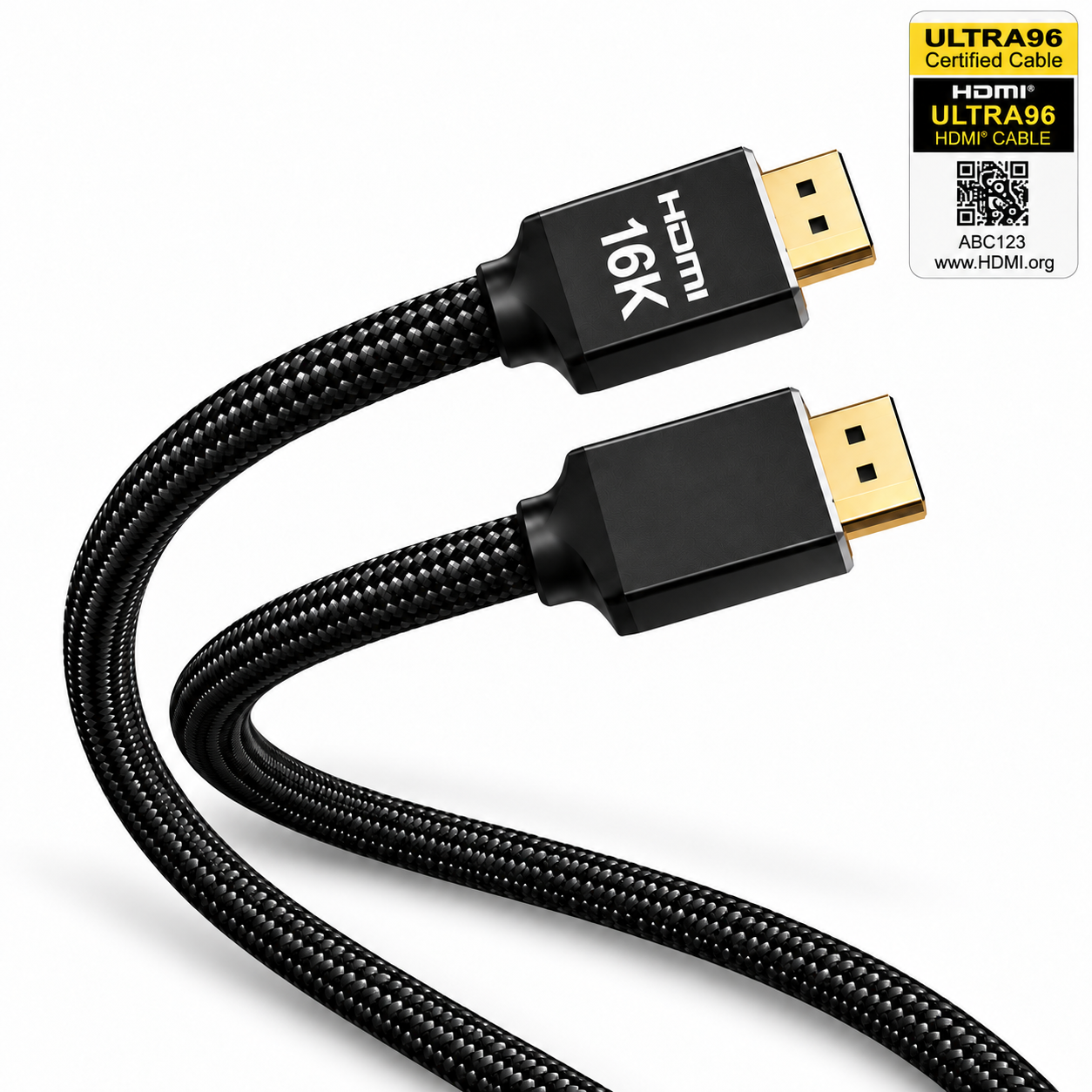
As HDMI technology moves toward higher bandwidth and more demanding display applications, I believe HDMI 2.2 creates an important opportunity for consumer electronics brands, professional AV distributors, and connectivity solution providers.
At STAR FIRE TECH, we have worked in connectivity manufacturing since 2006. Our experience has shown me that bringing a new cable product to market requires more than meeting a technical specification.
A reliable manufacturing partner must understand product performance, certification requirements, manufacturing consistency, pricing, and long-term supply.
I also see a change in how professional buyers evaluate suppliers. More customers now ask for certification evidence, actual test results, and details about production capabilities before discussing large orders.
This change makes sense. At higher transmission speeds, small manufacturing differences can have a greater impact on product reliability.
So, what should brands and sourcing teams consider when choosing an HDMI 2.2 cable manufacturer?
What Is the Difference Between HDMI 2.1 and HDMI 2.2 Cables?
As display technology advances, brands face growing pressure to offer higher bandwidth. Confusing HDMI 2.1 and HDMI 2.2 capabilities can lead to incorrect specifications and purchasing decisions.
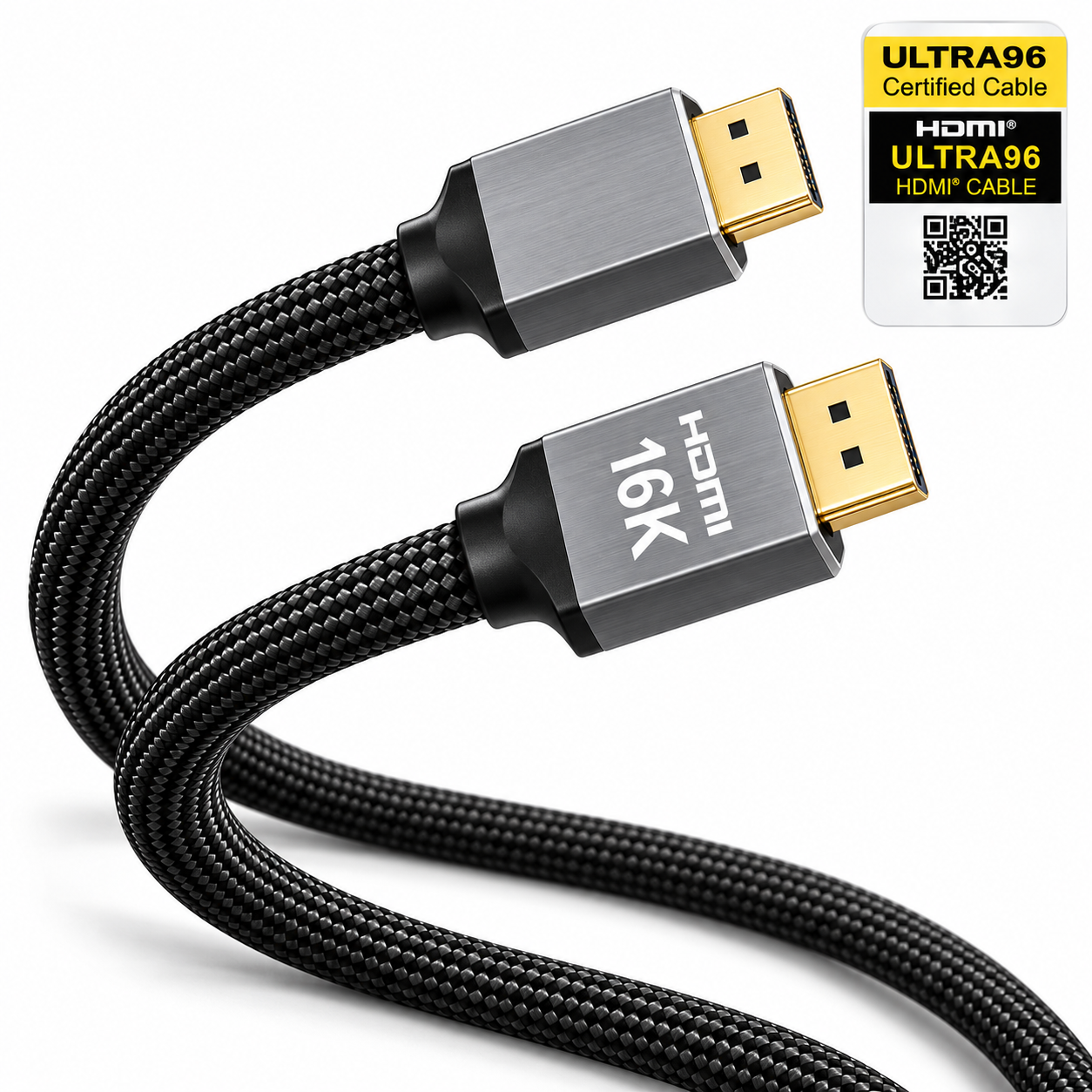
The main difference between HDMI 2.1 and HDMI 2.2 cables is maximum supported bandwidth. Ultra High Speed HDMI Cables support up to 48Gbps, while the new Ultra96 HDMI Cable supports up to 96Gbps. HDMI 2.2 enables more demanding video formats, including uncompressed 4K@240Hz and 8K@60Hz with full chroma.
Why Does 96Gbps Bandwidth Matter?
When I discuss HDMI 2.2 with customers, I often start with bandwidth.
HDMI 2.2 doubles the maximum bandwidth available under HDMI 2.1, increasing it from 48Gbps to 96Gbps.
This increase gives equipment manufacturers more room to support advanced display formats, higher refresh rates, and greater color detail.
The table below compares the three HDMI generations.
HDMI Specification
Maximum Bandwidth
Representative Video Applications
HDMI 2.0
18Gbps
4K@60Hz
HDMI 2.1
48Gbps
4K@120Hz and 8K applications
HDMI 2.2
96Gbps
4K@240Hz, 8K@60Hz full chroma, and higher-resolution formats
Actual video performance depends on the complete system, including the source device, display, color depth, and video format.
I believe higher bandwidth will become increasingly important in several markets.
For gaming equipment manufacturers, higher refresh rates can improve the experience of fast-moving content.
For professional AV companies, HDMI 2.2 creates opportunities for next-generation displays, video production systems, and high-resolution installations.
For medical imaging and industrial visualization applications, higher bandwidth may support more demanding display requirements when the connected equipment is designed for HDMI 2.2.
Why Does Cable Manufacturing Become More Challenging?
I have learned that increasing bandwidth also increases the demands placed on cable design.
At 96Gbps, signal integrity becomes a major engineering consideration.
Cable impedance, conductor construction, shielding, connector design, and manufacturing consistency can all affect high-speed transmission performance.
A cable may appear normal during visual inspection and still experience signal problems under demanding transmission conditions.
This is why I believe buyers should evaluate a manufacturer's engineering and testing capabilities rather than focusing only on advertised bandwidth.
At STAR FIRE TECH, we have invested in in-house TDR and eye diagram testing capabilities to help evaluate high-speed cable performance.
These tools support our understanding of impedance behavior, signal quality, and potential transmission issues.
I also remind customers that an Ultra96 HDMI Cable cannot create HDMI 2.2 capabilities in equipment that does not support them.
The cable is one part of the complete signal path.
For brands planning future product lines, I believe HDMI 2.2 is not simply a specification upgrade. It is an opportunity to prepare for more demanding AV applications while maintaining compatibility with existing HDMI equipment.
How Can You Verify Whether an HDMI 2.2 Cable Is Officially Certified?
A supplier may advertise 96Gbps support, but performance claims alone do not establish certification. Unverified products can create compliance risks and damage a brand's reputation.
I recommend verifying Ultra96 HDMI Cable certification through the official HDMI certification label and its QR code. Buyers should confirm the registered brand, model number, and cable length. Each applicable cable model must complete the required testing at an HDMI Forum Authorized Testing Center before being marketed as certified.
What Should Buyers Check Before Placing an Order?
In my experience, official certification is one of the most important factors in HDMI cable sourcing.
A supplier may show attractive product pictures, detailed specifications, and competitive pricing.
However, I believe professional buyers should request objective evidence before making a purchasing decision.
HDMI Licensing Administrator operates an official cable certification program for Ultra96 HDMI Cables.
Certified cable models must pass the required tests at an HDMI Forum Authorized Testing Center.
The official certification label allows buyers to verify the registered product information.
I recommend checking the following details.
Verification Item
What Buyers Should Confirm
Official certification
The cable model has passed the required certification testing
Certification label
The appropriate official Ultra96 HDMI Cable label is available
QR code verification
The registered brand, model, and length match the product
Cable length
The exact required length has the applicable certification
Technical specifications
The cable meets the intended bandwidth and application requirements
Product customization
Any design changes are reviewed for certification impact
I believe these checks are particularly important for private-label brands.
A certification associated with one cable design or length should not automatically be treated as certification for every customized version.
Buyers should also confirm how certification labeling will be handled under their own brand.
Why Is In-House Quality Control Still Necessary?
I often explain to customers that official certification and factory quality control serve different purposes.
Official certification verifies compliance with the applicable requirements.
Factory quality control helps maintain consistent production after the product enters mass manufacturing.
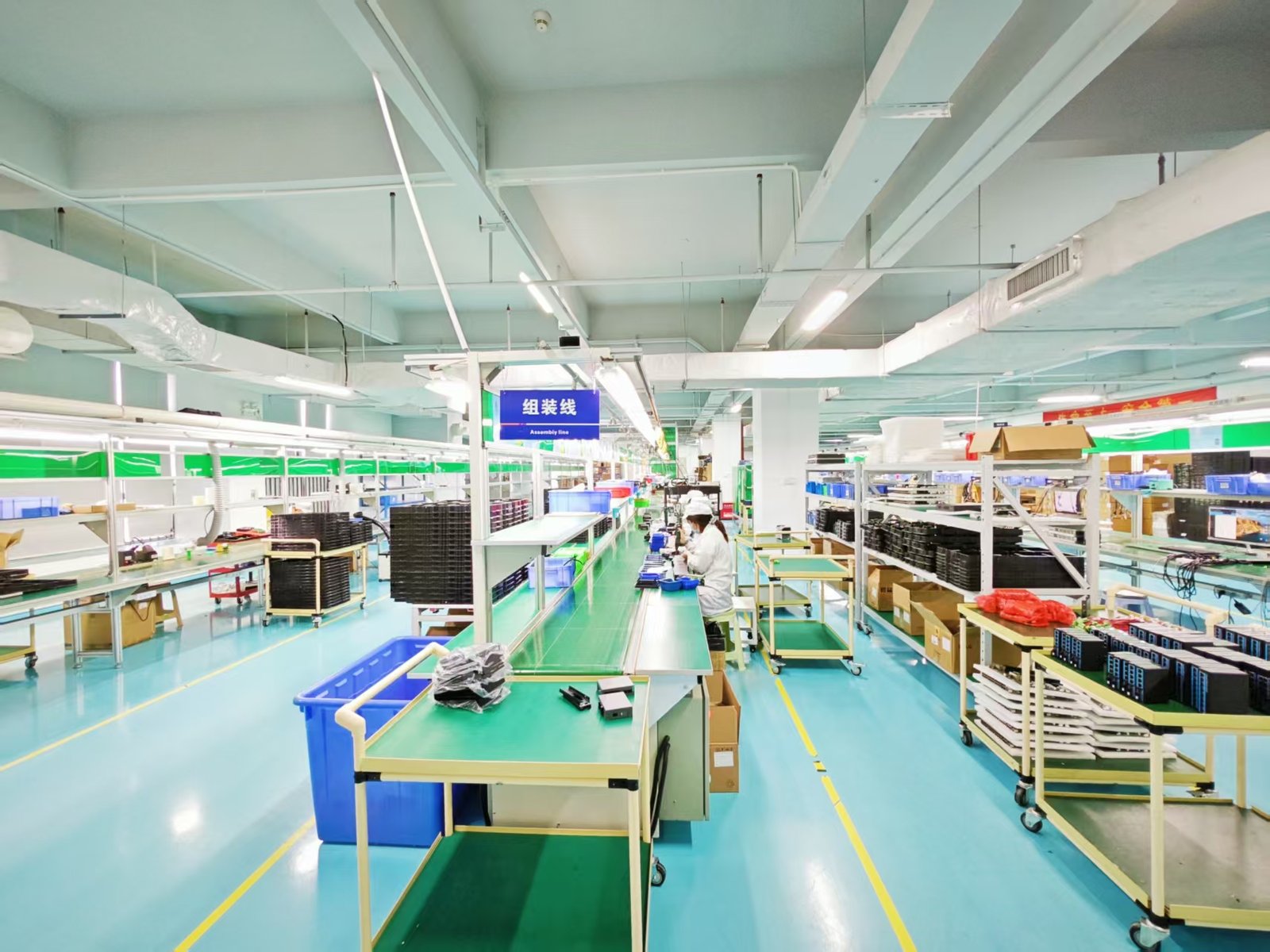
At STAR FIRE TECH, our quality management process includes incoming material inspection, in-process quality control, and outgoing product inspection.
We also have testing capabilities that support signal integrity and reliability evaluation.
Testing Area
Main Purpose
TDR Testing
Evaluate impedance behavior and signal reflections
Eye Diagram Testing
Assess high-speed signal quality
Continuity Testing
Identify open and short circuits
Environmental Testing
Evaluate performance under defined temperature conditions
Vibration Testing
Assess mechanical reliability under test conditions
Salt Spray Testing
Evaluate corrosion resistance of applicable components
I believe quality control must begin with materials and continue through final inspection.
A certificate is important, but consistent manufacturing is what helps brands maintain customer trust after products enter the market.
How Does STAR FIRE TECH Support HDMI Certification?
STAR FIRE TECH has developed extensive HDMI manufacturing experience since 2006.
We are an HDMI Adopter and maintain memberships associated with VESA/DisplayPort and USB-IF technologies.
Our existing HDMI certification experience includes:
We have introduced HDMI 2.2 Ultra96 Cable products supporting up to 96Gbps bandwidth.
For buyers, we can discuss the current certification status of specific product models and lengths and provide applicable documentation.
I believe the HDMI 2.2 market will increasingly reward manufacturers that can demonstrate actual technical and certification capabilities.
As more suppliers enter this market, verified compliance may become a stronger competitive advantage than simply advertising a high bandwidth number.
What Should Brands Look for in an HDMI 2.2 Cable OEM/ODM Manufacturer?
Launching an HDMI 2.2 product requires more than a competitive quotation. Limited customization, weak technical support, and inconsistent supply can delay a brand's market entry.
I recommend choosing an HDMI 2.2 OEM/ODM manufacturer that offers certified product options, flexible customization, reliable quality control, clear communication, and stable production capacity. Buyers should also evaluate minimum order quantities, sample support, packaging capabilities, pricing stability, and the manufacturer's experience with international brand customers.
Why Does Manufacturing Experience Matter?
At STAR FIRE TECH, we have been developing and manufacturing connectivity solutions since 2006.
Our business covers Audio Visual Connectivity, Optical Fiber Communication, and Industrial Communication.
This experience helps us understand different market requirements and customer expectations.
For example, I find that consumer electronics brands often pay close attention to product appearance, retail packaging, and pricing.
Professional AV distributors may focus more on signal reliability, technical documentation, and compatibility with demanding installations.
System integrators may place greater importance on product consistency and delivery schedules.
I believe a manufacturer should understand these differences before recommending a product.
A cable that works well for one market may not be the best commercial choice for another.
What OEM/ODM Services Should a Manufacturer Provide?
For customers developing their own HDMI 2.2 product lines, OEM/ODM flexibility can be a major advantage.
At STAR FIRE TECH, we support various customization requirements based on the product design and technical feasibility.
OEM/ODM Service
Available Support
Cable Length
Multiple length options, subject to testing and certification
Connector Housing
Molded and aluminum-shell designs
Branding
Customized brand identification
Packaging
Customer-specific packaging solutions
Product Specifications
Technical coordination based on project needs
Certification Support
Applicable certification documents and guidance
Minimum Order Quantity
Starting from 500 pieces
Sample Evaluation
Product samples for customer evaluation
I always recommend confirming certification requirements before approving a customized HDMI 2.2 cable design.
Some product changes may require additional testing or certification work.
I believe this discussion should happen during the product development stage rather than after mass production begins.
How Should Buyers Evaluate Pricing and Supply Reliability?
I understand that pricing is an important factor when brands compare HDMI cable manufacturers.
However, I do not believe the lowest quotation always represents the best business decision.
An inexpensive cable can become costly if it creates quality complaints, replacement expenses, or unexpected production delays.
I prefer to evaluate the total value of a supplier relationship.
This includes manufacturing consistency, product quality, technical support, pricing transparency, and supply reliability.
At STAR FIRE TECH, we aim to provide competitive and sustainable pricing while maintaining consistent product quality.
We are an ISO- and BSCI-certified company with established quality management procedures.
Our HDMI 2.2 Ultra96 Cable products support OEM/ODM cooperation, with minimum order quantities starting from 500 pieces.
We also understand that brands often require samples, certification details, technical information, and packaging discussions before launching a new product.
I believe good communication during these early stages can prevent costly mistakes later.
My View on the HDMI 2.2 Market
I see HDMI 2.2 as an important product development opportunity, but I do not believe every brand needs to rush into mass production.
The right timing depends on the brand's target market, customer demand, product positioning, and the availability of compatible HDMI 2.2 equipment.
Some customers may want to introduce Ultra96 HDMI Cables early to prepare for future high-performance AV products.
Others may prefer to evaluate the market before expanding their cable portfolio.
Both approaches can make business sense.
In my view, the strongest manufacturers will be those that combine proven engineering, verifiable certification, stable quality, and reliable commercial support.
I also expect sourcing teams to pay more attention to the differences between genuine manufacturers, trading companies, and suppliers that outsource critical production processes.
For brand owners, understanding who controls manufacturing and quality can be just as important as comparing quotations.
At STAR FIRE TECH, we welcome discussions with global brands, distributors, and professional AV connectivity companies planning HDMI 2.2 product development.
We can discuss product specifications, available certification documentation, sample requirements, OEM/ODM customization, pricing, and production planning.
Our goal is to help customers introduce new connectivity products with greater confidence.
Learn more: https://www.starfirecableshubs.com
Conclusion
I believe reliable HDMI 2.2 manufacturers must deliver more than 96Gbps performance. Verified certification, consistent quality, OEM/ODM flexibility, and dependable supply are essential for long-term brand success.