Table Of Content
Table Of Content
The Reality: Not All Network Equipment Is Built for Industrial Environments
As manufacturing systems become more automated and interconnected, network infrastructure is no longer just a support function—it is a critical part of production.
However, many facilities still rely on commercial-grade Ethernet switches originally designed for office or data center environments. While these devices may work under controlled conditions, they often struggle when exposed to industrial realities such as electromagnetic interference, temperature extremes, and continuous operation requirements.
This raises an important question:
Can standard network equipment truly support industrial operations at scale?
The Core Difference: Design Philosophy and Intended Use
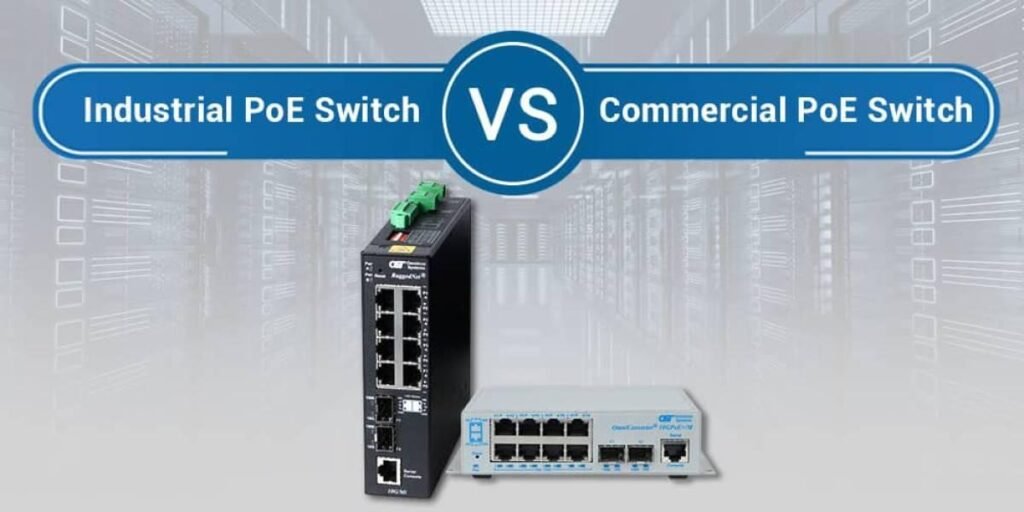
At a fundamental level, the difference between industrial Ethernet switches and commercial switches lies in their design priorities.
Commercial switches are optimized for cost efficiency, high port density, and stable indoor environments.
Industrial Ethernet switches, by contrast, are engineered for durability, reliability, and deterministic communication in harsh conditions.
This distinction affects every aspect of performance, from hardware construction to network behavior.
1. Environmental Adaptability
Commercial switches are typically designed to operate within a narrow temperature range and are sensitive to dust, humidity, and vibration. In industrial settings, these limitations can lead to frequent failures or unstable performance.
Industrial Ethernet switches are built with ruggedized enclosures and extended temperature tolerance, often supporting operation in environments ranging from sub-zero conditions to high-heat production areas. They are also designed to withstand vibration and exposure to contaminants.
Takeaway: Industrial switches provide consistent performance in environments where commercial devices are likely to fail.
2. Resistance to Electromagnetic Interference
Industrial environments are filled with sources of electromagnetic interference, including motors, welding equipment, and high-voltage systems.
Commercial switches generally lack sufficient shielding against EMI, which can result in packet loss, signal degradation, and communication errors.
Industrial Ethernet switches incorporate enhanced electromagnetic shielding and filtering technologies to maintain stable data transmission even in high-interference zones.
Takeaway: Reliable communication in industrial networks requires hardware specifically designed to handle EMI.
3. Network Reliability and Redundancy
Commercial switches often rely on standard network protocols without built-in mechanisms for rapid recovery in case of failure. If a link goes down, network disruption may last long enough to impact operations.
Industrial Ethernet switches support advanced redundancy protocols such as Rapid Spanning Tree Protocol (RSTP), Media Redundancy Protocol (MRP), and ring topologies that enable near-instant failover.
This ensures that even if one connection fails, the network continues operating without interruption.
Takeaway: Industrial switches minimize downtime by providing fast and reliable failover capabilities.
4. Real-Time Communication and Traffic Control
Industrial automation systems depend on real-time communication between PLCs, sensors, and control systems. Delays or inconsistencies can affect synchronization and production accuracy.
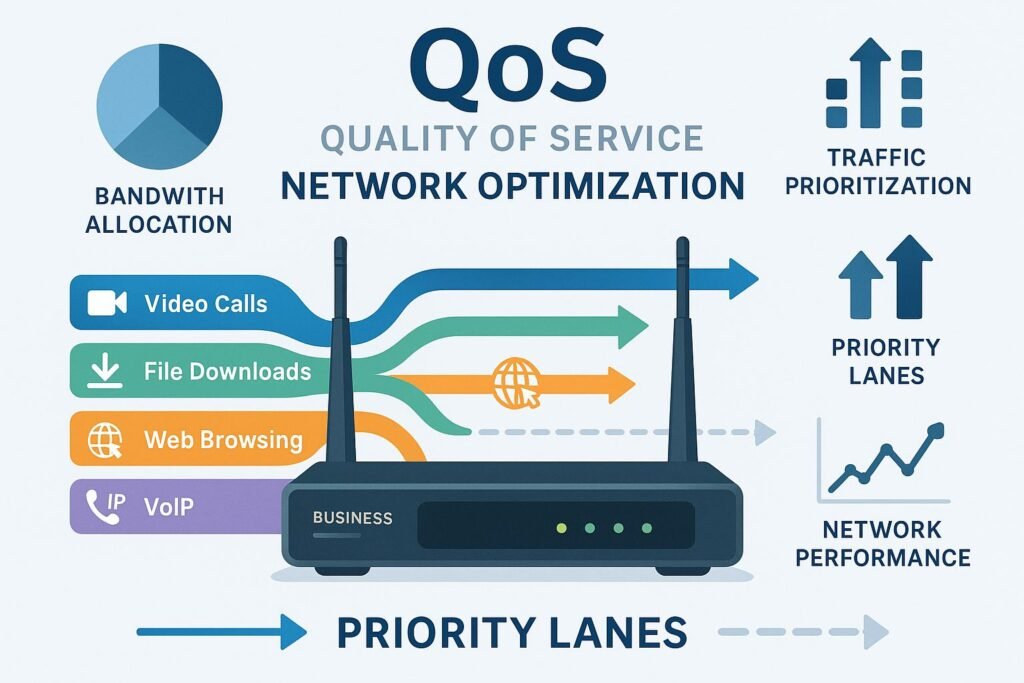
Commercial switches typically handle traffic in a best-effort manner, which may not guarantee the priority of critical data.
Industrial Ethernet switches support Quality of Service (QoS), VLAN segmentation, and industrial protocols that prioritize time-sensitive data, ensuring deterministic communication.
Takeaway: Industrial switches are essential for maintaining real-time control in automated systems.
5. Power Stability and Installation Flexibility
Commercial switches are usually designed for stable power environments and standard rack installations.
Industrial Ethernet switches offer wider voltage input ranges and support flexible mounting options such as DIN rail installation. This makes them suitable for distributed deployment across factory floors, control cabinets, and remote locations.
Takeaway: Industrial switches provide greater flexibility and reliability in diverse deployment scenarios.
5. Lifecycle and Maintenance
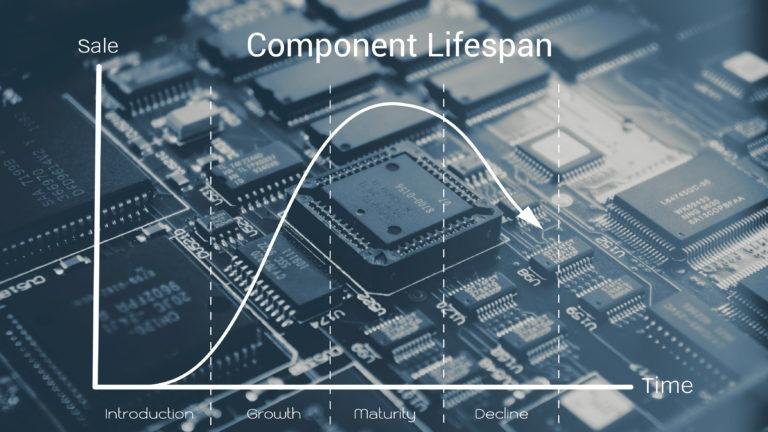
Commercial switches often have shorter product lifecycles and may require frequent replacement when exposed to harsh conditions.
Industrial Ethernet switches are designed for long-term operation, with higher durability and lower failure rates. This reduces maintenance costs and minimizes the need for emergency interventions.
Takeaway: Industrial-grade equipment offers a lower total cost of ownership over time.
What This Means for Your Operation
Choosing between commercial and industrial Ethernet switches is not simply a technical decision—it is a strategic one.
If your facility experiences:
- Frequent network interruptions
- Unstable communication between devices
- Harsh environmental conditions
- Increasing automation complexity
Then relying on commercial-grade equipment may be limiting your operational performance.
When Industrial Ethernet Switches Are the Right Choice
Industrial Ethernet switches are particularly valuable in:
- Automated manufacturing lines
- Energy and utility systems
- Transportation and infrastructure networks
- Warehousing and logistics automation
- Mining and heavy industry
In these environments, network reliability directly impacts productivity, safety, and cost control.
Final Takeaway
Commercial switches may be sufficient for office environments, but industrial operations demand a higher level of performance and reliability.
Industrial Ethernet switches are not just a hardware upgrade—they are a critical component of a resilient and future-ready network infrastructure.
The real question is not whether commercial switches can work, but whether they can continue to perform under the conditions your operation requires.
Industry Keywords
#IndustrialEthernet
#IndustrialSwitch
#NetworkReliability
#SmartManufacturing
#Automation
#IIoT
#PLCCommunication
#IndustrialNetwork
#EdgeComputing
#Industry40