Table Of Content
Table Of Content
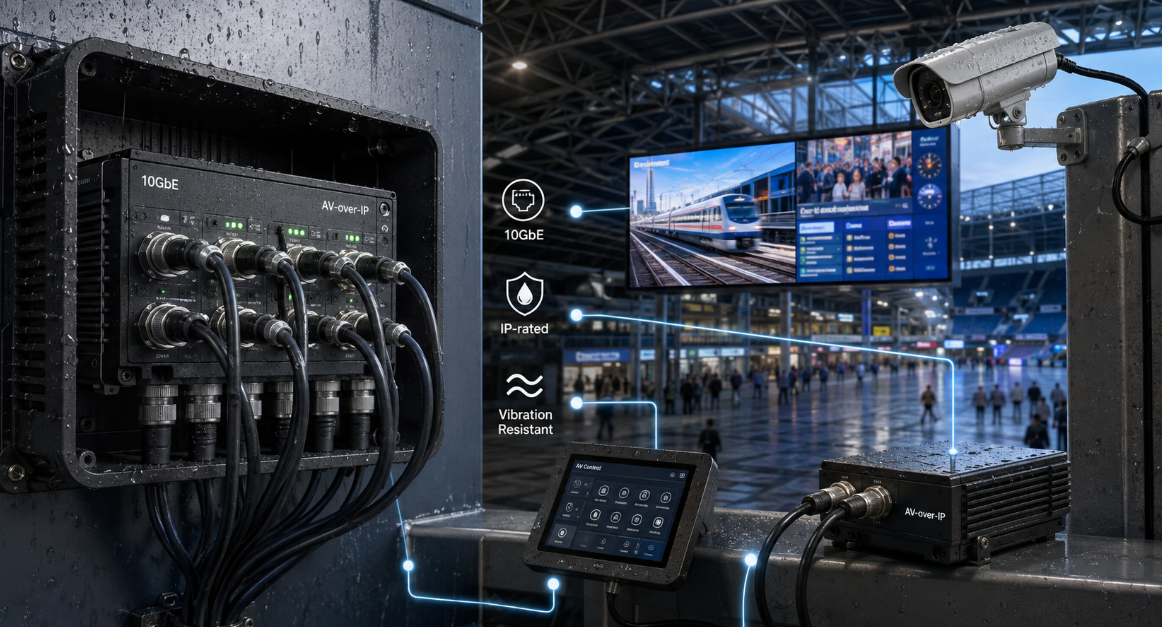
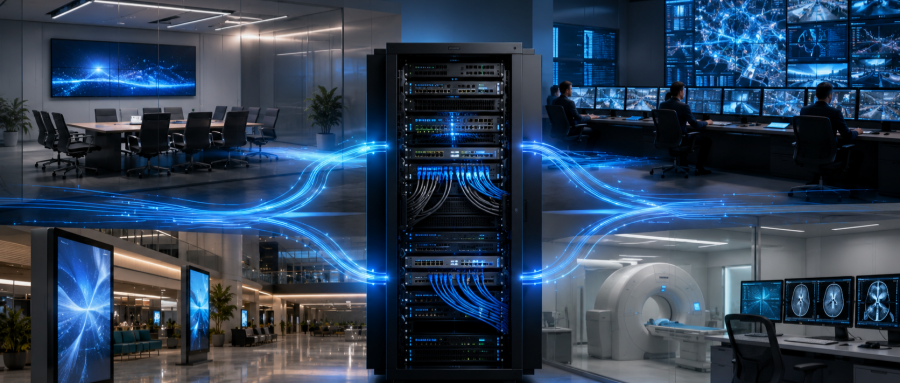
 Modern professional AV systems are often evaluated by resolution, bandwidth, and transmission distance. Terms such as 8K, 48Gbps, HDMI 2.1, DisplayPort 1.4, and high refresh rates have become key performance indicators and major selling points across the industry. However, after more than 20 years working with professional audiovisual connectivity solutions, one lesson has become increasingly clear: A successful AV system is not built by bandwidth alone. It is built on reliable signal integrity. For integrators, consultants, system designers, and AV engineers, the real challenge is not simply moving more data. The challenge is maintaining stable, accurate, and uninterrupted signal transmission in complex real-world environments. The Hidden Challenge Behind Modern PRO AV Systems Modern professional AV environments are becoming more demanding. Conference rooms, command centers, digital signage networks, medical imaging systems, broadcast studios, education facilities, and control rooms require:
- Higher resolutions
- Longer transmission distances
- Lower latency
- Greater installation flexibility
- Stronger EMI resistance
- Long-term reliability A cable that works perfectly on a test bench may fail after installation because professional AV environments introduce many unpredictable factors:
- Electromagnetic interference from power equipment
- Tight cable pathways
- Limited bending space
- Temperature variations
- Complex routing requirements
- Continuous operation demands This is why professional AV connectivity requires engineering knowledge, not only product specifications. Understanding Signal Integrity in HDMI and DisplayPort Transmission High-speed digital signals are extremely sensitive. When transmitting HDMI 2.1 48Gbps signals or DisplayPort 1.4 high-bandwidth signals, even small electrical losses can affect system performance. Key factors influencing signal integrity include:
- Impedance Control Digital AV transmission relies on accurate impedance matching. Any impedance variation can create reflections, signal distortion, and data errors. Professional cable design requires precise control of conductor structure, shielding, dielectric materials, and manufacturing processes.
- Attenuation Management As transmission distance increases, signal loss becomes one of the biggest challenges. Premium active optical cables (AOC) solve this problem by converting electrical signals into optical signals, allowing stable long-distance transmission with lower attenuation.
- EMI and EMC Protection Professional AV installations often operate near:
- Power cables
- Motors
- Lighting systems
- Wireless equipment
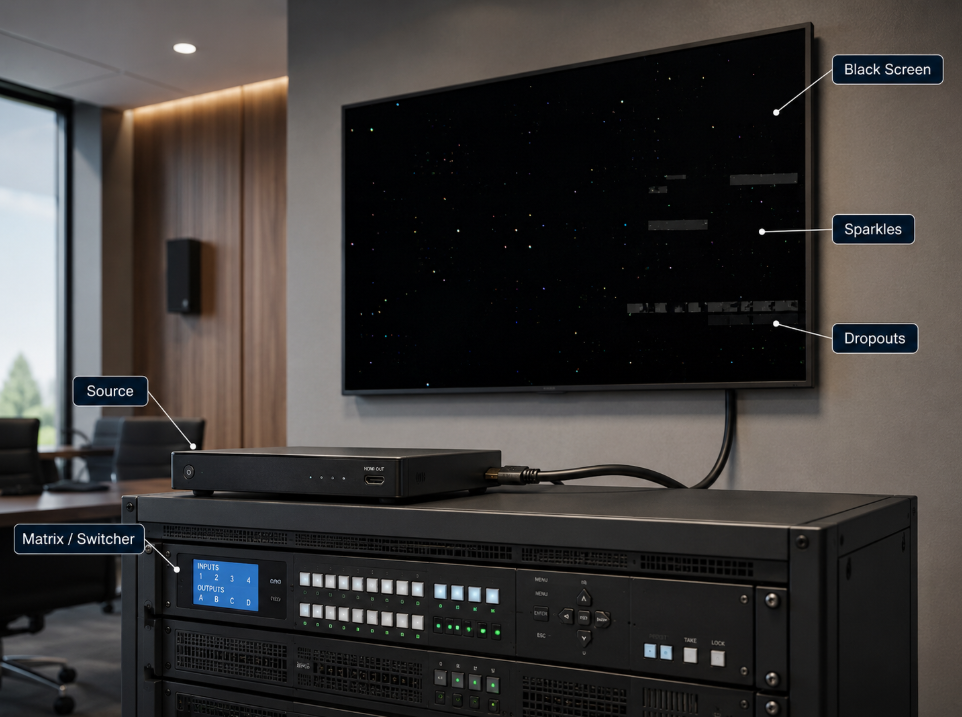
- Industrial devices Without proper shielding design, interference can cause:
- Flickering screens
- Signal drops
- Random blackouts
- Intermittent failures Multi-layer shielding, high-quality materials, and strict testing are essential for reliable operation.
 Why AOC Technology Has Become Critical for Professional AV Active Optical Cable technology represents one of the most important developments in modern AV connectivity. Compared with traditional copper cables, AOC solutions provide:
 - Longer transmission distance
- Lower signal loss
- Better EMI resistance
- Slimmer cable diameter
- Easier installation For professional applications such as conference rooms, digital signage, medical imaging, and control rooms, AOC technology helps engineers overcome distance and installation limitations. However, not all AOC cables are equal. A professional-grade AOC solution requires:
- Stable optical engines
- Reliable chipset design
- High-quality fiber materials
- Strong mechanical protection
- Complete testing procedures Engineering Reliability Through Testing At STAR FIRE TECH, we believe connectivity products should be engineered for real applications, not only laboratory demonstrations. Professional AV cable quality requires comprehensive testing, including:
- Functional testing
- Signal integrity testing
- Impedance testing
- High and low temperature testing
- Bending testing
- Reliability testing
- EMI performance verification For example, TDR (Time Domain Reflectometry) testing helps identify impedance discontinuity, reflection problems, attenuation issues, and transmission delay imbalance. These tests allow manufacturers to discover potential failures before products reach customer projects. The Future of PRO AV Connectivity The future of professional AV is moving toward:
- 8K and higher resolution environments
- Immersive experience systems
- Hybrid collaboration spaces
- AI-powered meeting rooms
- Large-scale visualization systems
- Advanced medical and industrial imaging As systems become more advanced, connectivity will become even more important. The cable is no longer a simple accessory. It is a critical component that determines whether an entire AV system performs successfully. Choosing the Right Connectivity Partner For AV consultants, integrators, distributors, and OEM customers, selecting the right connectivity partner is about more than price. It requires:
- Engineering capability
- Manufacturing experience
- Customization support
- Reliable quality control
- Fast response capability Since 2006, STAR FIRE TECH has focused on professional connectivity solutions, including HDMI AOC, DisplayPort AOC, USB-C connectivity, optical fiber solutions, and industrial communication products. With OEM/ODM capability, flexible MOQ support, and professional manufacturing experience, STAR FIRE TECH helps global customers solve challenging connectivity requirements. In professional AV, reliability starts from the connection. Because when the signal matters, every detail matters.
 Why AOC Technology Has Become Critical for Professional AV Active Optical Cable technology represents one of the most important developments in modern AV connectivity. Compared with traditional copper cables, AOC solutions provide:
 A professional-grade AOC solution requires:
#PROAV #AVIntegration #AVTechnology #HDMI21 #AOC #ActiveOpticalCable #DisplayPort #SignalIntegrity #AVEngineering #DigitalSignage #ConferenceRoomTechnology #MedicalImaging #BroadcastTechnology #AVSystemDesign #ConnectivitySolutions