Table Of Content
Table Of Content
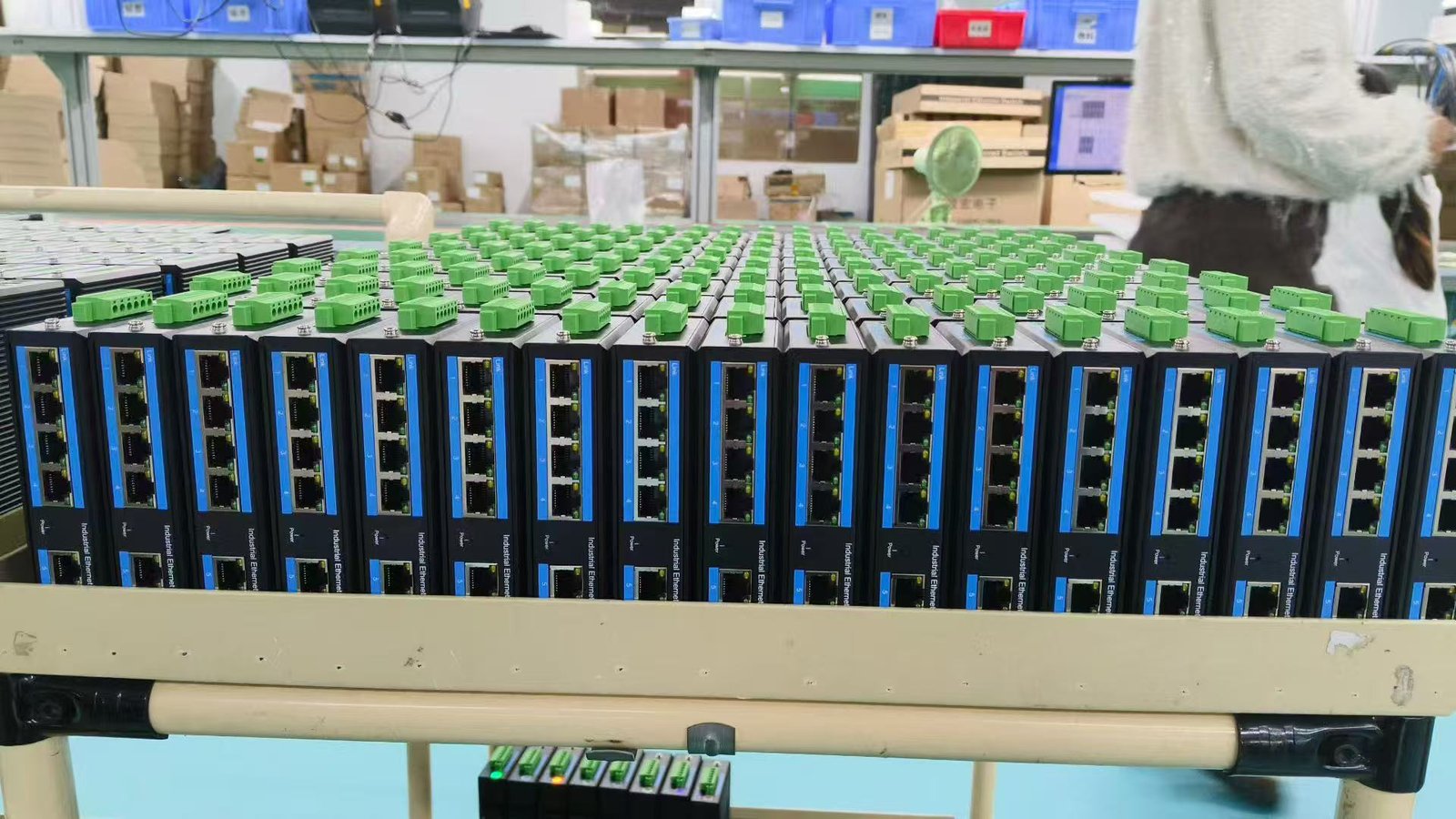
In modern Pro AV systems, the network switch is no longer just an IT component. In AV over IP, Dante, AES67, NDI, IP KVM, digital signage, control rooms, broadcast systems, and industrial visualization, the switch is part of the signal path.
That changes how it should be selected.
The right question is not simply, “How many ports do I need?” It is: What traffic must this network carry, under what conditions, and how much failure can the application tolerate?
A switch can look excellent on a datasheet and still be wrong for the project. For professional AV, selection should be based on architecture, traffic behavior, power, environment, redundancy, and long-term manageability.
Start with the AV application, not the port count
Before comparing models, define the real workload:
- Video: resolution, codec, bitrate, number of sources and destinations
- Audio: Dante, AES67, intercom, clocking and latency requirements
- Control: controllers, serial-over-IP, GPIO, device management
- Power: PoE cameras, encoders, decoders, touch panels and access points
- Environment: rack room, factory floor, outdoor cabinet, transportation or mobile installation
This avoids one of the most common mistakes in Pro AV networking: choosing hardware first and trying to make the architecture fit later.
Industrial switch or standard AV/enterprise switch?
“Industrial” should mean more than a rugged metal enclosure.
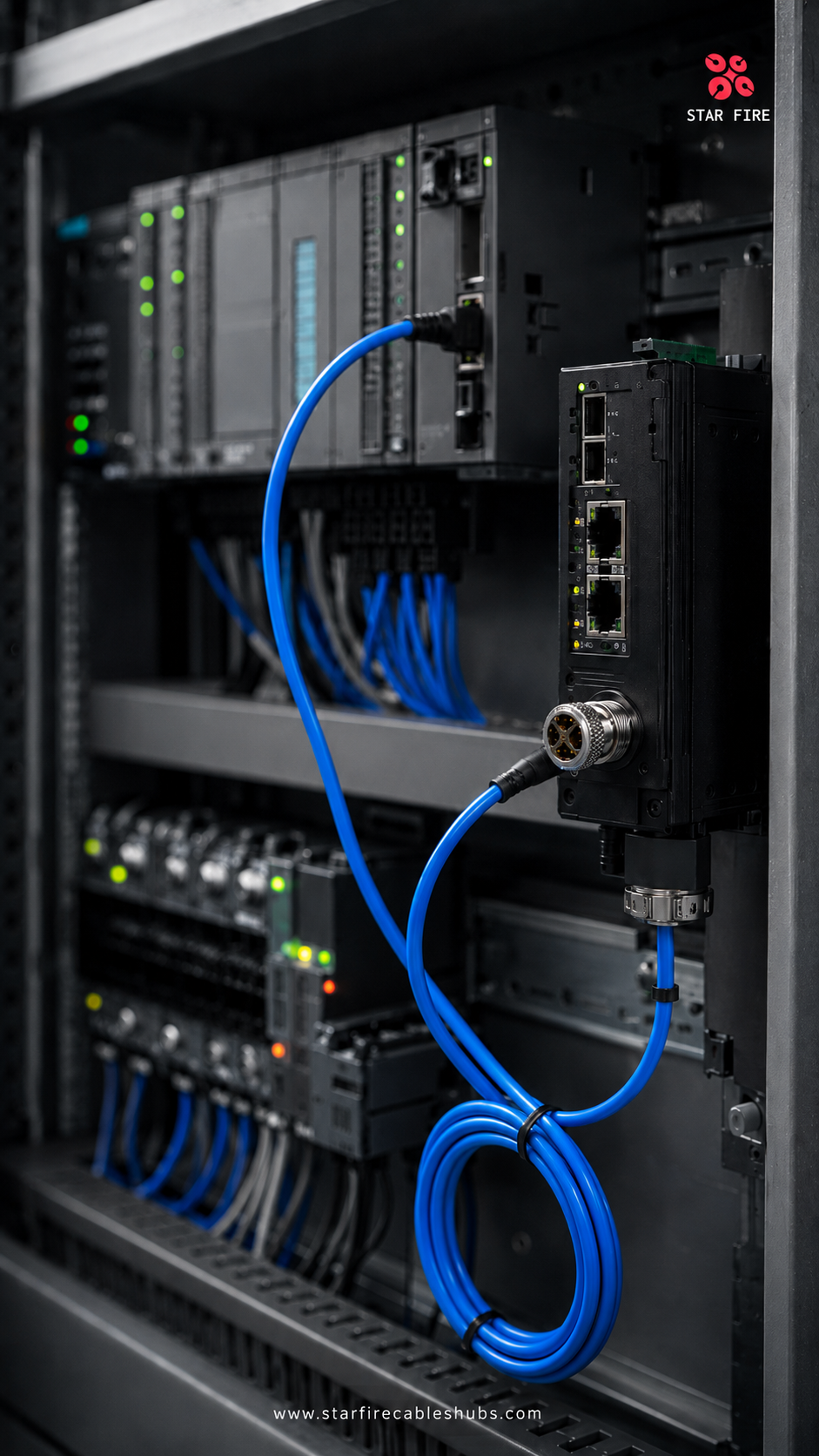
Industrial Ethernet switches are typically designed for continuous operation in demanding environments. Depending on the model, this may include wide-temperature operation, fanless cooling, DIN-rail installation, dual DC power inputs, relay alarms, surge/ESD protection, fiber uplinks and industrial redundancy.
A Pro AV-oriented managed switch may focus more heavily on multicast control, PoE, AV-friendly configuration, quiet operation, high-bandwidth uplinks, VLANs and QoS.
Neither category is automatically better.
For a meeting room or theater rack, acoustic noise and AV workflow may matter most. For an outdoor LED display, factory control room, transportation system, machine-vision network or industrial AV deployment, temperature, EMI resistance, redundant power and mechanical reliability may become equally important.
The correct switch is the one that matches both the network requirements and the physical environment.
Calculate bandwidth as a system
Port speed alone tells very little about system capacity.
A 1GbE endpoint port may be perfectly adequate for many compressed AV over IP devices. But when dozens of streams are aggregated through a single uplink, the uplink can become the bottleneck long before the access ports do.
For every design, calculate:
- Bitrate per stream
- Number of simultaneous streams
- Multicast destinations
- Inter-switch traffic
- Recording and monitoring traffic
- Control and management overhead
- Expected future expansion
Then check three separate limits: access-port bandwidth, uplink bandwidth and total switching capacity.
For many Pro AV systems, a practical architecture may use 1GbE at endpoints and 10GbE or higher at aggregation. The objective is not to specify the fastest possible switch everywhere. It is to put bandwidth where the traffic actually converges.
A healthy design also keeps headroom. Running critical AV links continuously near theoretical maximum utilization leaves little tolerance for bursts, failover, new endpoints or troubleshooting.
Multicast deserves serious attention
Many AV over IP networks depend heavily on multicast. This is one of the biggest differences between a normal office LAN and a professional AV network.
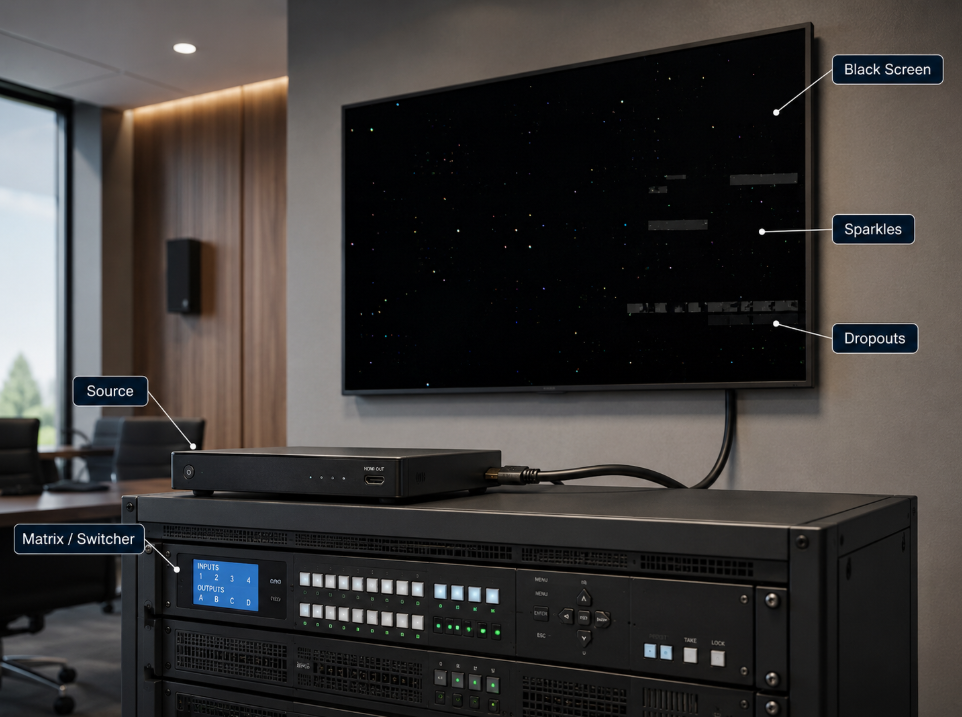
If multicast is poorly controlled, symptoms can include frozen video, audio dropouts, unexpected latency, excessive traffic, unstable endpoints and systems that work in a small test but fail when scaled.
IGMP snooping is therefore essential in many managed Pro AV networks. It helps the switch forward multicast only to ports that have requested a stream instead of flooding traffic across the VLAN.
But “IGMP snooping supported” is not enough. Engineers should also consider:
- IGMP version support
- IGMP querier behavior
- Fast leave where appropriate
- Multicast table capacity
- Unknown multicast handling
- Behavior across multiple switches and VLANs
In larger AV systems, the multicast strategy should be documented. The network needs a clear answer to a simple question: who is controlling group membership if the topology changes or a switch reboots?
QoS helps, but it cannot fix congestion
QoS is important for latency-sensitive traffic such as audio, timing and control, especially when AV shares infrastructure with other services.
However, QoS does not create bandwidth.
If a link is overloaded, QoS only determines which traffic receives priority. It cannot turn a 1Gbps link into a 10Gbps link.
Use QoS after the bandwidth architecture is correct. Check support for 802.1p, DSCP, queue management and scheduling, and follow the recommendations of the AV platform being deployed.
For Dante, AES67 and other real-time applications, generic “high priority” settings are not a substitute for proper network design.
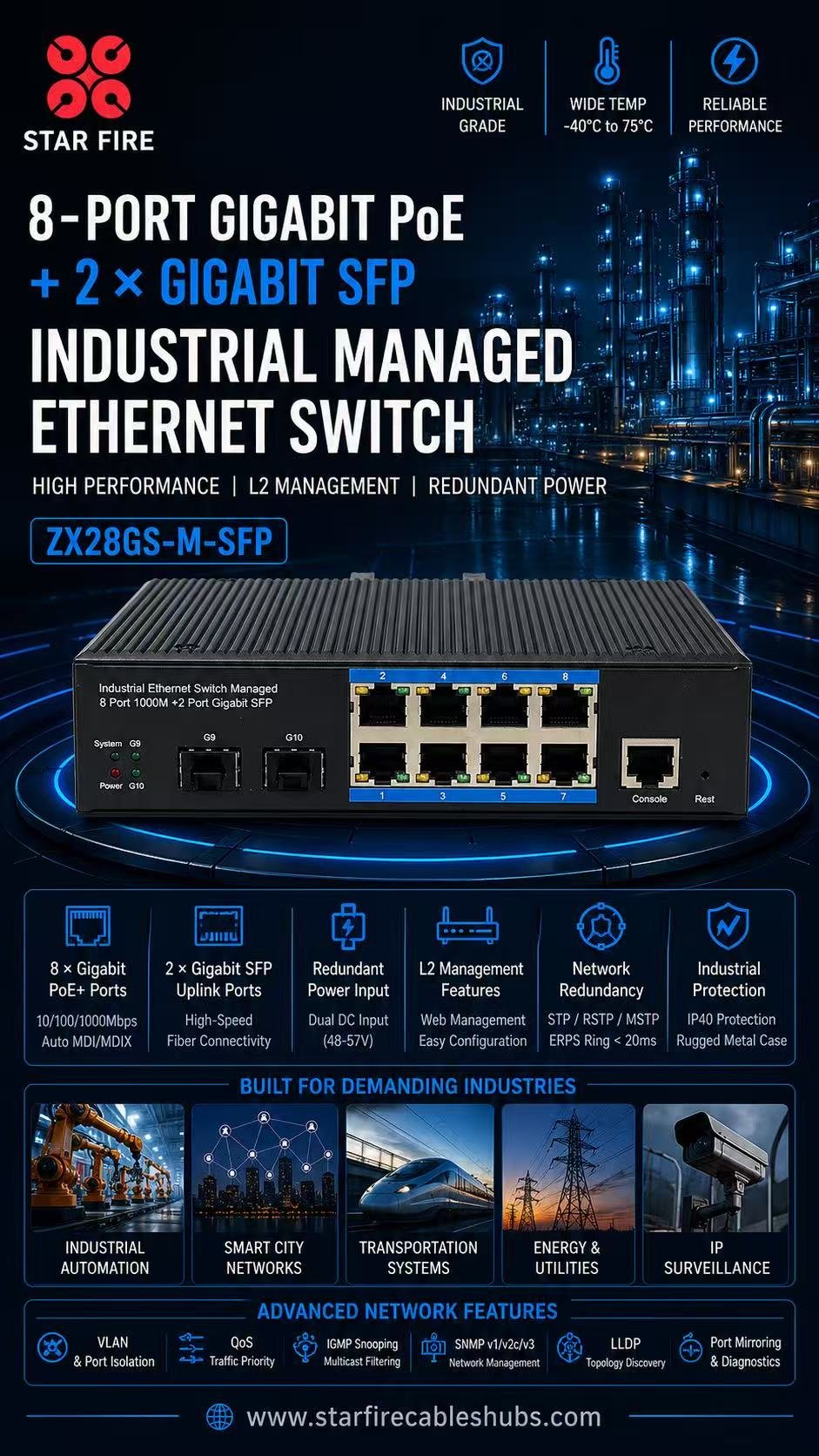
PoE: budget for the entire switch
For modern Pro AV, PoE can be just as important as switching capacity.
A switch may advertise PoE+, PoE++ or a high wattage per port, but the critical specification is often the total available PoE budget.
For example, powering multiple PTZ cameras, touch panels, encoders and wireless devices simultaneously can exceed the switch’s total budget even when every individual port is technically capable of supplying the required power.
Calculate:
Total required PoE power = sum of endpoint requirements + engineering margin
Also consider startup current, future expansion and what happens after a power-supply failure. A redundant network is not truly redundant if the surviving power supply cannot maintain the required PoE load.
Fiber uplinks matter more as AV networks grow
Copper is excellent for local access, but fiber becomes increasingly valuable between racks, floors, buildings and electrically noisy areas.
Fiber offers long-distance transmission, electrical isolation and strong immunity to electromagnetic interference. In large AV over IP, broadcast, industrial control room and campus deployments, SFP/SFP+ uplinks also provide flexibility in choosing optical modules and link distances.
When selecting a switch, check not only whether it has SFP ports, but also:
- 1G or 10G uplink speed
- Number of uplinks
- Supported SFP/SFP+ modules
- Single-mode or multimode requirements
- Link redundancy options
- Diagnostics and monitoring capability
For high-density AV over IP, insufficient uplink capacity is one of the easiest ways to create a hidden system bottleneck.
Redundancy should match the consequence of failure
Not every installation needs the same level of redundancy.
A small digital signage system may tolerate a short outage. A command center, broadcast facility, transportation system or industrial visualization platform may not.
Depending on the application, consider:
- Dual power inputs
- Redundant power supplies
- Rapid Spanning Tree or other supported redundancy mechanisms
- Redundant fiber paths
- Link aggregation
- Ring topology
- Layer 3 segmentation for larger systems
The important point is to design redundancy around the actual failure modes. Adding a second link is not enough if both links share the same power source, cabinet, conduit or upstream switch.
Environmental specifications are engineering specifications
In Pro AV, network switches are increasingly installed outside traditional data rooms.
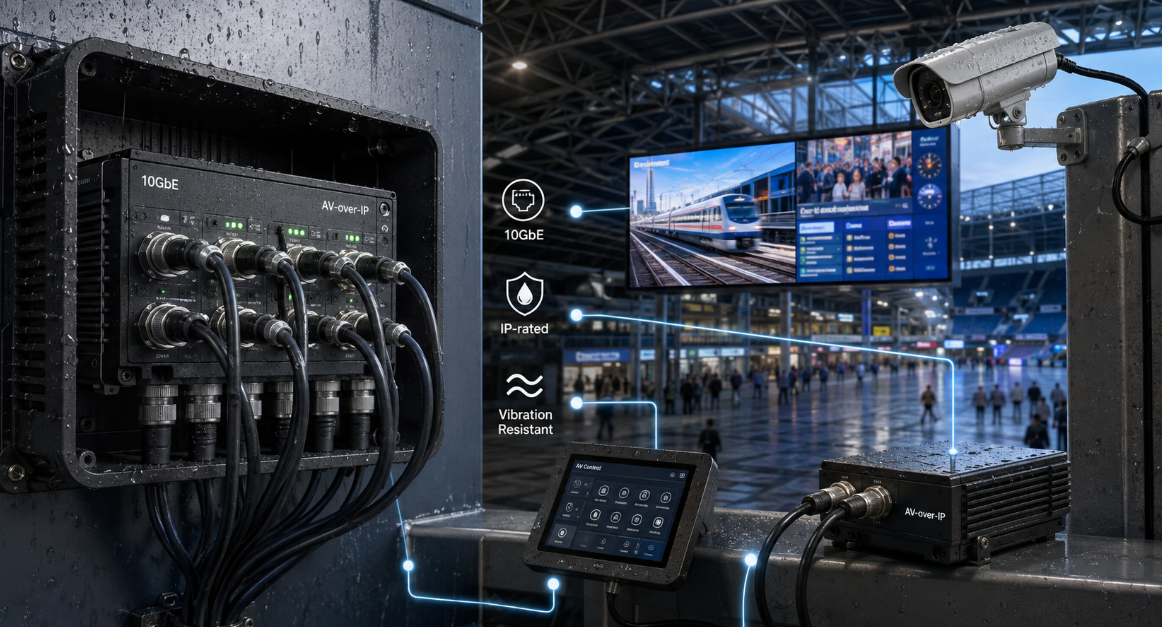
They may operate inside outdoor displays, roadside cabinets, factory cells, transportation systems, mobile broadcast racks or machine-vision equipment. In these environments, temperature, vibration, dust, power quality and EMI can affect network stability.
Check:
- Operating temperature
- Fanless or active cooling design
- Surge and ESD protection
- Input voltage range
- Mechanical mounting
- Enclosure protection
- Vibration and shock requirements
For industrial AV, a stable network depends on both packet performance and physical resilience.
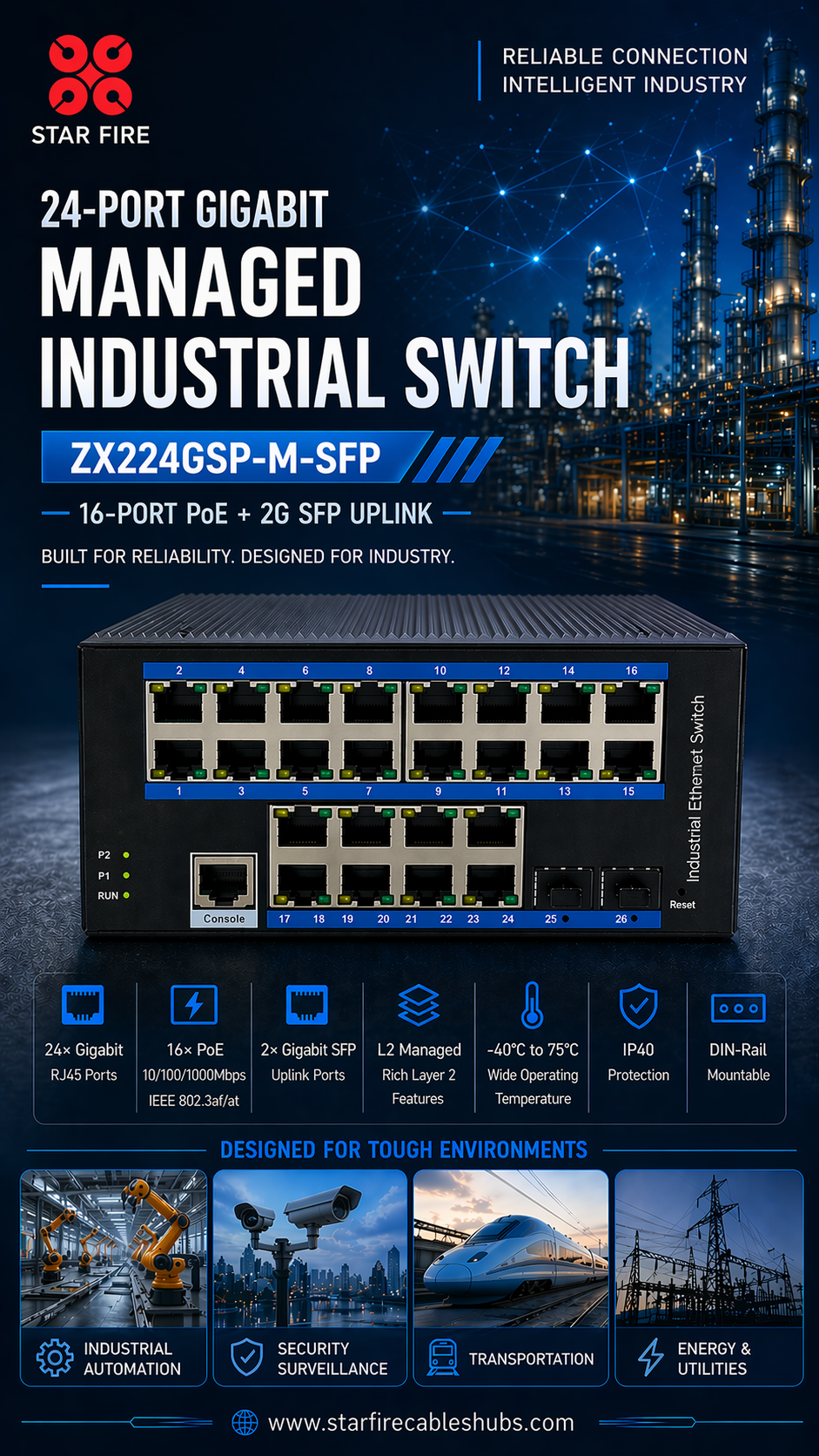
Managed vs. unmanaged: choose for lifecycle, not installation day
An unmanaged switch can be appropriate for a small, fixed and low-risk network. But once the system includes AV over IP, multicast, VLANs, PoE management, redundancy or remote support, a managed switch usually provides much greater control.
Useful management features include:
- VLANs
- IGMP snooping and querier
- QoS
- Port mirroring
- SNMP
- LLDP
- PoE monitoring and restart
- Link and traffic statistics
- Event logs
- Access control and security features
These features are not only for commissioning. They matter when a system needs to be diagnosed three years later by someone who did not design it.
A good switch should make the network observable.
A practical Pro AV switch selection checklist
Before approving an industrial Ethernet switch, I recommend asking these questions:
1. What AV protocols and codecs will run on the network?
2. What is the real peak bandwidth at the edge, aggregation and core?
3. Does the switch support the required multicast behavior?
4. Is the PoE budget sufficient with margin?
5. Are 1G, 2.5G or 10G uplinks appropriate for the traffic model?
6. Are VLAN and QoS features adequate for the application?
7. Does the design require precise timing, PTP awareness or AVB/TSN support?
8. What happens if a power supply, uplink or switch fails?
9. Can the hardware tolerate the actual operating environment?
10. Can the system be monitored and troubleshot remotely?
11. Is there enough capacity for future expansion?
12. Is long-term supply and technical support available?
The larger lesson
The best industrial Ethernet switch is not the model with the longest specification sheet. It is the one whose architecture matches the application.
In Pro AV, the network is becoming the signal infrastructure. Video, audio, control, timing and power increasingly share the same Ethernet platform. That means switch selection can no longer be separated from AV system design.
A good design balances bandwidth, multicast, PoE, fiber, redundancy, environmental reliability and manageability. A weak design may work on commissioning day but become unstable as the system grows. A strong design leaves room for traffic, failure, maintenance and change.
At STAR FIRE TECH, we work across Pro AV connectivity, optical fiber communication, structured cabling and industrial communication. That cross-industry perspective is especially useful as AV and industrial Ethernet continue to converge.
For integrators, consultants, OEMs and project engineers, our recommendation is simple: select the switch as part of the AV architecture, not as an accessory at the end of the BOM.