Table Of Content
Table Of Content
How Industrial Ethernet Switches Improve Machine Vision Network Stability
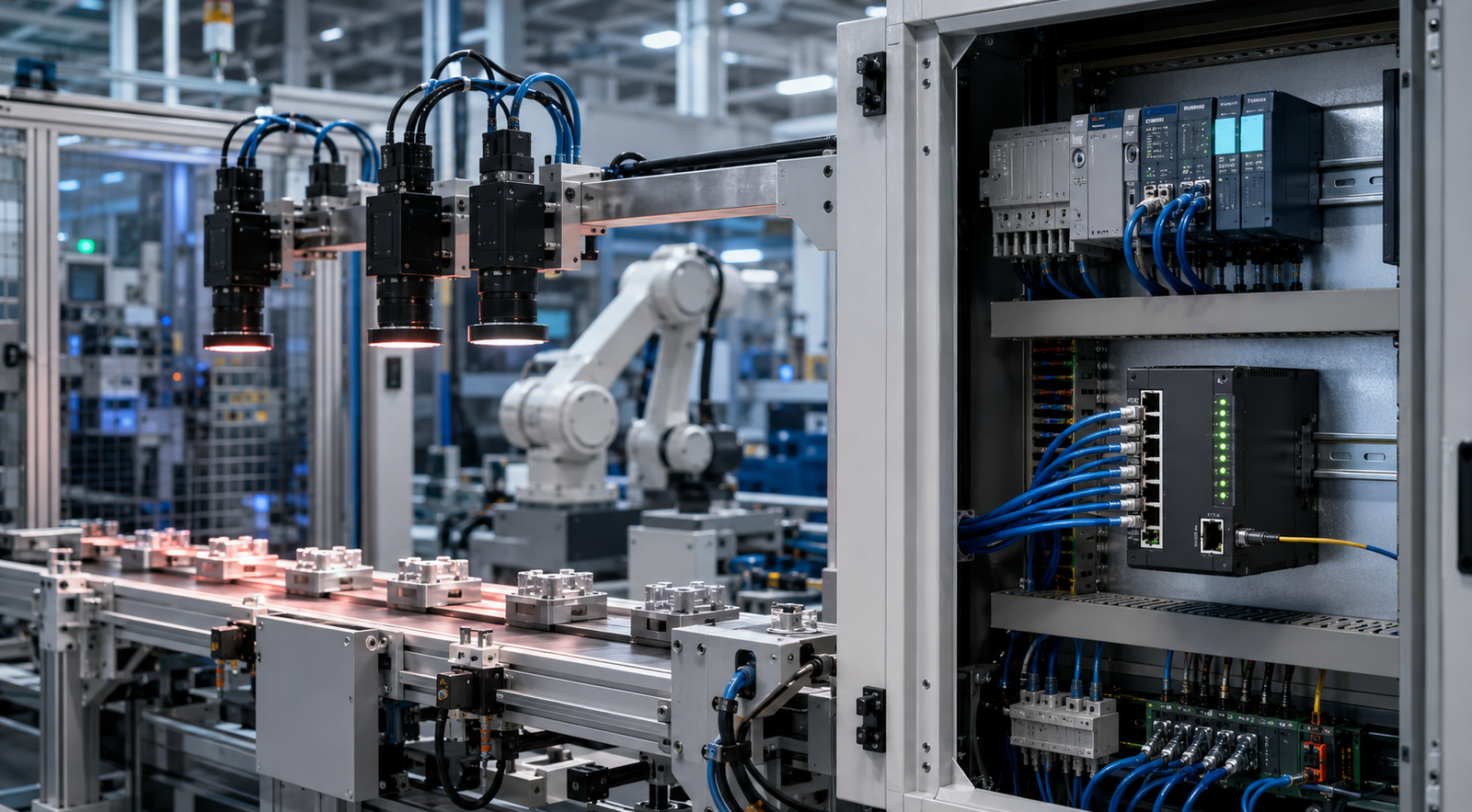
In machine vision projects, the camera is often the most visible device in the system. But when image data is delayed, inspection results become inconsistent, or industrial cameras disconnect randomly, the root cause is not always the camera.
For many customers, the real problem may be the industrial network behind the camera. A machine vision system depends on stable data transmission between industrial cameras, controllers, IPCs, PLCs, servers, and monitoring platforms. If the switch cannot handle the traffic, environment, or electrical noise, the whole inspection process can become unstable.
The Customer Problem: Image Data Must Arrive on Time
Machine vision is used for defect inspection, barcode reading, positioning, dimension measurement, robotic guidance, and production quality control. These applications often require continuous image data, low latency, and reliable communication.
If a network delay causes image loss or if a camera disconnects during production, customers may face false rejects, missed defects, slower production speed, and extra maintenance work. In quality inspection, unstable connectivity can directly affect production confidence.
Why a Standard Office Switch May Not Be Enough
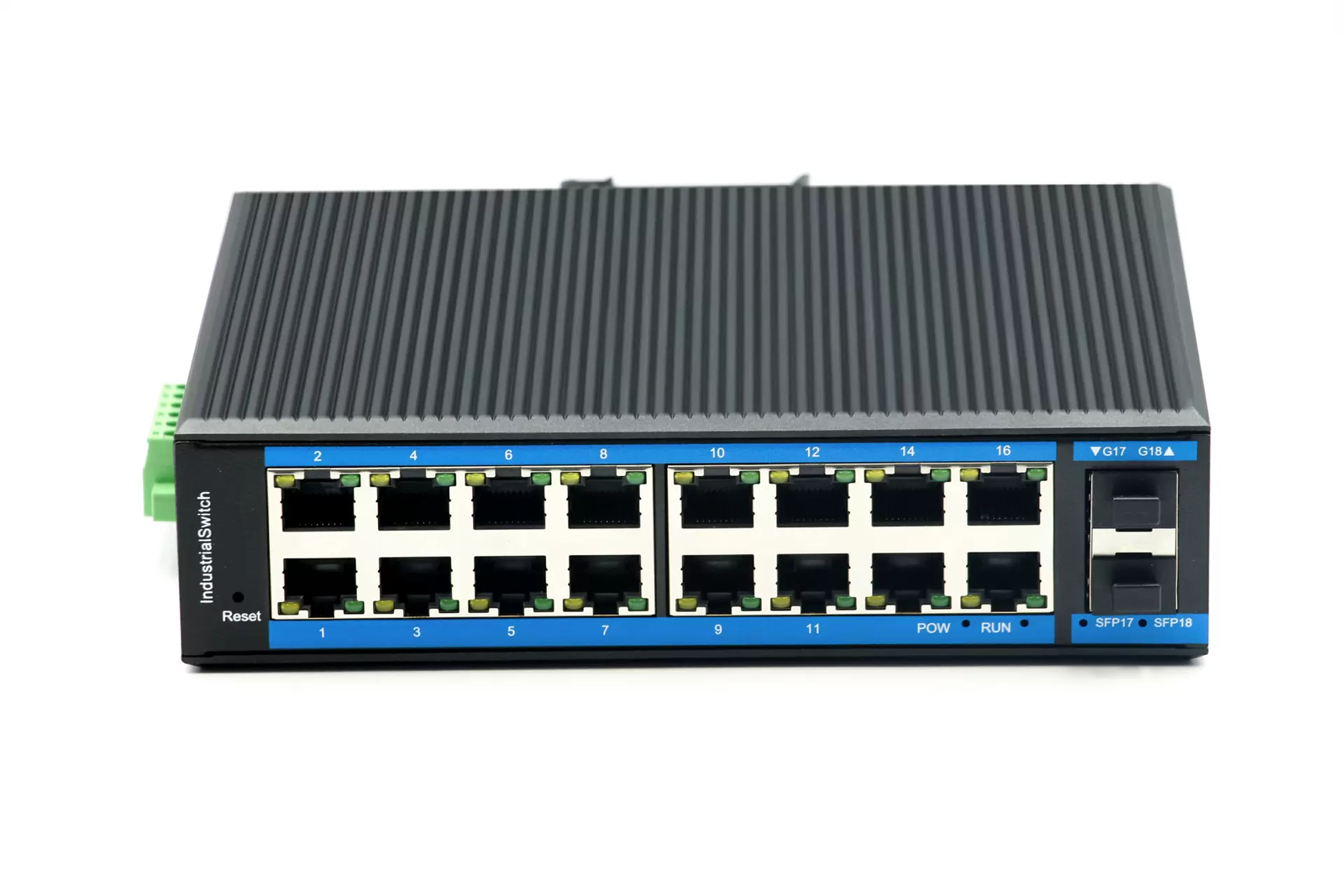
Office switches are usually designed for clean environments and general data traffic. Machine vision networks are different. They may operate near motors, inverters, high-speed equipment, robotic arms, and power lines. EMI interference, vibration, heat, and heavy camera traffic can all affect network stability.
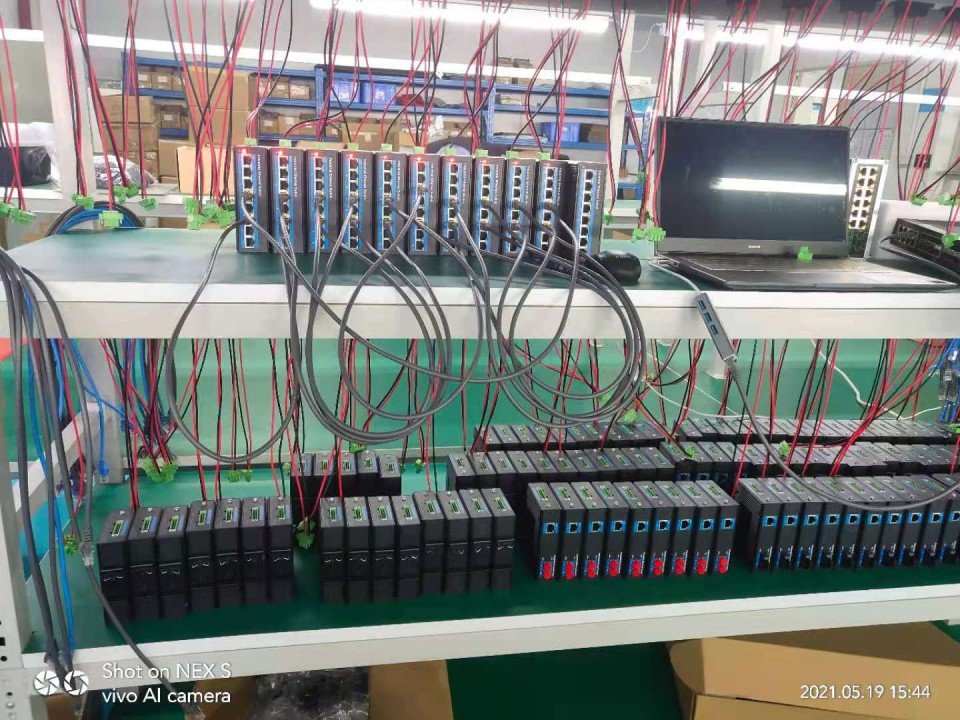
Industrial Ethernet switches are designed for demanding environments. Features such as rugged metal housing, DIN-rail mounting, wide temperature support, EMC protection, fiber uplinks, and managed functions help customers build a more reliable inspection network.
Key Selection Points for Machine Vision Networks
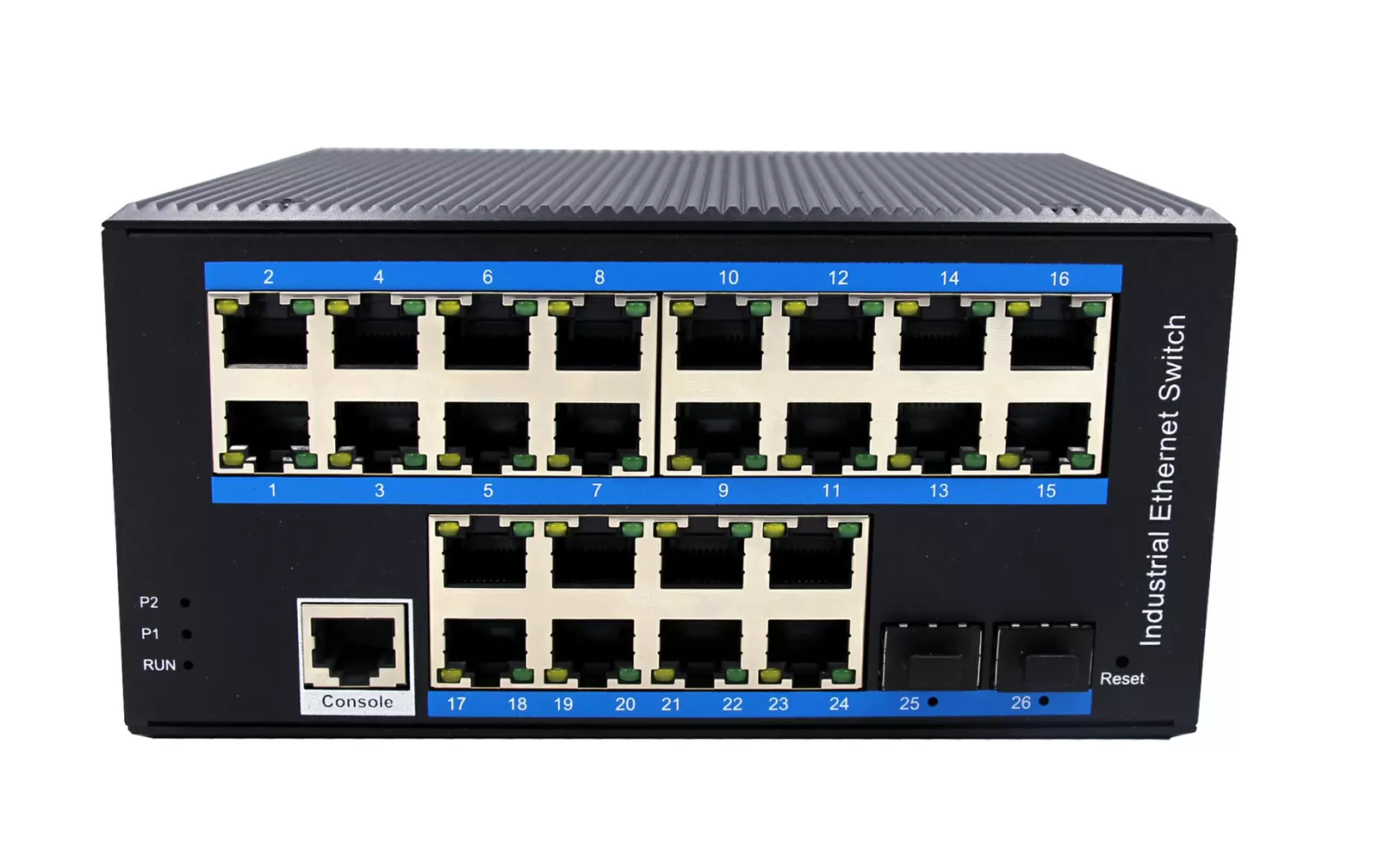
First, check bandwidth and uplink capacity. Multiple industrial cameras can generate large data streams, especially in high-resolution or high-frame-rate inspection. Gigabit ports and reliable uplinks help prevent congestion.
Second, consider network segmentation. If camera traffic, PLC communication, and factory IT traffic are mixed together, the network may become harder to control. Managed switches with VLAN and QoS can help separate traffic and prioritize critical data.
Third, evaluate the installation environment. If the switch is installed inside a machine cabinet or close to electrical equipment, industrial-grade design and EMI resistance become very important.
Fourth, plan for maintenance. Managed industrial switches provide port status, traffic information, alarms, and remote diagnostics. This helps engineers identify cable, port, or device problems faster instead of replacing parts blindly.
Customer Value: More Stable Inspection and Less Downtime
For customers, the value of the right industrial switch is not only faster communication. It is more stable inspection, fewer random disconnections, better troubleshooting visibility, and lower downtime risk.
At STAR FIRE TECH, we help customers evaluate industrial switch selection based on camera quantity, data volume, cabinet environment, fiber distance, EMI exposure, and maintenance needs. A stable network helps machine vision systems deliver more reliable inspection results and supports smarter factory operation.
FAQ
Q: Why do industrial cameras disconnect randomly?
A: Common causes include poor cabling, EMI interference, overloaded links, unstable power, loose connectors, or unsuitable switches.
Q: Do machine vision systems need managed switches?
A: Larger or critical systems often benefit from managed switches because they support VLAN, QoS, monitoring, and diagnostics.
Q: Why is low latency important in machine vision?
A: Low latency helps image data reach controllers and inspection software faster, supporting more consistent quality control.
Q: When should fiber uplinks be used?
A: Fiber uplinks are useful for long-distance transmission, high data aggregation, and EMI-heavy industrial environments.
Q: What should customers check before choosing a switch?
A: Camera quantity, bandwidth, uplink type, environment, power stability, EMI exposure, and future expansion needs.
#MachineVision #IndustrialCamera #IndustrialEthernet #FactoryInspection #LowLatencyNetwork #IndustrialSwitch #FactoryAutomation #QualityInspection #EMIProtection #STARFIRETECH